
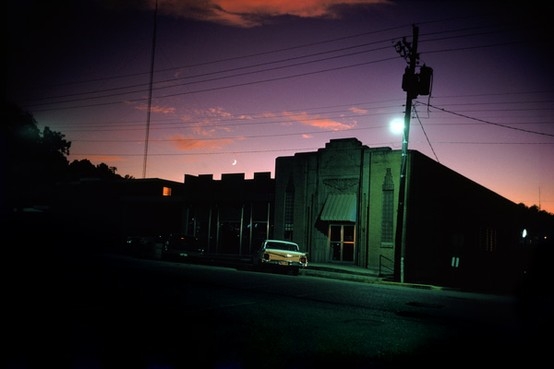
Click through for full-size gallery.
Author Archives: BobHill
Marina Abramovic on Self-Actualization (2012)
“I think that the most important thing for any human being to understand is who you are and why you are on this planet. What is your purpose? For somebody, their entire purpose is to be mother, and to be free to have children and reproduce. And another person need to be architect, and another person need to be baker and bake the bread; and another one, a gardener. I mean, every single human being has his own quality, and the most important is to find your own center in life, and to understand who you are, and not spend energy doubting. The biggest problem, especially with young people, is doubt. Y’know, there are so much things to presume, and you like this, and then you don’t like that; then you try this or try that. And you’re losing so much energy, and you’re losing yourself, and you’re losing perspective on who you are. The moment you find who you are, and you know your purpose, then, ‘This is it.'”
Classic Capsule: 2001: A Space Odyssey (1968)
In terms of sheer ambition, there really is no worthwhile substitute for 2001: A Space Odyssey. We are speaking of grand cinema here; a sprawling epic that traces mankind all the way back to its origins. We are speaking to a premise so ethereal, most directors would’ve fumbled it entirely. We are toiling in superlatives; discussing motifs upon the highest order. We are speaking to rich subtext – the kind that justifies 25 minutes void of dialogue at both ends. And – in that spirit – we are tampering with symmetry … a constant harbinger of Kubrick’s work, impacting everything from script choices to screen shots.
Keep in mind, 2001 was created several decades short of CGI. There were no digi-cams to speak of. There was no motion capture on the set. There was only Stanley Kubrick, and his inimitable ability to transform the average montage to a waltz. To watch 2001 today is to experience outer space as if on quaaludes – slow and tranquil, warm and hypnotic. It’s precisely the type of discipline that Terence Malick has wet dreams over, specifically because Space Odyssey possesses the innate ability to shift and evolve over time. During the four-and-a-half decades since it was originally released, 2001 has influenced everything from sci-fi to slick humor; mainstream culture to pro wrestling, and it’s slowly weaved its way into our consciousness as well.
But be warned: 2001 is only capable of casting its full spell provided one gives himself over to it entirely, preferably while seated in a dark room with sharp projection … cell phone powered down, Mac or PC powered off. This is the only way to truly appreciate the integral relationship between MAN and HAL; HAL and GOD; GOD and ALL; ALL and ONE. It’s a hell of a thing, watching this movie … if not a hell of a thing to witness mankind planting the eventual seeds of its own destruction.
2001 was the first, and – to this day – it is still the absolute gold standard.
I really think you should make some time to see it, Dave.
Dave … Dave?
Are you there, Dave?
Please confirm.
The Space Between
Click through for full-image gallery.
Alan Greenspan on Eliminating Too Big To Fail (2008)
“If indeed there are firms in this country that are too big to fail, it necessarily means that investors will give them moneys at lower interest rates because they’re perceived to be guaranteed by the Federal Government. The result is that they have a competitive advantage over smaller firms and that creates huge distortions in the system. So the question is, ‘Is it feasible to eliminate too big to fail?’ And, y’know, once you’ve gone down this road, everyone is not going to believe you. But remember that we used to argue strenuously that Fannie and Freddie were not backed by the full faith and credit of the United States Government because that’s what the law said. The markets didn’t believe that … I think the first thing you have to say – at a minimum – is that we have to eliminate the larger institutions’ subsidy. And one way to do that is either raise capital charges or raise fees. But you cannot allow it to go on without very serious consequences. At the end of the day, there’s got to be something which penalizes those firms which move above the level where they’ve become too big to fail. And that raises some very, very large questions”
Galleria: At War With the Obvious (William Eggleston @The Metropolitan Museum of Art)
When William Eggleston first started developing in Color way back in 1965, contemporary purists considered it an insult to their palate, tantamount to Bobby Dylan going electric up in Newport (at right about the very same time). Over the years, Eggleston slowly came to regard his staunch critics as pariahs, the majority of whom were constantly angling to get over, despite resigning themselves to standing still upon arrival. Theirs was a static existence, so far as Eggleston was concerned. By most accounts, Mr. Eggleston was – and is – an unrepentant aristocrat who never sought to form alliances. A half a century removed, the Memphis photographer is now widely recognized to be both an auteur and an outlaw, cracking the necessary yoke of color photography only a short time before bleeding it dry via transfer. In Eggleston’s wake, you’ll find an entire plethora of acolytes, Sofia Coppola and David Lynch chief among them. More importantly, you’ll find the towering legacy of a man who’s always understood that adhering to arbitrary lines in the sand will only serve to bind you till the next slow-building groundswell comes along.
(At War With the Obvious is running now through July 28th in Gallery 852 at the Metropolitan Museum of Art, 1000 5th Avenue @ 83rd Street)
Five More For The Offing:
- An Evening Of Critical Conversation About Art @ The National Academy Museum (Tonight, 6:30 PM, $12, 1083 5th Avenue)
- Jean-Michel Basquiat @ The Gagosian Gallery (Through 4/6, 555 W. 24th Street)
- Everyday America: Photographs from the Berman Collection @ Steven Kasher Gallery (Through 3/23, 521 West 23rd Street)
- Tracy Had a Hard Sunday by Parra @ The Jonathan LeVine Gallery (Through 3/23, 529 W. 20th Street, 9th Fl.)
- Cold Castle @ Family Business Gallery (Through March 9th, 520 West 21st Street)
Galleria is a new weekly feature on IFB.
Film Capsule: A Fierce Green Fire
There is a point during the first 20 minutes of A Fierce Green Fire at which long-time environmentalist Martin Litton stops to posit, “If you don’t have any hatred in your heart, then what are you living for?” Litton presents the question as if it were a call to action – one clearly reminiscent of the age-old premise that anything worth living for is most assuredly worth fighting for as well.
To that end, A Fierce Green Fire does a pretty decent job of tracing back the ongoing struggle for conservation in this country, chronicling every worthwhile wrinkle from the Audobon Society to the Sierra Club; Green Peace to The EPA; environmental awareness to political activism; King’s Canyon to Love Canal; Earth Day to Kyoto; corporate interest to our climate; Ronald Reagan to Al Gore; air pollution to fierce warming (The list goes on and on). In so doing, the film joins an entire maelstrom of enviro-docs, many of which have been released in the last few years alone (Plastic Planet, Chasing Ice and Surviving Progress among them).
Much like An Inconvenient Truth was able to benefit from Al Gore’s name recognition, A Fierce Green Fire arrives packing some A-list power of its own. Different sections of the film are narrated by the likes of Robert Redford, Meryl Streep and Ashley Judd (to name a few). To his credit, (Director) Mark Kitchell does not exploit any of that talent to his own end. In fact, at no point during the film do any of those A-List narrators actually appear in front of the camera at all.
In the final analysis, what we’re left with is the oft-recurring notion that we’ve traded in our once-proud culture for consumption … a wholly backward state of being in which corporate interests trump the greater good, time and time and time again. The good news is, it’s not too late to set the record straight, provided we have the wherewithal – if not the sheer integrity and guts – to see this battle through.
(A Fierce Green Fire arrives at the Cinema Village in New York City today with a staggered national rollout to follow. For a complete list of opening dates and cities, click here.)
This Is Princeton University (Part II)
Click through for full-size images. Continue reading
19 Reasons Why ‘6 Souls’ Is The Absolute Worst Movie Julianne Moore Has Ever Agreed To Be a Part Of
- This film was originally released in Japan and the UK way back in 2010 (as something called Shelter), at which point it received a unanimous score of 0% via Rotten Tomatoes’ “Top Critics” meter.
- This film will be released in the United States as 6 Souls via Video-on-Demand this coming Friday … and it currently maintains a unanimous score of 0% via Rotten Tomatoes’ “Top Critics” meter.
- Jonathan Rhys-Meyers plays a supernatural psychopath with multiple personalities and several really bad American accents (not to mention a bad pencil mustache).
- Jeffrey DeMunn, while most assuredly a nice guy, is an absolute eyesore in this movie (He looks like that puppet thing from Saw … seriously. It’s unbelievably irritating.)
- The storyline includes some weird, convoluted subplot involving mutant hill people.
- 6 Souls makes the rookie mistake of assuming that in the year 2013 mainstream audiences are still naive enough to accept something this fucking insane as even remotely plausible.
- 6 Souls is guilty of doing that really lazy B-movie thing wherein the more dire and dangerous a situation, the more insistent the lead character must be about going into it alone.
- 6 Souls is guilty of doing that really lazy B-movie thing wherein characters call the police for help, then completely forget to mention there’s a supernatural madman on the loose.
- 6 Souls is guilty of doing that really lazy B-movie thing wherein the bad guy is absolutely all-powerful, yet no one sees any reason for extreme caution or public assistance.
- 6 Souls is guilty of doing that really lazy B-movie thing wherein the bad guy is absolutely omniscient, and yet he cannot figure out which room a little girl is hiding in.
- 6 Souls is guilty of doing that really lazy B-movie thing wherein an unspeakable evil has been lying dormant in the mountains for the past century, going completely unnoticed until an entire family comes upon it.
- 6 Souls is guilty of doing that really lazy B-movie thing wherein every character, plot point and situation conveniently appears exactly where and when the screenwriters need it to.
- 6 Souls is guilty of doing that really lazy B-movie thing where none of the central characters have any full-time jobs, relationships, or other distractions to keep them from wasting all of their time with this bullshit.
- 6 Souls is unnecessarily vile.
- The directors commit the unforgivable – though increasingly frequent – mistake of assuming what makes a good cult film a good cult film is just how utterly absurd it all is (Please note: This is not what makes a good cult film a good cult film).
- The directors attempt some really misplaced tribute to Stanley Kubrick (ala The Shining) during the first five minutes of the film. It fails miserably.
- Everything – and I mean everything – about 6 Souls is just soooooooooooooooooo damn spooky.
- The screenwriters tease the idea that the lead character has a drinking problem during the first 5 minutes of the film, then never (and I mean “never”) follow up on – or even reference – it again.
- 6 Souls arrives via Video-on-Demand this coming Friday, March 1st (a full month before it arrives in U.S. theaters … not good).
This Is Princeton University (Part I)
Click Here for “Princeton, University (Part II)”.
Click through for full-size images. Continue reading