Film Capsule: Grand Piano

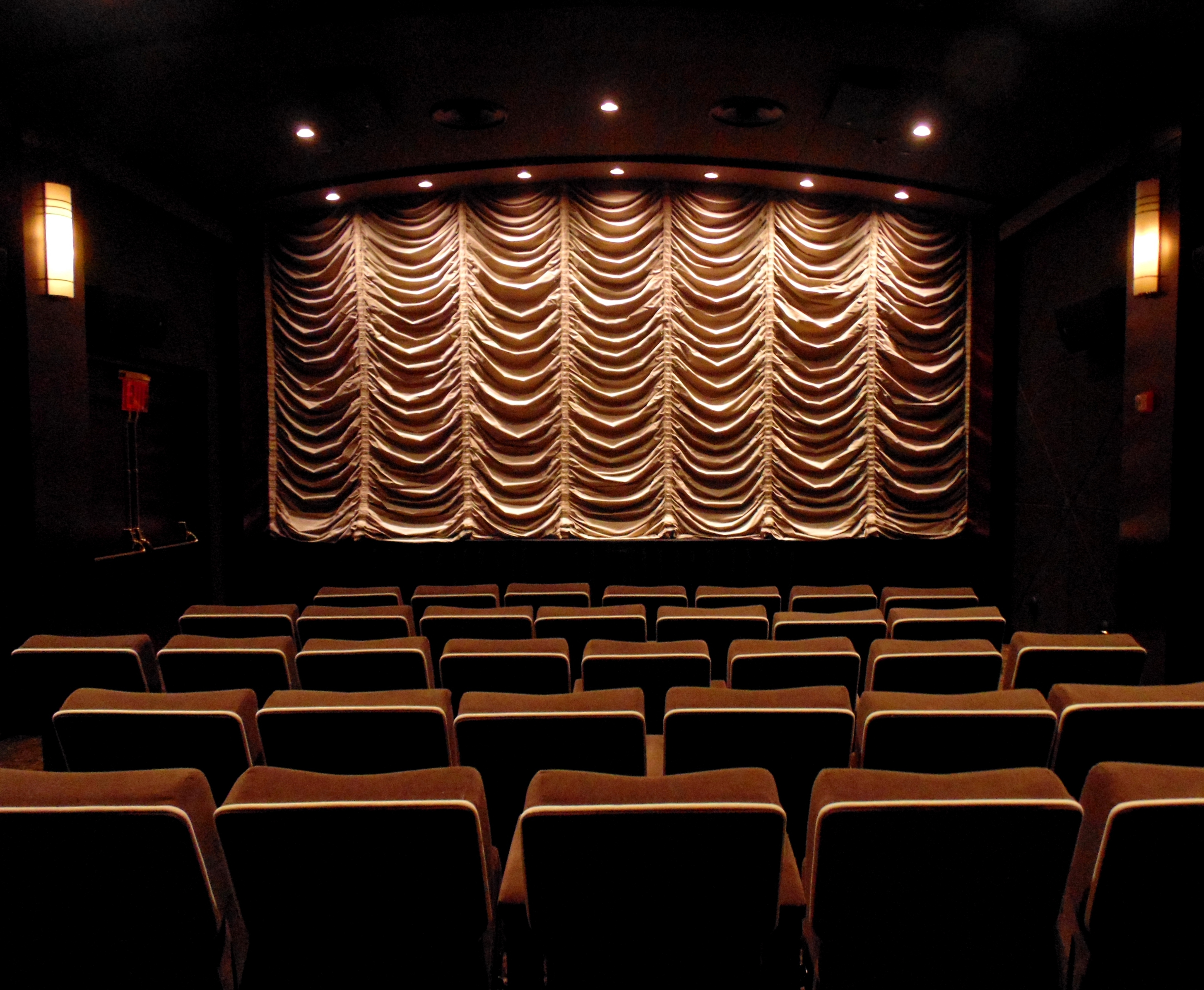
Eugenio Mira is a director who understands the difference between a ticking suitcase and a bomb exploding. And he uses that difference to his advantage throughout the movie Grand Piano. Here we find a slice of Old Hollywood – a Hitchcockian thriller, featuring a lead character named Selznick, with a wink and a nod to Citizen Kane. Add a new Chicago looking old along with an opening theme right out of The Untouchables, and, conceptually, Grand Piano has a lot of good things working in its favor.

But a critical gap exists between pitch and execution, and the longer Grand Piano lingers on (which is only 90 minutes, by the way), the more implausible its lead character choices become. Tom Selznick (Elijah Wood) goes from making really dumb decisions, to making really smart decisions, to making inconceivably stupid decisions. During the first half-hour, Selznick is motivated by fear, during the second half-hour, self-preservation, and during the final half-hour, whatever Mira needs to keep the storyline afloat. It’s a common pitfall wherever big-screen thrillers are concerned. The writer and director work so hard on airtight set-up, they wind up sacrificing credibility down the road. Think Silent House, or House of Games, or even the final episode of Lost.

Grand Piano succeeds in mimicking the style and  tradition of Alfred Hitchcock. Mira employs an entire litany of Hitch standards including: psychedelic lighting, jagged camera angles, split-screens and The Vertigo Effect. But Mira fails to adjust integral plot points in accordance with the times. Back in 1959, moviegoers might’ve been willing to accept the real-world ineptitude of a North by Northwest. But expectations have evolved, and so too have storytellers’ ability to oblige. This isn’t the case toward the end of Grand Piano, a movie which may be entitled to a pass specifically because it’s an homage to early thrillers.

Finally, a word about the casting, as this represents a glaring oversight, to say the least. Elijah Wood is almost invisible as the leading man, a well-coiffed body in a board-stiff suit that’s performance – above and beyond playing the piano – feels equally starched. John Cusack, meanwhile, in his current pursuit of playing villainous men, seems completely out of place. The same can be said for a lot of the lead players, a dynamic which causes one to wonder how much better Grand Piano might’ve been with ample casting.

All told, Grand Piano is still an entertaining throwback, so long as one accepts it on those terms. A great deal of work went into synchronicity (Eugenio Mira’s also a talented composer), and, as such, Mira has tapped into a wellspring worth exploring. A little tightening on the story and some slightly better casting, and this director might be looking at a breakthrough down the road.

(Grand Piano is currently available via iTunes and OnDemand. It arrives in theaters on March 7th.)

Laird Hamilton on Civil Disobedience (2013)

“There’s a great quote that says, ‘Disobedience is the true foundation of liberty.’ I have children, and we always say the thing that makes kids hard to raise will probably make them great adults. But it’s all that defiance and all those things that society doesn’t want to recognize, or agree with. It’s kind of like they want you to go get in a line, walk over there and go through that door and ‘We’ll tell you what to do,’ and, ‘No, you can’t do that.’ I remember growing up and having teachers tell me, ‘Y’know, you’re not going to be anything,’ ‘You can’t surf for a living,’ ‘You can’t eat your surfboard.’ I mean, I heard it all. But that’s the time when you have to decide if you want to try to live for yourself or you want to try to live for other people.”

(From interview conducted by best-selling author Jake Ducey.)

‘Before Nausea’: A Case Somewhat For – But Mostly Against – The Most Pretentious Trilogy of All-Time

SONY-BDOS-01_Onesheet4.16.13_Layout 1Less than seven minutes in I could sense there would be trouble. The opening scene took place in a rail car – scattered riders, mostly German. There was a French girl, then an American, both of them en route from Budapest to Vienna. Every passenger appeared either isolated or antagonized. This was, I assumed, an attempt at demonstrating how the entire world gets lost in translation. Only it smacked of condescension, and the ringing got much worse from there.

Over the course of a five-hour trilogy, Richard Linklater included enough intellectual name-dropping to put Woody Allen’s oeuvre to shame: Apollo, W.H. Auden, Honore de Balzac, Marlon Brando, Albert Einstein, Euripides, Sigmund Freud, Mahatma Gandhi, Mikhail Gorbachev, Vaclav Havel, Ernest Hemingway, Joan of Arc, Elia Kazan, Martin Luther King, Medea, Henry Miller, Sylvia Plath, Django Reinhardt, Georges Seurat, William Shakespeare, Socrates, Dylan Thomas, Leo Tolstoy, Lech Walesa, Thomas Wolfe … Holy Fuck!

I mean, imagine, if you will, how intolerable it might be to sit across from anyone who would insist on cramming all those names into a dialogue?

Continue reading

Film Capsule: The Pretty One

Jake Johnson is a comer, a guaranteed presence via every movie he’s appeared in. Generally cast as either the cool-ass Bro (Safety Not Guaranteed) or platonic No (Drinking Buddies), Johnson also plays a recurring character in the FOX sitcom, New Girl. He’s got a voiceover in The Lego Movie (opening this weekend), and a significant role in Colin Trevorrow’s Jurassic World (slated for release in June of 2015).

Like I said: “Jake Johnson = comer.”

Unfortunately, Johnson also plays the only sympathetic character in Jenee LaMarque’s The Pretty One – a schizophrenic indie romp featuring Zoe Kazan in dual roles (a career choice twice as bad). The Pretty One‘s writing is stale, the story’s macabre, and you’re constantly distracted by that fat dude from Zodiac. Regardless, Mr. Johnson comes off swimmingly. I mean, he always does. The dude is just a pro.

(The Pretty One arrives in limited release this coming Friday.)

Moving On: New York

Mad 3By March of 1995 Mad About You had reached the zenith of its network fame. Boasting the eight o’clock slot in NBC’s Must-See-TV line-up, Paul Reiser’s highly relatable situation comedy functioned as a lead-in to Friends, which was then followed by Seinfeld (a series which would eventually lampoon Mad About You in September of that same year). As the lowest rated of all three, Mad About You was still achieving a robust 15 share, admirable enough to covet a top 10 spot in the weekly Nielsen ratings. In the wake of Cheers, NBC’s prime-time priorities were shifting. Consequently, Paul Reiser – co-creator and co-star of Mad About You – had been called upon to host the March 18th edition of Saturday Night Live, the first and only time the 38-year-old would be enlisted to do so.

Meghan was a fan, which meant that I – by extension – had become a fan, as well. I mean, Mad About You, that was us, y’know? How could it not be? Forget about the fact that Paul Buchman represented the prototypical 1990s New York nebbish, and Jamie Buchman, the safe-but-attainable career-minded woman. He had dark hair, and she was a blonde. He wore plaid shirts … and she was a blonde. He wore denim jeans … and she was a blonde. To a young and struggling couple living in the armpit of New Jersey, Paul and Jamie Buchman represented the art of possibility. New York City, Union Square, a one-bedroom opening out onto a fire escape. And they were married. They were married. They were so crazy-happy married. They were Jack Lemmon and Shirley MacLaine, the empty promise of a Springsteen song (Walk tall, or, baby, don’t walk at all). Paul and Jamie Buchman represented the height of where blind faith could take us – one last dying remnant of a narrative gone cold.

More to the point, Paul and Jamie Buchman represented the reason I stood showering in a bath tub with no curtain now, watching steam fog up a mirror with brown metal rusting through. There was a bug inside the bathroom sink – black and shell-like, sliding down. There was a carpet in the main room, red and black with door-mat bristles. The outside hallway reeked like turpentine, despite no paint on cracking walls.

We were staying on the fourth floor of the Latham Hotel, a one-star establishment along 28th and 5th Avenue. The room cost $60, which I had paid through 3-inch glass.

“Did you know he wrote the theme song?” Meghan shouted. She was sitting on a desk chair in the corner of the bedroom.

“He wrote the what?” I shouted back.

“The theme song,” Meghan shouted. “Paul Reiser co-wrote the Mad About You theme song.”

I turned the shower off – C for hot and H for cold. I drip-dried on drab tiles.

Meghan was sitting by drawn curtains, denim jacket half-unbuttoned. She asked if I was ready. I told her I was not. She was behaving like a woman who had long since sworn off sex.

We went strolling north through Midtown, toward the New York we’d been advertised. We remained stunningly oblivious to corner stores and miles of scaffold. Looking up outside the Empire State, I was reminded of my only other visit to Manhattan, an 8th-grade field trip to Tower Two of the World Trade. There was an observation deck along floor 107, all waist-high bars and slanted glass. One could see the entire universe unfurling out there –  Fitzgerald’s Lost City, Platner’s Windows on the World. And yet, the only thing that I or any of my classmates could conceivably think to do was bow our heads and look straight down.

Meghan and I embarked upon a tour at Rockefeller Center, prompted by the notion this was Saturday, and, as such, NBC might provide us limited access to Paul Reiser. Alas, Studio 8H ran mostly empty, as did the Nightly News studio and the original Tonight Show set – a stunning array of hanging lights and bundled wires, tourists commenting on how much bigger all the props looked on TV. Following the tour, Meghan sought out a concierge, who assured us there were no remaining tickets for that evening’s SNL.

We ate dinner at The Hard Rock, where Meghan ordered a $6 daiquiri known as Strawberry Fields. Feigning disgust, I argued the use of a fake ID might get us booted. And yet, the reality was, my aggravation stemmed from shame – shame about the fact that I was poor, and Meghan was poor, and we were holed up in some poor hotel because I’d insisted on this trap café.

***

“We’re lost,” Meghan told me.

We were lost, continuing north-northwest along Riverside, in pursuit of a diner, the exterior of which was prominently featured throughout Seinfeld. A mutual friend assured us it was located “up near Columbia,” which Meghan and I assumed might make it reasonable to find. Only we were tourists, and, as such, New York City unfolded more like a neverending labyrinth than an easily-navigated system of grids. We zigged, and then we zagged, skirting fringes of the Harlem we’d been advertised.

“We should just hop on the parkway,” Meghan insisted. She was pointing off toward the Hudson with her cigarette. “There’s a huge green billboard on, like, every other corner.”

“It’s a bad idea,” I countered. “We commit to the wrong exit and it could take us hours to get back in.”

“Well, we need to think of something,” Meghan bristled. “My car is running on E. Why aren’t there any gas stations around here?”

“Maybe we should just give up,” I whispered.

Neither of us seemed too keen about the prospect. I mean, what were we to tell our friends, many of whom we’d promised close-up pictures of the diner? Alas, it was decided: We would reverse course, doubling back toward Manhattan, en route to see if any last-minute standby SNL tickets had been released.

We were directed to a lobby inside of 30 Rock – jet-black marble, mustard trim – where we stood with several others. Molly Ringwald rambled through around 11, followed by the actor who had played Phillip Spaulding on Guiding Light. A few minutes later, a network page emerged, declaring, “We can take another.” Before Meghan or I could summon the initiative, a nearby couple raised their hands. A rope was lifted. They were escorted through.

Meghan and I called it quits just after midnight. A hush had fallen over 5th Avenue, and we reveled in the silence, staring past our dark reflections in the garish windows. Meghan lit a cigarette. She leaned her back against a wall.

“We could give it one last shot,” I murmured. I was staring at a storefront – heat-lamp orange, flanked by flowers.

“What, Saturday Night?” Meghan said. “That show’s as good as over.”

“Yeah, but the entire cast’ll still be up there,” I responded. “You gotta figure they’re gonna exit through the lobby.”

“What about the car?” Meghan said. “If we don’t pick up the car by 1 it’s gonna cost another $15.”

“OK, so we’ll go pick up the car,” I said. “I’ll wait outside while you hurry in.”

Meghan re-emerged from 30 Rock around 1:40, boasting autographs from David Spade and Kevin Nealon, Adam Sandler and Chris Farley. Annie Lennox hurried past, Meghan told me, Chris Elliott ignored me.

“What about Paul Reiser?” I wondered.

Paul Reiser never showed.

I bought a 6-pack on our way back to the Latham, then sat drinking it while Meghan fell asleep. Our relationship felt older now, forever dog-eared and unclear. All the greetings cards read desperate; all the plans, void of conceit.

I opened a window. I tapped my smoke out on the ledge. I watched the ashes drift like snowflakes, several stories into the dark. There was no posh view of the city; there was no atmosphere at all. Just one concrete wall across the alley, and an empty sky too bright for stars.

Day 776

(Moving On is a regular feature on IFB.)

©Copyright Bob Hill

Harmony Korine’s Advice To Aspiring Writers (2013)

“Try to be great. Try to give extra. Try to be bold. Try to invent your own reality. Try to do what’s not been done before. Don’t even get started if you’re gonna try to do some mediocre shit, cause there’s so much of that. Don’t do it just to make noise. There’s too much noise. Give me something amazing. Give me something new. Give me something I haven’t seen before in a way I haven’t seen it. Make me feel something. Find some kind of magic. Go toward something that’s inexplicable. Give me something that’s aggressive and gnarly. Chew up the world. Come at it from some other place. But just don’t give me the same shit over and over again, cause I don’t want it.”

Film Capsule: Tim’s Vermeer

Consider for a moment the sticktoitiveness required to complete a documentary upon the order of Tim’s Vermeer. First off, Tim’s Vermeer required an artisan. And not just any artisan, mind you. Tim’s Vermeer required an absolutely exceptional artisan … a savant, by all appearances, who was equal parts innovative and intuitive. Next, the film required said artisan to possess an exhausting combination of both malleability and focus. Beyond that, the film required eight full years worth of time … time and enough money to finance international travel, production and architectural costs. Lastly, Tim’s Vermeer required an inconceivable shitload of good fortune … good fortune and good faith that every wrinkle could be ironed.

And so what does it mean, exactly, the fact that Tim’s Vermeer ultimately succeeded on an Oscar-worthy scale? Well, assuming you’re of the belief that revelation and change are the highest virtues any film can aspire to, Tim’s Vermeer represents one of the most effective documentaries of the past 15 years. It also represents a seismic shift in both the historical perspective and artistic application of oil painting. It’s Bob Ross for the intellectual set, and it’s highly recommended.

(Tim’s Vermeer opens in limited release this Friday.)

Howard Stern on The Fear of Success (2014)

“When you really come up with some new, fresh ideas, a lot of people get frightened. And who could blame them? I’m the GM of a station, making a shit-ton of dough, and here comes this asshole who tells me how to do radio. I remember at WNBC, this guy wanted us to change the news so that Robin and I would sound like the rest. We had the highest ratings of the whole station. I was like, ‘Why don’t you change your news to be like ours?’ It didn’t make any sense to me. When you’re coming up with something new, it’s threatening. It really is. And some people in business fear success. They’re comfortable where they are, not wanting to cause too many waves.”

(Via “Howard Stern: The Billboard Cover Q&A)