“People who work at counters and make you wait while they answer the telephone, privileging the customer on the phone over the one right in front of their face, the one who made the trip, got out of bed, appeared in person. People who interrupt the phone call with the person who called first to use call-waiting to take the call from the person who called second. People who get to the counter and make the person waiting at the counter wait while they talk on their cell phone. People who glance at their email when you’re in the room. People who use hand-held devices to glance at their emails while in your house. People who borrow your computer or hand-held device in order to glance at their emails. People who answer emails from people they do not know with great alacrity and full capitalization and punctuation while replying slowly and with few if any capitals or punctuation marks to the emails of their devoted friends. People who unfriend their friends while friending their unfriends. People who do not acknowledge the person. Persons who are not personal.
People who visit parties and ignore their friends, do not dance with the one that brung you. People who have more time, more munificence, more courtesy, for strangers than for their friends. Children who love their uncles and aunts more than their father and mother, their cousins more than their siblings. People who have a picture of Jesus Christ or John F. Kennedy or Abraham Lincoln on their wall, as if Jesus Christ or John F. Kennedy or Abraham Lincoln was their relative. People who use the first names of celebrities. People who shorten the names of or create nicknames for those they don’t know or barely know, in order to seem more familiar, especially in cases where people who are actually familiar with those named would never shorten their name or use a nickname. Rotisserie-baseball fans who never go to a baseball game or follow a ‘real’ team. Married people who develop crushes on waitresses or bank tellers.
Those who speak to the invisible, the remote, those not present, while disfavouring the visible, the proximate, the present. Those concerning themselves with ghosts. Clergy of all types. People who wear pictures in lockets of grandparents they never knew, even as they disdain or neglect living uncles or aunts. People who construct family trees or visit genealogical web sites but are brusque and rude to strangers on the subway. Those who adopt animals but not children. Eaters of fish but not pork.
People who concern themselves with the fate of slaves in distant capitals they have never visited and would never visit. People who read the International section before they read the Metro section, or never read the Metro section. People who read eagerly of discoveries of planets orbiting distant stars in unreachable galaxies. Anyone interested in SETI (the search for extra-terrestrial intelligence). People who watch the Oscar telecast but don’t go to movies. People who watch a telecast of celebrations in Times Square at midnight on New Year’s Eve. Lip-synchers. Karaokeists.
People who read stories about imaginary people while real people stand before them unsung and unappreciated. People who read stories and experience real emotions while finding it difficult to feel real emotions when presented with the difficulties of their living friends. Science-Fiction people. Historical re-enactors. Pen-pals. Those who fall in love remotely, projecting cherished values onto those distant from them, values that they never identify among those nearest to them. Constructors of time capsules. People who write in journals or diaries never intended to be read during their lifetimes. Anonymous authors. Anonymous donors. People who comment anonymously on the blogs of their friends. People who at parties glance over your shoulder while they speak with you, searching for a better option. Necrophiliacs.
Those studying foreign languages, especially dead languages. Students of Esperanto or Klingon. Those mourning the deaths of royalty. Those who love or hate anyone they’ve never met. Catholics drinking wine and eating wafer. Readers of secondary sources before primary sources. Archaeologists and anthropologists. Those cherishing extinct species. ’Pay It Forward’ people. Sexaholics. Doctors Without Borders. Mimes who follow people on the street.
People who use time machines to prevent the crucifixion of Jesus Christ or the Kennedy or Lincoln assassinations but would not use time machines to apologize to those they personally disregarded in fourth or fifth grade.
Lawyers for the unborn. Pro-lifers. Autograph hounds. Strangers who interfere in private arguments on the street. Fans. Ventriloquists. Ventriloquists on the radio. People who listen to podcasts while in the presence of others. Ham-radio operators. Stamp collectors, with their glue-tabs and albums, adorers of the tenuous papery whisper of what comes from afar, soaking envelopes to reclaim cancelled stamps, discarding the envelopes, ignoring the addresses, never noticing the names of the original recipients, the persons for whom the letter was intended, cherishing instead the postage.
“‘The coward dies a thousand deaths, the brave but one.’ … The man who first said that was probably a coward. He knew a great deal about cowards but nothing about the brave. The brave dies perhaps 2,000 deaths if he’s intelligent.
He simply doesn’t mention them.”
We’ve all played the word association game when it comes to Asbury Park, New Jersey. There’s Springsteen and The Stone Pony and that one episode of The Sopranos where Tony winds up talking to the fish. But the beautiful thing about Joe Maloney’s work is that it manages to drill down deeper, exposing the ambient town beneath – the sights, the sounds, the circuit, the community. Here we see a choral ensemble singing at sundown on the boardwalk, there a grown woman riding the midway carousel, still reaching for that golden ring. The majority of photographs included in this exhibit were taken during 1979 and 1980, each of them snapped between Seaside Heights and Asbury Park. The timingis ideal, what with a slew of multi-million-dollar gentrification projects suggesting that – despite Sandy and slumlords and a variety of other sinkholes along the way – Asbury Park may possibly, finally, be ready for its close-up again.
“I like the dark part of the night, after midnight and before four-thirty, when it’s hollow, when ceilings are harder and farther away. Then I can breathe, and can think while others are sleeping, in a way can stop time, can have it so – this has always been my dream – so that while everyone else is frozen, I can work busily about them, doing whatever it is that needs to be done, like the elves who make the shoes while children sleep.”
“The hardest part about writing fiction is the part that you know you have to put in that is expository. It’s like the part in a stage play where you have to get the characters on and off the stage. So you have to think of a reason why they’re now going to walk off of the stage. And then you have to make sure that the timing is right to enable them to get off the stage. So the parts in a novel [that correspond] are the parts where you know there is other stuff that the reader has to know, but it’s not very interesting stuff for you to write. Those are the parts I don’t like. And if you’re competent enough, they won’t be able to tell which those parts are. We hope. We’re always hoping. We’re always hoping that the hard parts won’t be found out, if you like. And the other hard part, of course, is when you’ve written the spectacular passage with all kinds of wonderful words in it, and it’s just great, but it doesn’t fit, and you have to take it out. Too bad.”
It was just past 10 am on a Saturday when the phone in Gerry Vessels’ kitchen began ringing – four straight reps directly into a greeting; loud beep, dial tone, “If you’d like to make a call …”. The cycle then began anew.
Gerry rolled out of bed. He stumbled through the living room, cursing at dark walls and furniture along the way.
“Hel-lo,” Gerry Vessels said. “Hello.”
“Ger, you really need to get a handle on this whole Mikey Rollins situation,” Gerry’s sister Susan insisted.
“Why?” Gerry responded. He sounded out of sorts. “What happened?”
“He called here last night,” Susan explained. “He called here late, Ger, like three-o’clock-in-the-fucking-morning late.”
“He did what?”
“He called here,” Susan repeated, slightly louder, if not faster. “Mikey Rollins called here at three o’clock in the fucking morning last night.”
“What the fuck?” Gerry said, rubbing the sleep out of both eyes. He stood silent for a moment, staring out the window at an empty beer keg in the backyard. “He didn’t leave a message, did he?”
“Leave a message?” Susan responded. “He talked to Mommy, Ger. She answered the phone.”
“She what?”
“She answered the phone,” Susan repeated. “Mikey Rollins talked to Mommy.”
“What did he say?” Gerry asked.
“He told her that she had better start looking into caskets,” Susan explained.
“Mikey Rollins told Mommy that he was gonna put her in a casket?” Gerry said.
“No,” Susan responded. “Mikey Rollins told Mommy that she had better start looking around for your casket.”
Gerry hung up the receiver and shuffled hard toward his bedroom. A half hour later he was speeding down the expressway en route to North Philadelphia.
He had no interest in allowing cooler heads to prevail.
***
I was hearing this story two months after the fact, as Gerry and I sat talking along a counter at the Ring Toss. It was late August, and the sheer exuberance of early summer had given way to deep fatigue. The majority of boardwalk employees were simply angling to get by at that point, subsisting on coffee or nicotine, Jolt Cola or cocaine. The college kids were slowly heading back to campus now, along with a majority of the J-1 Irish and the Canadians. The nighttime crowds had started thinning; the side streets ran wide with neon vacancy signs.
These were the deep weeds of 1994 – a slow-grating period during which fleeting romances gave way to disillusionment, the midnight bars ran thick with regulars and the town began a three-week transition from end of summer into fall. I spent most of these afternoons grinding it out on Surfside Pier, working a stand, or perhaps even two, for lack of any sustainable help. On that particular afternoon the humidity was stifling, and it was bearing down to an extent that I could feel the sting of sweat seeping into my eyes.
“So what happened?” I asked.
“What happened when?” Gerry Vessels responded.
“What happened when you drove all the way back to North Philadelphia that afternoon?”
“Oh, right,” Gerry said. “So I swung by and picked up a couple of buddies, which turned out to be a pretty good thing, actually, considering it was my buddy Chris who eventually talked me out of bringing along some back-up for the …”
“Whoa,” I said. “Hold up. What kind of back-up are we talking about?”
“Don’t worry about it,” Gerry insisted. “It doesn’t matter. It never happened.”
“Yeah, I get that,” I said. “But the fact that you were even considering …”
“Look, man, I have no idea how shit went down back there in Swarthmore,” Gerry said. “Maybe your parents invited the other kid’s parents over for coffee or something. Regardless, where I come from, the situation does not get resolved that way. In fact, assuming you’re like me, and you’re dealing with some fucking asshole who’s suddenly put your mother – a woman who just recently lost her husband of 35 years, mind you – smack-dab in the middle of things, you either nip that shit in the bud or you might as well not bother ever showing your face around the neighborhood again.”
Gerry went on to explain that he and Mikey Rollins shared a history, that the two of them had nearly come to blows one night during a house party in North Philadelphia, that their confrontation ended prematurely when a friend of Gerry’s came barreling across the basement, blindsiding Rollins with a glancing haymaker to the noggin, the thundering force of which sent Mikey semi-conscious to the ground. Ever since, Mikey Rollins had been talking shit about Gerry to anyone who might listen. Mikey was bent on revenge despite the fact he and Gerry lived a hundred miles apart.
***
Gerry Vessels had been working mornings throughout that summer, flipping burgers at a Beach Grill along the back of Surfside Pier. Most days, Gerry was finishing up right about the time that I was starting my break. We were like two ships passing, either one of us waving to the other as we wandered up and down the pier. This was the first time since early June that Gerry and I had found an opportunity to talk.
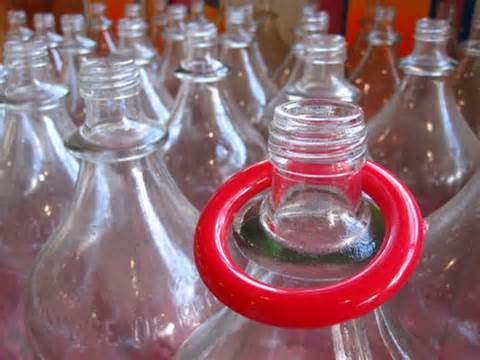
“You ever land one of those on a bottle?” Gerry wondered. I had been pulling plastic rings from a bucket and tossing them oe by one at a massive configuration of bottles in the ring toss.
“Twice,” I responded.
“Twice out of how many?” Gerry asked.
“I dunno, maybe 10,000,” I said. “It’s not impossible, but it is highly incumbent upon luck. Either that or some bullshit method of cheating.”
“What d’you mean, like leaning over and placing a ring on top of one of the bottles?”
“That’s one way of doing it,” I acknowledged. “But placing a ring usually requires the aid of an accomplice, y’know, like somebody who might be willing to distract the operator while another does the placing. Bill Morey, Jr has actually outlawed the first row of bottles all the way around the game in an effort to minimize that sort of thing.”
“Can he do that?” Gerry asked.
“Of course,” I told him. “So long as we post it on the rules and the rules are, in turn, posted on every facade around the outlet, he can pretty much do whatever he wants. The point being, if you’re going to cheat the best way to do it is to either throw a cracked ring or to throw two rings at a time.”
I grabbed a pair of rings from out of the bucket, then layered them one of the top of the other. I leaned forward and lobbed the rings gently toward the first row of bottles. Upon contact, the bottom ring ricocheted off of the top ring, before standing pat.
“Winner,” I said, jokingly.
“Do a lot of people get away with that?” Gerry asked.
“Well, again, the rules clearly state that you can only throw one ring at a time,” I said. “But I imagine some people still get away with it, especially when matters happen to get hectic around here.”
“So what do you do?”
“What can you do?” I said. “You’ve worked a handful of games up on this boardwalk. Once the joint starts poppin’, you can’t risk losing your crowd over an argument. It kills your momentum. So unless you’ve caught some motherfucker red-handed, you simply take the hit and keep on moving. Oddly enough, you can sidestep the overwhelming majority of that nonsense by developing a well-trained ear.”
“You mean like listening for the sound of two rings clanging off each other?”
“Exactly,” I responded. “On top of which, a cracked ring makes a more hollow sound whenever it bounces off of any of these bottles. Cracked rings are also a lot more likely to land flat upon the neck. So every time you happen to hear that hollow zing,” I said, snapping my fingers for effect, “you do your best to locate the offending ring immediately, then break it in half. If the same player pulls that shit again – y’know, like throwing two rings or cracking another ring before he tosses it – you have every right to either tell that low-rent scoundrel to fuck off or call the goddamn police. Either way, he’s the one who winds up looking like the asshole, not you.”
***
I felt a certain admiration for Gerry Vessels, having formed a lasting friendship with the guy toward the end of my first summer. Gerry had gotten me my first full-time job working on the boardwalk. He was the first – and only – person I had ever dropped acid with. More importantly, he was one of the only people still remaining from my initial group of friends. I mean, Bobbi Jean and Billy Lee were both still kicking around, sure. But the two of them had all but given up on Wildwood at that point, what with Bobbi Jean having gotten involved in a long-distance relationship and Billy Lee constantly traveling back and forth between Poplar Avenue and Lancaster.
Gerry Vessels remained the lone constant. Much like me, he had originally moved to Wildwood in the interest of escaping something. Unlike me, Gerry was perennially struggling to make a significant break from the sordid past he’d left behind. The majority of Gerry’s childhood friends were still hustling to make a go of it back in North Philadelphia, with the primary difference being that the stakes were infinitely heightened now – lead pipes and knives were giving way to hair trigger .44s; probation and parole were giving way to long-term sentences. Gerry’s old neighborhood resembled an atmosphere of constant anxiety, one in which the cross streets intersected like lines on a battlefield and the telephone wires hung down low with ghetto tributes to the dead.
It was into this dank haze that Gerry drove that Saturday in June, uncertain just how far he might be willing to go in order to satisfy the balance.
“So what happened next?” I prodded.
“What happened when?” Gerry responded.
“What happened once you and your buddies went out looking for this guy?”
“Oh, right,” Gerry said. “Well, we rolled up on this house where Mikey Rollins was supposed to be. Then I jumped out and started pounding on the door. Only nobody’s answering, see. But I look over to my left and I see this fucking crackhead peeking out from just around the corner. So I wander over there and it turns out it’s this fucking Kenzo by the name of One-Eyed Larry …”
“One-Eyed Larry?” I said.
“It’s a long story,” Gerry explained. “Dude got poked in the eye with a metal dart way back when we were in high school. Anyway, I was in no fucking mood, so instead of pussyfootin’ around I just kind of grabbed that motherfucker by the throat and jacked him up.”
“Did he tell you where Mikey Rollins was?”
“No, he didn’t,” Gerry explained. “He kept on fucking stuttering about how he hadn’t seen that motherfucker for days. I mean, I had my hands wrapped around this fucker’s neck so tight that I could feel the blood trickling out beneath my fingernails. Eventually, it got to a point where I actually started to feel bad for the guy.”
“So what did you do?” I wondered.
“I let him down,” Gerry said. “Then I told him to be sure and pass the fucking message along that if I happened to run into Mikey Rollins again, I was gonna fucking kill him.”
“So is that it?” I shrugged my shoulders.
“It is until I see that motherfucker again.”
I was leaning back against the opposite pillar now, arms crossed, looking off toward the bumper cars.
“What?” Gerry said.
“Nothing,” I responded.
“No, seriously,” Gerry insisted. “What?”
“Why not just let it go?” I said, turning round to face him. “I mean, I understand what you’re telling me about standing up for your mother and what not, but this guy sounds like a complete fucking wastoid. And yet, the way you’re talking, you make it sound like you went down there prepared to do something that could’ve cost you the next 30-40 years of your life. And for what? Some fucking crackhead who probably doesn’t even remember calling your mother’s house that night in the first place? Think about it, Ger: what are you actually gonna do when and if you stumble into this motherfucker again?”
“I’m pretty sure you know exactly what I’m gonna do,” Gerry responded.
“See?” I said. “That’s it. Right there. That’s what I’m talking about. All this cryptic nonsense. You keep on pursuing all of this and sooner or later something really bad is gonna happen. And you know it. You know it. Win or lose, there’s still no way you come of this unscathed.”
“Y’know, I don’t hear you complaining when you’re calling me up at 11:30 at night to shuffle up here and save you from some asshole who’s standing out front of the pier, waiting for you to get off work.”
“That’s different,” I asserted. “You’re talking about a situation where I was simply trying to avoid a confrontation.”
“What you were trying to avoid was getting your ass kicked,” Gerry said.
“OK. Fair enough” I said. “But you, man, it’s suddenly like you’re out there just looking for it. Y’know, I’ve heard a couple of stories about what you’ve been up to this summer, and I gotta tell you, it sure as shit ain’t good. Keep in mind, I’ve buttoned my lip about a lot of stuff over the past couple of seasons, a lot of stuff … even when some of that stuff just so happened to have a negativeimpact on me.”
“Yeah, well, have you ever considered that maybe I’m not all that happy about the direction things have been going lately, either?”
“No, you know what? I really haven’t,” I said. “I mean, I barely even get an opportunity to talk to you these days. Every little thing I hear is coming back to me second-hand.”
“Well, then, allow me to break it down for you,” Gerry shot back, emphatically. “There are mornings when I wake up and I feel like there’s already a bullet out there somewhere with my name written on it.”
“What the fuck are you talking about?” I said.
“Nothing,” Gerry said. He stood up, clapping loose grains of sand off of his shorts. “Don’t worry about it.”
I remained seated on the counter, looking up at Gerry as I tugged my shirt, lightly fanning myself beneath the canopy.
“What time you go on break?” Gerry asked me.
“I’ve been on break ever since you wandered over here,” I said. “I’m scheduled back around seven.”
“Perfect,” Gerry said. “What d’you say you and I go grab ourselves a decent bite to eat?”
“No can do,” I told him. “I’m exhausted. I was out drinking until 6 am this morning. As soon as you and I are done talking here, I’m headed directly down to the stockroom to catch a little bit of shut-eye.”
“Just my luck,” Gerry muttered. “You get a pass for tonight. But let me know what your schedule looks like after Labor Day. Maybe we can fire up the grill over at my place and do ourselves a little day drinking.”
“I hear that,” I assured him.
With that Gerry Vessels sauntered off, lumbering south along the promenade. I maintained a vigilant eye, watching until he disappeared down the off-ramp over on Juniper. Then I scampered across the thoroughfare to B&B’s Boardwalk Pub, where my cheesesteak and cheese fries were already waiting.
“Naturally, in the milieu aforesaid, I was thought somewhat eccentric, which was fair enough, and stupid, which I suitably resented. Still, I despised school – or schools, for I was always changing from one to another – and year after year failed the simplest subjects out of loathing and boredom. I played hooky at least twice a week and was always running away from home. Once I ran away with a friend who lived across the street – a girl much older than myself who in later life achieved a certain fame because she murdered a half-dozen people and was electrocuted at Sing Sing. Someone wrote a book about her. They called her the Lonely Hearts Killer. But there, I’m wandering again. Well, finally, I guess I was around 12, the principal at the school I was attending paid a call on my family, and told them that in his opinion, and in the opinion of the faculty, I was “subnormal”. He thought it would be sensible, the humane action, to send me to some special school equipped to handle backward brats. Whatever they may have privately felt, my family as a whole took official umbrage, and in an effort to prove I wasn’t subnormal, pronto packed me off to a psychiatric study clinic at a university in the east where I had my I.Q. inspected. I enjoyed it thoroughly and – guess what? – came home a genius, so proclaimed by science. I don’t know who was the more appalled: my former teachers, who refused to believe it, or my family, who didn’t want to believe it – they’d just hoped to be told I was a nice normal boy. Ha ha! But as for me, I was exceedingly pleased – went around staring at myself in mirrors and sucking in my cheeks and thinking over in my mind, my lad, you and Flaubert – or Maupassant or Mansfield or Proust or Chekhov or Wolfe, whoever was the idol of the moment. I began writing in fearful earnest – my mind zoomed all night every night, and I don’t think I really slept for several years. Not until I discovered that whisky could relax me. I was too young, 15, to buy it myself, but I had a few older friends who were most obliging in this respect and I soon accumulated a suitcase full of bottles, everything from blackberry brandy to bourbon. I kept the suitcase hidden in a closet. Most of my drinking was done in the late afternoon; then I’d chew a handful of Sen Sen and go down to dinner, where my behavior, my glazed silences, gradually grew into a source of general consternation. One of my relatives used to say, “Really, if I didn’t know better, I’d swear he was dead drunk.” Well, of course, this little comedy, if such it was, ended in discovery and some disaster, and it was many a moon before I touched another drop. But I seem to be off the track again. You asked about encouragement. The first person who ever really helped me was, strangely, a teacher. An English teacher I had in high school, Catherine Wood, who backed my ambitions in every way, and to whom I shall always be grateful. Later on, from the time I first began to publish, I had all the encouragement anyone could ever want, notably from Margarita Smith, fiction editor of Mademoiselle, Mary Louise Aswell of Harper’s Bazaar, and Robert Linscott of Random House. You would have to be a glutton indeed to ask for more good luck and fortune than I had at the beginning of my career.”