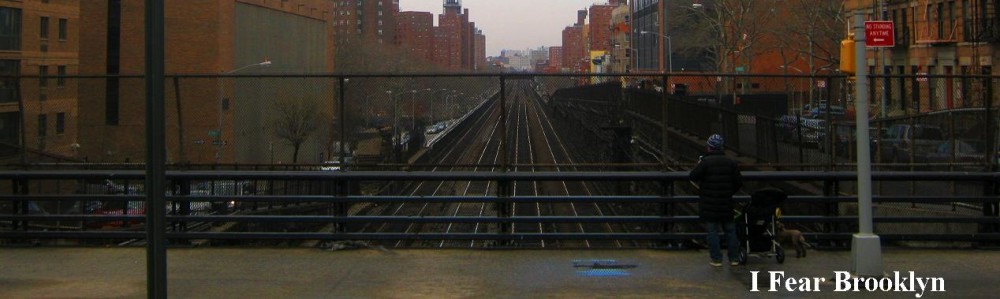
Bob Hill’s America: Day Six (From The Mountains to The Prairies)

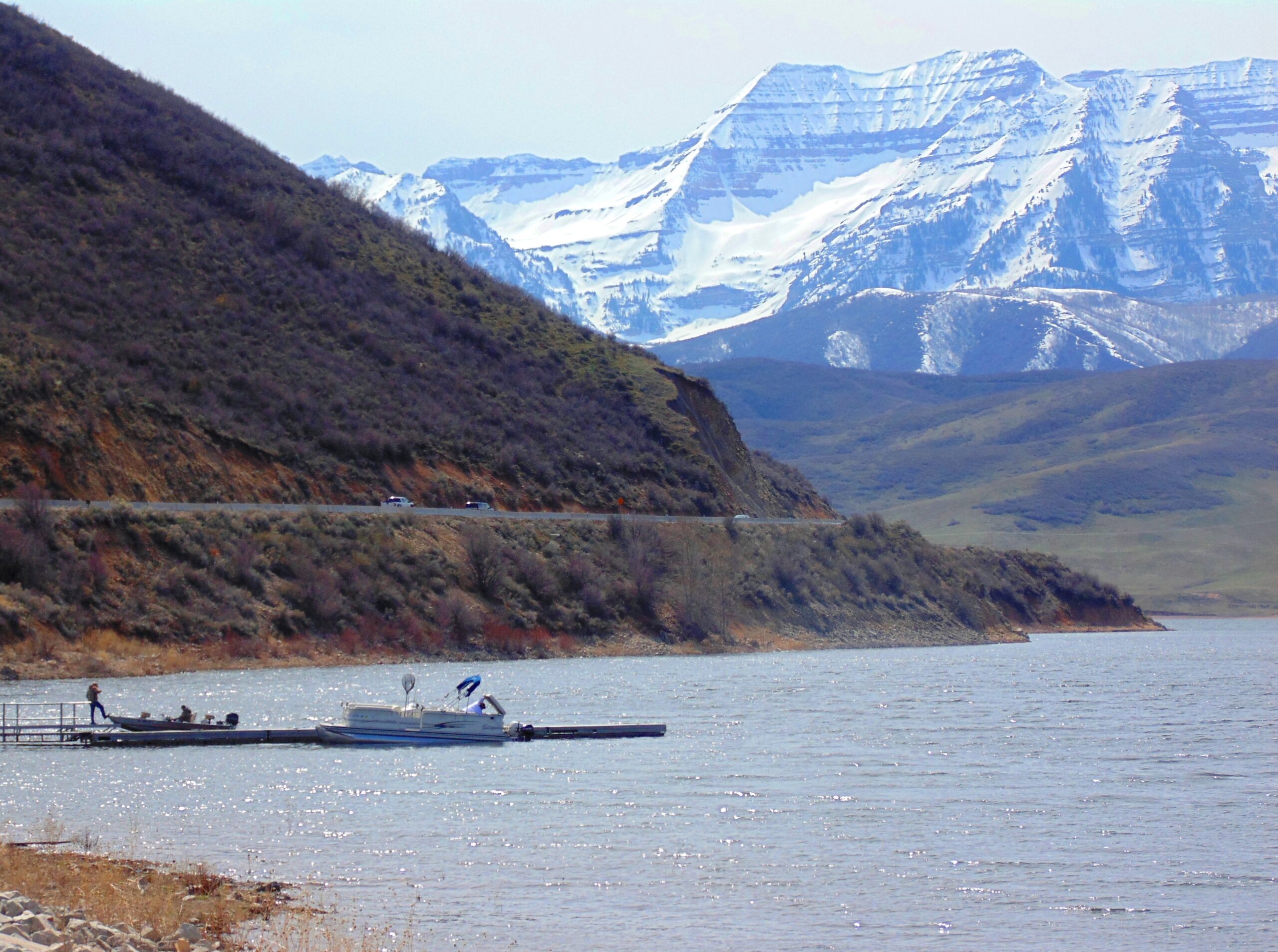
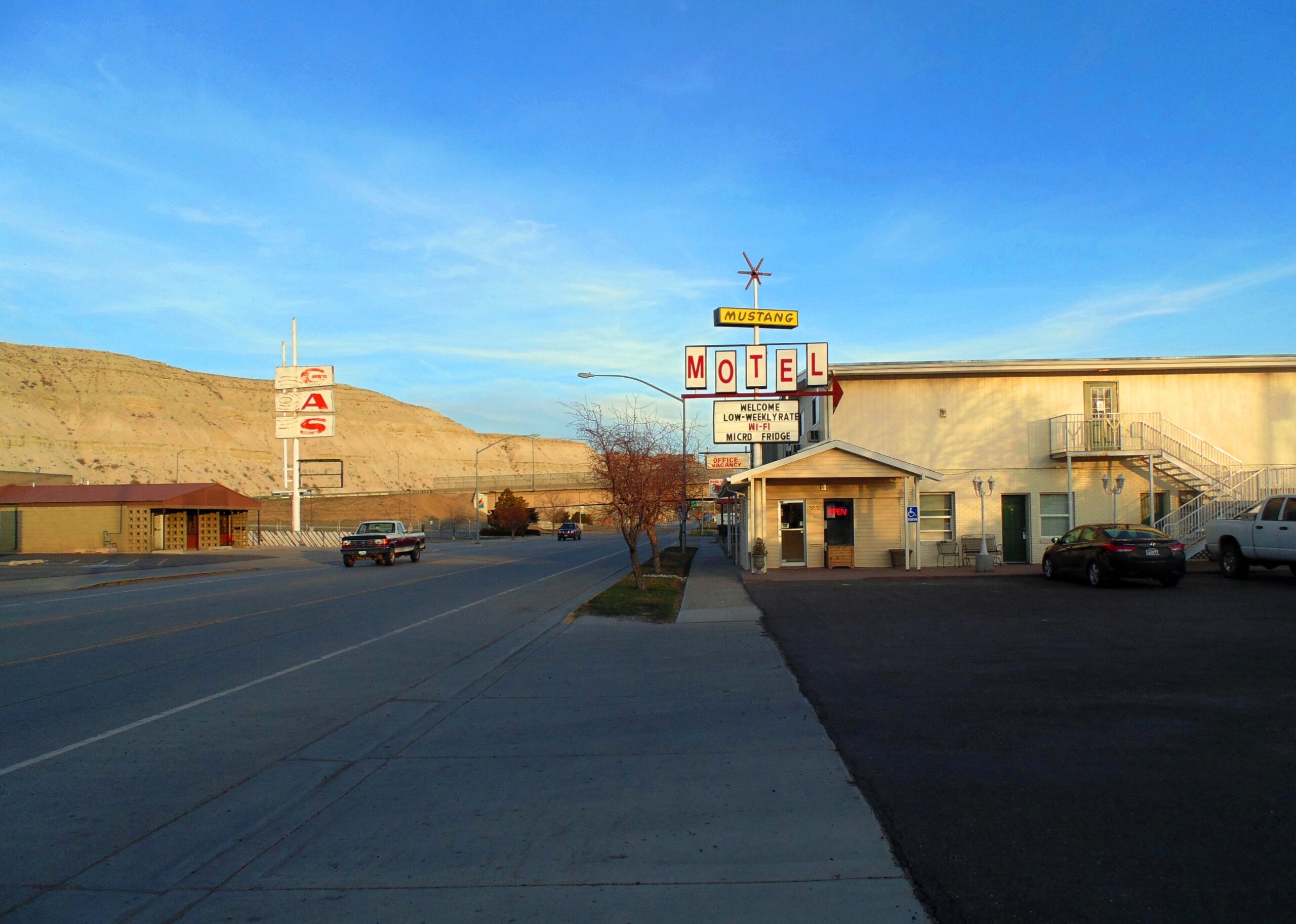
Weaving, winding, carving deep through snow-capped mountains, Utah summits grasping weakly to what still remains of winter. The Douglas firs fall down in breakneck order, the empty streets feel like the backdrop from some movie. I stop for gas outside Park City and the attendant can’t believe that I’m an “actual New Yorker.” I think better of explaining I identify much more with Philadelphia and continue driving south along the interstate. It is twilight when I break the plane of northwest Arizona. Looking off toward my left I am reminded of the final stanza from Bob Dylan’s “Last Thoughts on Woody Guthrie”:
You can either go to the church of your choice,
Or you can go to Brooklyn State Hospital.
You’ll find God in the church of your choice,
You’ll find Woody Guthrie in Brooklyn State Hospital.

And though it’s only my opinion,
I may be right or wrong,
You’ll find them both,
In the Grand Canyon
At sundown.

Bob Hill’s America: General Index

The Amazing Spider-Man 2 (AKA ‘The Case Against Stan Lee Syndrome’)


The problem with The Amazing Spider-Man 2 – in a word – is Stan Lee. That’s two words, I know. But they both refer to one concept, that being the idea that blatant, shameless self-reference is the bane of any worthwhile superhero franchise. This is not to say there’s no place for humor or lightheartedness in the Marvel/DC Universe because, quite frankly, humor is what allows both comic books and their celluloid counterparts to maintain a sense of buoyancy. But this odd, ongoing tradition of having Stan Lee – a giant in the industry – pop up throughout the majority of Marvel movies is embarrassing, if not entirely off-putting. These cameos, particularly the more recent ones, take one out of the suspended reality most superhero movies have come to rely on. And for what? To have a 91-year old man with unsavory acting chops deliver some throw-away one-liner? No, sir. There really is no place for it. Least of all in a franchise the likes of Spider-Man, a franchise that’s still battling to overcome the specter of its predecessor (Sam Raimi – for anyone who happens to be keeping score – is now up 2-0 in terms of critical superiority).

The Stan Lee issue speaks to something much larger, of course – the use of in-jokes and subtle winks to compensate for – or distract from – a general lack of substantive writing. Consider, by way of example, that during the opening action sequence of The Amazing Spider-Man 2 there is not only an unnecessary cameo by Lee, but two separate references to the original Spider-Man theme. The first features the theme serving as Peter Parker’s ringtone, the second Parker whistling the tune while in costume (less than one minute later). Cute, right? Wrong. Both references serve no other purpose save for distracting from the matter at hand, forcing viewers to temporarily consider how it might be possible for a 47-year old song to exist in a world where Spider-Man only recently came into being. One might argue this is a minor issue … and one might be correct. But when the joke’s repeated and then stomped on before being topped off by some one-liner from Stan Lee, the cumulative effect becomes stultifying, bordering upon inane.

What’s the point, beyond seeming coy? Die-hard comic fans are going to see each of these movies regardless of whether Lee appears in them or not. The remainder of the box office public doesn’t care. Meanwhile, as a writer/director, you wind up forcing a square peg into a round hole and for what? I mean, can you imagine Christian Bale running by Michael Keaton amidst the dark-end streets of Gotham only to have Keaton turn to the camera and say, “Hey, where’d he get that costume?” What if every Marvel comic book was required to include a cameo by Stan Lee? Poppycock, I say. Nothing more than cornball nonsense … and that, for any of you who might be wondering, is precisely what The Amazing Spider-Man 2 feels like. Dane DeHaan is fantastic and Andrew Garfield is OK, but it’s not enough to save a movie that’s lacking any soul, any deep-down sense of what people actually relate to in terms of style, motivation, layered conflicts and betrayal. The movie’s fun and the special effects are dazzling, but there’s very little left to latch on to once the CGI has run its course. I’d suggest that maybe what it needs is a little bit more, but the reality is The Amazing Spider-Man 2 would have benefited a great deal from trying to cram in just a little bit less.

(The Amazing Spider-Man 2 opens in theaters nationwide today.)

Bob Hill’s America: Day Five (Wyoming)

The air falls fresh and thinner at this altitude, the gusts like offshore gales. The roads come filled with tumbleweed, the dirt lays soft like sand. The grass grows sharp and arid, the freight trains last forever. My room in Green River costs $37 without tax. There’s no number on the door and the knob jams before opening, but the space itself proves welcoming – two-cup coffee maker, full-service cable, a corner table, reliable wifi, a brand-new bathroom, a queen-size bed … double the amenities of several four-star hotels.

The night wind slips down low across the prairies, rattling hard against the window as I lie awake in bed. I am watching a cable access show about the suicide rate throughout this region. Wyoming, as it turns out, is part of a cluster of mid-western states, all of which perennially compete for the top five suicide rates in the country.

Bob Hill’s America: General Index

Bob Hill’s America: Day Four (Nebraska)

Nebraska is the most beautifully barren stretch of land I’ve ever known. Gold and desolate, wind-swept prairies, low-hanging clouds that bunch and tear like cotton, stiff-whistling winds that bob and weave through rusted wire, empty lanes where old jalopies cruise at 95 for hours. The distant farms appear so grand it makes one question states like Pennsylvania and Ohio, states where rotting barns and livestock brush right up against the road.

Bruce Springsteen, Alexander Payne, Adam Duritz of the Counting Crows … Nebraska is a place where “Rain on The Scarecrow” still makes a perfect world of sense, where the homeless nearly outweigh the young executives, where the mid-day sky beams bright and tranquil, despite dark storm clouds on the rise.

Bob Hill’s America: General Index

Bob Hill’s America: Day Three (Why Walk When You Can Take a Train?)

Home of the World’s Largest Golf Tee, Home of The World’s Largest Windchime, Home of the Annual Popcorn Festival … everything along this stretch declares itself to be the bullshit home of something. The selling points are meager, designed to draw fast-passing motorists beyond the off-ramp into doldrums, beyond the cheap motels and gas pumps into whatever circus tent or freak show the chamber of commerce can procure.
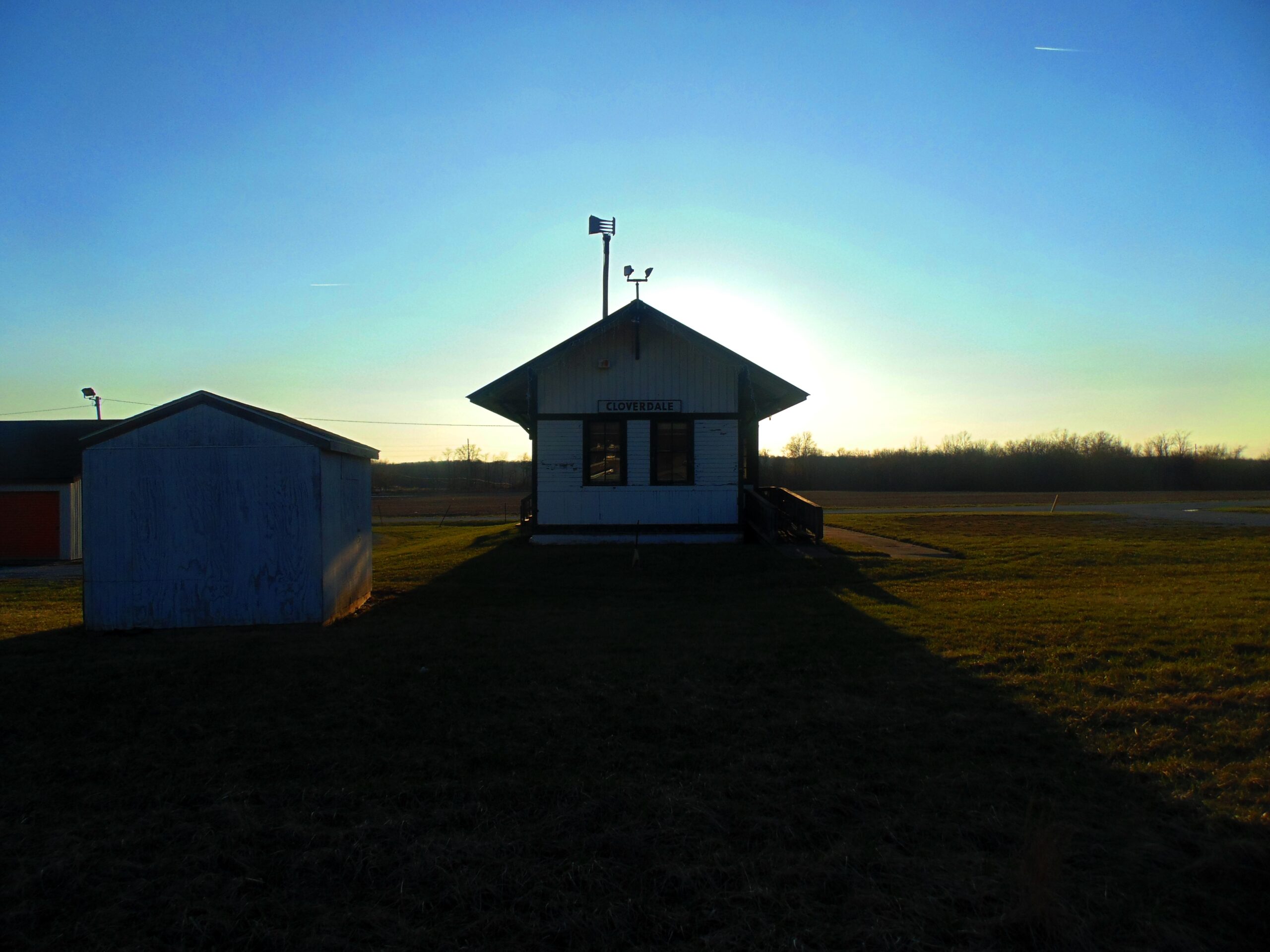
While driving through St. Louis I stop off to visit the World Chess Hall of Fame, where I find myself consumed with the phrase “Pax Americana.” Thirty minutes later I am weaving west along I-70, the DJ sending “Highway to Hell” out to “The hottest girl in Wartville.” From there it’s north-northwest along I-29, where the rural routes bear names like H-I-J and K. I check into a Super 8 beyond Topeka, its office doors within a stone’s throw of the highway. One quick left and then a right, and I’m off and running once again the following morning.

Bob Hill’s America: General Index

Bob Hill’s America: Day Two (The Flatlands)

I meet Keith outside a rest stop in Indiana. Keith is a truck driver, slumped over and shapeless, wearing XXL sweat pants that clash beneath his paisley. Keith moved down this way “a while ago,” satisfying a mandatory prerequisite for his job. These days, Keith splits his time between the big rig and his God. He sneaks in references to the messiah at every turn, whether discussing the 90-year history of Route 66 or the robust arts community that exists outside of Omaha. We shake hands upon departing, and I offer Keith best wishes. “I leave it all up to the man in charge,” Keith assures me. He is pointing off toward an empty sky, a soiled Band-Aid dangling listless from his arm.

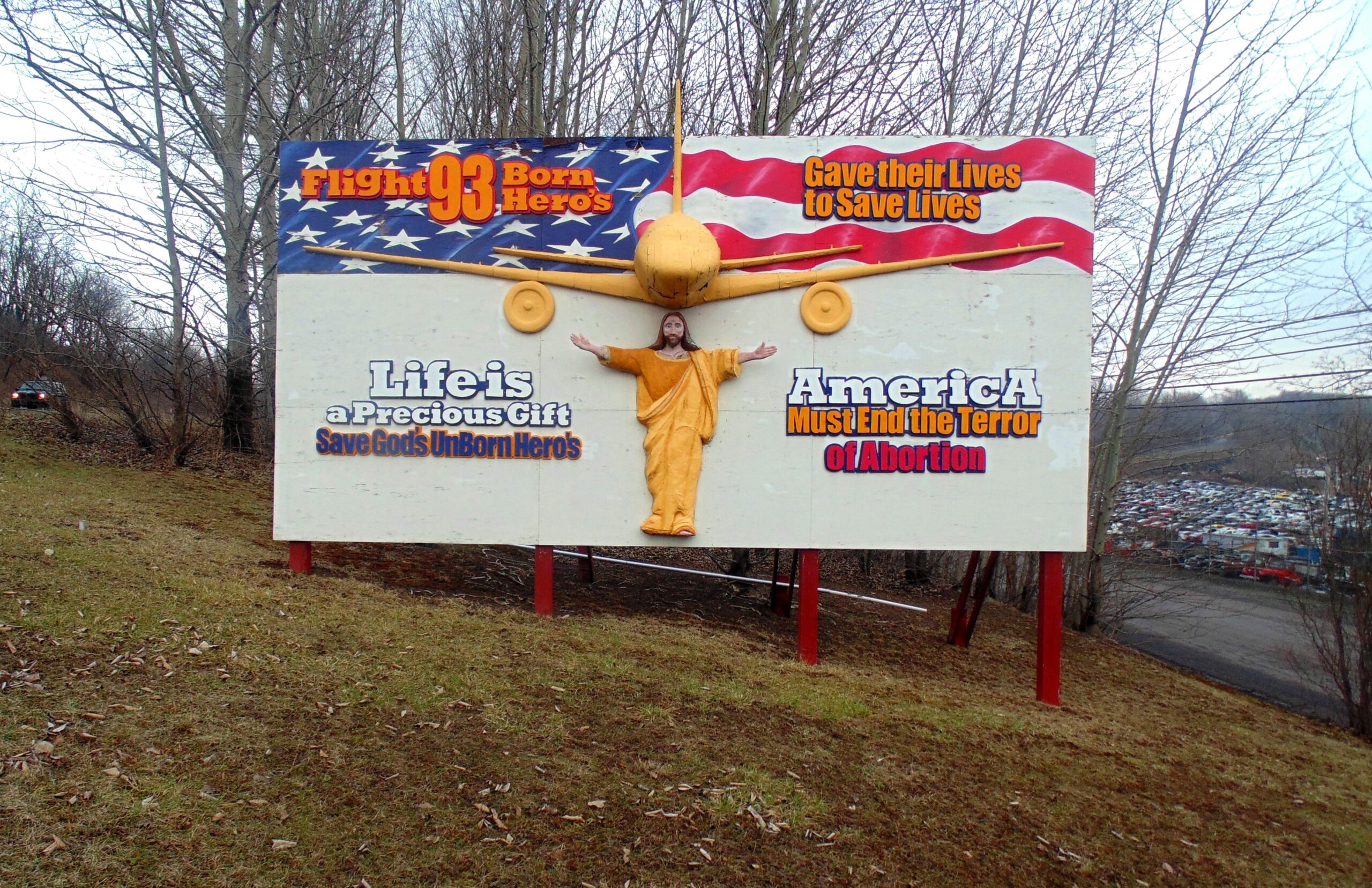
The story of the Flatlands is a story bathed in Christianity – a long-lost tug of war between an America that never was and the capitalist regime it’s since become. Here in the Flatlands there are feuding steeples all but dwarfed by giant crosses, Christian universities located on opposite ends of the same block. There are billboards draped in crimson, plagued with slogans about God and love and Christ and death; bankrupt houses sinking low into the ground. There are burned-out train cars, rusting silos, stripped-down plants that haven’t seen good work in years.

“I come here every evening,” an elderly woman informs me. We are standing in an open field along the northern edge of Cloverdale. “I search the brambles for my Jackie.” Jackie is a house cat. Jackie flew the coop after his lifemate disappeared. It’s been several weeks now since poor Jackie hit the bricks. And yet his owner still comes out here right at sundown, unwilling – or perhaps even unable – to acknowledge the bustling traffic less than 40 yards away.

Bob Hill’s America: General Index

Bob Hill’s America: Day One (The Vital Signs of Pennsylvania)


The first day is a day of reminders. Reminders to disconnect appliances, to lock all windows and doors, to double-check for laptop and adaptor, Paxil, toiletries and phone. The first day is a day of refamiliarizing myself with the mechanisms of a motor vehicle, with an FM dial forever rife with songs by Journey, Fleetwood Mac and the Doobie Brothers (everywhere the goddamn Doobie Brothers). The first day is a day of reorienting myself to a normal daylight schedule, to a life out on the road.

I am off now, free and clear, American flags hanging in tatters from the chain-link overpasses above. Painted buses, chutes and ladders, an abandoned factory, a rotting farmhouse … Kittaninny, Tuscarora, FM stations bearing handles like The River and The Peak; Michael Savage down on 103, denouncing the scourge of anti-white racism in America.

I pass a string of pines beyond the watershed, struck down and left for dead along the roadside. It is dusk now, queer and foggy, and I check into a motel southeast of Pittsburgh. I have driven 500 miles. I have another 6,500 left to go.

Bob Hill’s America: General Index

Film Capsule: The Unknown Known


Errol Morris’s background as a private investigator might explain his unrivaled ability to gain access and answers, to know when to push or pull back, how to dig and where, what to look for, how to supply interviewees with just enough rope to let them hang themselves. Alex Gibney has this ability, to a lesser degree, as does Ken Burns. But they take their cues from Morris, who, in turn, took many cues from Werner Herzog.

Morris’s most recent documentary, The Unknown Known, focuses almost entirely on the labyrinthine Defense record of Donald Rumsfeld, in much the same way Morris’s Fog of War focused on the record of Robert McNamara. While not an overt indictment of Rumsfeld (one could actually make the case this film is a tribute to Rumsfeld’s genius) The Unknown Known does an exceptional job of exposing Rumsfeld’s blind spots. As an interviewee, Rumsfeld shucks and jives, conversationally perjuring himself with all the deftness of a swashbuckler.

The name of Morris’s film is derived from a 2002 press conference. Rumsfeld, while responding to a question about terrorist ties in Iraq, insisted: “There are known knowns. There are things that we know that we know. We also know there are known unknowns; that is to say we know there are some things we do not know. But there are also unknown unknowns, the ones we don’t know we don’t know.”

Here we find both the genius and the conundrum – an equivocator so complex he steered a country into war. Morris conducted over 30 hours worth of interviews with Rumsfeld in conjunction with the film, and Rumsfeld – to his credit – breezed his way through every minute. He’s a marvel to behold, like watching an aging champion lace ’em up for one last spar. The Unknown Known is a compelling character study, so rich that while one may or may not come out of with a more sympathetic view, there’s very little risk of coming out of it with no new view at all.

(The Unknown Known opens in limited release this Friday.)

Charlie LeDuff on The Bankruptcy of Detroit (2013)

“What happened? How Did Detroit  the most iconic of American cities  become a cadaver?

Detroit’s slide was long and inexorable. You might blame it on white racism and legal mortgage covenants that barred blacks from living anywhere but the most squalid ghettos.

You might blame the city’s collapse on the 1967 riot and the white flight that followed. You might blame it on Coleman Young – the city’s first black mayor – and his culture of corruption and cronyism.

You could blame it on the gas shocks of the seventies, which opened the door to foreign car competition.

You might point to the trade agreements of the Clinton years that allowed American manufacturers to leave the country by the back door. 

You might blame the UAW, which demanded things like near-full pay for idle workers, or the myopic management, who instead of saying no took their piece and simply tacked the cost onto the price of the car.

Then there is the thought that Detroit was simply a boomtown that went bust, a city that began to fall apart the minute Henry Ford began to build it. The car made Detroit and the car unmade Detroit. Detroit was built in some ways to be disposable. The auto industry allowed for sprawl. It allowed a man to escape the smoldering city with its grubby factory and steaming smokestacks.

Detroit actually began its decline in population during the 1950s, precisely the time that Detroit  and the United States  was at its peak. And while Detroit led the nation in per capita income and home ownership, automation and the beginnings of foreign competition were forcing automobile companies like Packard to shutter their doors. That factory closed in 1956 and was left to rot, pulling down the east side, which pulled down the city.

By 1958, 20% of the Detroit workforce was jobless. Not to worry, the city, rich with manufacturing revenue, had its own welfare system  a decade before Johnson’s Great Society. The city provided healthcare, fuel and rent and gave $10 every week to adults for food; $5 to children. Word of the free milk and honey made its way down South and the poor “Negros” and “Hillbillies” flooded in by train. If it wasn’t for them, the city’s population would’ve sunk further than it did. 

Even the downtown train station  the Michigan Central Rail Depot  was ill fated from birth. Three weeks after it opened in 1913, Henry Ford announced the $5 workday, causing the ascension of Detroit and the inevitable bust of the train in America.

People came from Poland, from Ireland and from the sharecroppers’ shacks of Mississippi. The American middle class was born here.

And the Michigan Central Rail Depot has been set upon by vandals. The mahogany bannisters have been looted, as have the copper wiring, the marble walls. In a city full of ghost skyscrapers, the depot is Detroit’s Flying Dutchman, its gravestone, a mocking symbol of its lost greatness. On a clear day, you can see straight over the river to Canada, right through the windowless building.” 

(Excerpted from Detroit: An American Autopsy)