Click through for full-size gallery. Continue reading
Author Archives: BobHill
Classic Capsule: Once Upon a Time in The West (1968)
Focus groups killed the classic Western … focus groups and the notion that every significant plot point needed to be charted, categorized, cataloged and certified before a project could move forward. And what a tragedy that is, really. I mean, there was such an artform to those sprawling early Westerns – a steadfast appreciation for the fact that low-rent trollops were actually low-rent trollops, heroes and villains were morally ambivalent, and the average cowpoke ran so ripe that giant horseflies took to nesting on his face.
That world is all but gone now, rendered moot by the fact there is no big-budget formula that accounts for the violent killing of woman and children, no allowance for rape as a matter of historical record, no reconciling the fact that – at least in the wild frontier days of yore – mercy and compassion were the vestige of the weak. No, sir. Those amoral vices only test well with the Mafia audience. In fact, more often than not, the modern Western feels more like an homage – a glossy caricature brimming over with white-wash veneers. You’ll not find so much as an out-of-place scratch among the lead cast, let alone the usual cadre of freaks and geeks that an honest-to-goodness classic Western might actually call for.
At the forefront of the Western genre throughout the 1960s was Italian Writer/Director Sergio Leone – Lord of The Revenge Epic, Maestro of the Dollars Trilogy, known in various circles as the man who turned down Paramount’s Godfather. While most critics point to The Good, The Bad and The Ugly as the absolute pinnacle of Leone’s career (if not the Western genre, altogether), it was Leone’s follow-up, Once Upon a Time in The West, that inextricably solidified his legacy. Panned by critics and shunned by mainstream audiences, Leone’s masterpiece has since been added to Time Magazine‘s list of the 100 Greatest Films of All-Time. Certain aspects of the movie have also popped up in everything from Back to The Future to Inglourious Basterds.
Once Upon a Time‘s slow pacing and stiff cues play like a clinic in film tension. The good guys are bad, the bad guys are good, and the story unfolds retroactively, creating a multi-layered effect that keeps viewers guessing straight up to – and through – the climax. Once Upon a Time is long and labored and it’s sometimes taxing to endure. But the story is so rich and the payoff so significant, that all the requisite down time doesn’t really seem to matter. In the final analysis, Once Upon a Time remains a classic, constructed in a signature mold by the greatest director the Western genre’s ever known. It stands as living proof that Charles Bronson was actually once young, that Henry Fonda and Jason Robards never were, and that composer Ennio Morricone was capable of doing the same thing with a few notes and a harmonica that Johnny Williams was capable of doing via two notes and a piano. Slap it all together and what you’re left with is one hell of a kick-ass Western, the kind we shant see the likes of again.
(Once Upon a Time in The West is currently streaming via Netflix.) Continue reading
Mario Puzo on ‘Retrospective Falsification’ (1972)
“The young are impatient about change because they cannot grasp the power of time itself; not only as the enemy of flesh, the very germ of death, but as a benign cancer. As the young cannot grasp really that love must be a victim of time, so too they cannot grasp that injustices – the economic and family traps of living – can also fall victim to time. And so I really thought that I would spend the rest of my life as a railroad clerk. That I would never be a writer. That I would be married and have children and go to Christenings and funerals and visit my mother on a Sunday afternoon. That I would never own an automobile or a house. That I would never see Europe, Paris and Rome and Greece I was reading about in books from the public library. That I was hopelessly trapped by my family, by society, by my lack of skills and education. But I escaped again. At the age of 18 I started dreaming about the happiness of my childhood, as later at the age of 30 I would dream about the joys of my lost adolescence, as at the age of 35 I was to dream about the wonderful time I had in the Army which I hated being in, as at the age of 45 I dreamed about the happy, struggling years of being a devoted husband and loving father. I had the most valuable of human gifts, that of retrospective falsification:
remembering the good and not the bad.”
Happy Memorial Day Weekend
Galleria: A Different Kind of Order: The International Center of Photography’s Triennial Exhibition
 Consider this ICP’s State of The Union Address – a triannual installation (or collection of installations) that explores the ongoing evolution of photography. Curators have assembled an extremely progressive line-up this time around, incorporating audio, video, 3-D, digital, photorealism, lightbox, and more – the majority of it focused upon social activism in the field. There are moments when this exhibition feels a little schizophrenic, what with each passing display offering some new-fangled take on the role of photojournalism. But there are also individual works that are well worth exploring – chief among them Mikhael Subotzky and Patrick Waterhouse’s light-box collage from Ponte City (a 54-story residential tower in Johannesburg, South Africa). Go because ICP is well worth supporting, and so are the 28 artists whose work is on view. But don’t be surprised if you find yourself yearning for the halcyon days of good, old-fashioned photography. Simple may be old-hat, but it also has a way of connecting with people on a very human – if not wholly humane – level.
(A Different Kind of Order runs from now until September 8th @ The International Center of Photography, $14, 1133 Avenue of the Americas & 43rd Street)
Five More For The Offing:
- The Open Window: Objects, Rooms, and Landscapes by Helen Berggruen @ Fischbach Gallery (Free, through May 25th, 210 11th Avenue, between 24th & 25th Street)
- Recent Paintings by Kenne Gregoire @ Arcadia Gallery (Free, through 5/31, 51 Greene Street)
- Cosmologies by Marianne Van Lent @ The Painting Center (Free, through June 15th, 547 West 27th Street, Suite 500)
- Gueule De Bois by Quentin Garel @ Bertrand Delacroix Gallery (Free, through June 1st, 535 West 25th Street)
- Rain Room by Random International @ The Museum of Modern Art ($25, through July 28th, 11 West 53rd Street)
Pete Townshend on ‘Positive Assistance Vibration’ (1968)
“The breed of people that I like the most – ignoring the people I don’t like the most – people I like the most around me, in music, are the ones from whom I get what I would call – I know this is a weird thing but I’ve had it before – what I would call a ‘Positive Assistance Vibration,’ as though you were getting some kind of positive buzz from somebody. It’s a very negative concept, but it is the difference between someone having a role in what you’re doing and being there as an ornament or as an object of the performance or as a result of an engagement or something, rather than people who have a purpose. There’s got to be a purpose behind everything. In pop, the purpose is the whole thing, the whole thing with the people, people in the industry and everything unified and coming together and working together in one form towards one direction and everything. It’s got to eliminate all the shit. What I’m trying to avoid saying is the fact that the whole problem with the groupies is that they’re supposed to be playing a part in the role of pop music. But they’re not. It’s not just the group they’re riding along with, they’re riding along with pop itself. The audience out there, on the other hand, is playing a part. And we’re playing a part because we’re the fucking group and you’re playing a part because you’re writing an article about it. But they seem to have no role at all and I can never understand it. How can anyone be content to just act as the parasities of the glory, parasites of the booze, parasites of the grass, parasites of the lust, you know and everything. They’re just total parasites and I couldn’t dig it. I couldn’t get into it. I could never understand them. They’re a breed apart from me. Once a fucking groupie gets together and does something constructive, then I’m back with ’em again.
Rock of Ages
Click through for full-size gallery.
Frank Zappa on Organized Religion (1986)
“All the early bias against rock n roll started off as a racist bias. And then as rock n roll started to be performed by white people, then that shifted to something else. But at the heart of it is kind of a sick attitude toward music and toward what people do for enjoyment. People are entitled to enjoy themselves. You have a right to enjoy yourself, you do not have the right to hurt someone else while you’re enjoying yourself … You know what has caused more wars, more unhappiness, more misery, more problems than anything else in history is religion. That is the basis of it. But you have to look at what really happened there, because it is the people that sell you the religion and the way they try to mold you into using their product. When they say, ‘We’ve got the only one. Ours is the best. Those people don’t believe like we do.’ that leads to war.”
Moving On: The Vacationer
 The knocking began the same way it always did, a few minutes after I had arrived home from work. It was followed by several seconds of subtle tinkering with the knob, then a call from the other side of the door.
“It’s Chris,” the caller said.
Of course it was Chris. It had been Chris at this time for the past seven nights. Chris lived down the hall, and – ever since he had taken to showing up unannounced – I’d been doing my utmost to avoid him … hunching low beneath his peephole, walking barefoot down the hall. In the end it made no difference. Sooner or later, Chris would either hear me in my apartment or he’d spot a sliver of light beneath my door. And then he’d knock, as he was knocking now.
And so I wandered to the door, slid the bolt and said, “It’s open,” before sitting back down at the kitchen table. Chris made his entrance, slow and easy. He hovered over me, staring blankly at my cheesesteak. Then he inhaled through flailed nostrils, eager for me to acknowledge him.
“Want some fries?” I mumbled. “I’m afraid you kind of caught me in the middle of my dinner here.”
“Fries, no,” Chris responded, dismissing me with a wave of his hand. “But I could definitely deal with one of them Old Milwaukees you got there … y’know, assumin’ you might have a couple more of ’em lyin’ around.”
“In the fridge,” I told Chris. “By all means, help yourself.”
Chris ducked down into the mini-fridge, reemerged with a pair of Old Milwaukees. He slammed both cans down on the table, drug a chair in from the bedroom.
“Where’s Billy?” Chris said, drawing out the –ill as if it were an -eal.
“Down in his room,” I said. Billy lived on the same floor. “He said he might stop down in a bit.”
“He not drinkin’ tonight?” Chris wondered, as he lit up a cigarette.
“You know, Chris, I really couldn’t tell you,” I responded.
This was a lie. I had walked back to the apartment building with Billy no less than 15 minutes prior, at which point Billy had mentioned wanting to get some sleep.
“I don’t think that Bill likes me,” Chris said.
“I really wouldn’t know,” I responded, licking the grease off of my fingers.
And so it went for the better part of an hour, Chris asking simple questions as I deflected via a series of curt, one-sentence answers. Things began to simmer once I settled into a buzz, and, eventually, Chris and I began taking shots of vodka.
“I don’t think you ever actually told me where you’re from,” I mentioned, turning the radio down slightly.
“Central Florida,” Chris responded. “I was born and raised around those parts.”
“And I take it you spent the majority of your adult life there?”
“Thirty-some-odd years of it,” Chris confirmed. He swept dark locks of hair behind his ear. Then he dropped his cigarette into a beer can, shook it slow to hear the fizz.
“Why on earth would you decide to leave?” I wondered.
“Well,” Chris said, “a couple months back, I somehow managed to get myself tangled up in the worst possible kind of trouble.”
“What kind of trouble is that?” I asked.
“The kind that there ain’t no comin’ back from,” Chris told me. He shook the final Newport out of a soft pack, lit it up, then crushed the wrapper. “It’s the kind where you either pick up and leave immediately, or you ain’t never gonna get the chance to pick up and leave again.”
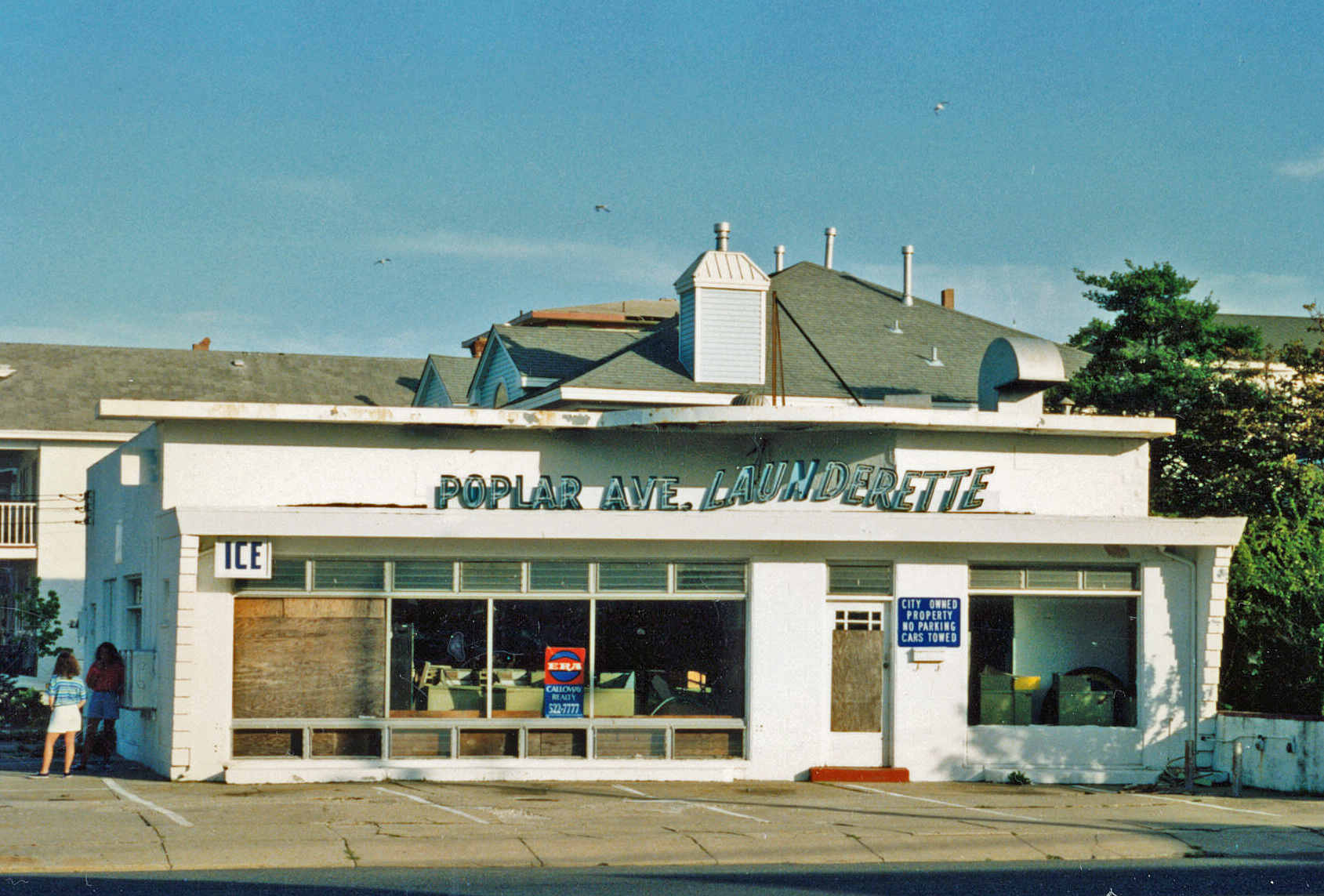
“I have no idea what that’s supposed to mean,” I responded. “But either way, I still don’t understand why you would travel a thousand miles just to hole yourself up in some broken-down old boarding house along the east end of Poplar Avenue.”
“This wasn’t the original plan,” Chris explained. He was twirling his index finger in the air to indicate he meant The Vacationer. “Way back in April, I’d been fixin’ to make a go of it up north there in Atlantic City. But then I came up empty after a handful of weeks spent looking for a job, and I couldn’t really pay the rent or even buy myself a goddamn sandwich. And so I got to talkin’ to my landlord one afternoon, and he suggested I might have better luck down here.”
“Atlantic City’s got a year-round economy,” I protested. “Why would anyone recommend you hoof it all the way down to Wildwood if you were looking for a decent job?”
“Well, first of all, I’m pretty sure that wily fucker was fixin’ to get rid of me,” Chris responded. “I still owed him two weeks rent on a three-week stay, and he had Memorial Day weekend loomin’ on the horizon. But more importantly, I was lookin’ for the type of work that’d keep me off the books.”
“And that diner you’ve been working at over on Pacific,” I responded, “you’re telling me that place is paying you under the table?”
“I’m tellin’ you it is,” Chris confirmed. He took a quick swig of vodka, wiping the excess dribble with his collar. “For what it’s worth, that is.”
“Why? What seems to be the problem?”
“Oh, you name it,” Chris said. “Shitty pay. Shitty hours. Shitty labor. Shitty attitude. They got me comin’ in there at the fuckin’ crack of dawn, man. Most of the time I’m still half-shot in the ass from the night before at the end of my shift. My boss keeps on promisin’ he’ll move me up to lunch once the 4th of July rolls around. But between then and now, I’m broke as a joke, wanderin’ round that cooped-up kitchen like a goddamn zombie every morning.”
“I’ve been there,” I told him. “The first summer I moved here, a friend of mine got me a job working mornings over at Samuel’s Pancake House. There were moments when I’d fall asleep standing upright over the sink. Then, of course, I ran into the whole issue of trying to cash a check without any ID. The good news is, sooner or later, you make some valuable in-roads and, eventually, you wind up landing on your feet. In the meantime, if there’s anything I can do to help, please don’t hesitate to ask.”
“Oh, man,” Chris said, “that’d be a huge weight off my shoulders.”
“What would?” I asked him.
“Well, it turns out I’m completely tapped until I get my pay this comin’ Friday. You think there’s any way you might be able to spot me a couple of bucks until the weekend?”
“What exactly is a couple of bucks?” I wondered.
“Oh, I dunno,” Chris sniffled, “maybe, like, 10 … actually, maybe more like 15 bucks, assuming it wouldn’t break ya or nothin’. All I need is enough to get me by, y’know?”
I dug into my cut-offs, fished out a pocketful of bills. I ironed out a 20 on the table, held it high above my head.
“I expect this back no later than Friday,” I told Chris. “My entire bank account is sitting in these pockets right now. It’s not as if I’ve got money to burn.”
“Honest injun,” Chris responded, snapping the 20 out of my fingers. “In fact, you’re welcome to walk on down and pound on my door if I don’t get it back to you by 5 pm Friday. Speakin’ of which, what’s with that ole’ biddy livin’ across the hall here? Bitch came knockin’ on my door this afternoon, started givin’ me a whole mess of what-for about playin’ the music loud.”
“That’s the landlord’s aunt,” I told him. “She’s kind of like the caretaker around here.”
“Yeah, I get that,” Chris explained, “I met her on the day I first moved in. But I ain’t never seen her like she was this afternoon. Bitch stood there rattlin’ her fist at me with a ball-peen hammer in her hand.”
“She does that,” I explained. “By all appearances, she also drinks a lot. Her son Henry lives right down the hall here – second door on the right.”
“You mean that whiny fuckin’ pipsqueak with the Little Rascals haircut?” Chris asked.
“That’s him,” I said. “Believe it or not, he was actually screwing Giesela for a couple of weeks there, immediately after she moved in.”
“Giesela? Now she’s that nutty bitch who lives right on the other side of the wall here,” Chris said, more as a question than a statement of fact.
“The very same,” I assured him. “Rumor is, it took Giesela a little over a month to screw her way across all three floors of this joint. That’s got to be some kind of land-speed record, y’know.”
“And what about her roommate, Alex?” Chris said. “She don’t strike me as bein’ that way.”
“Alex is nothing like Giesela,” I told Chris. “Alex is an Orthodox Christian. She actually keeps a swear jar on her bureau.”
“What the fuck’s a swear jar?” Chris wondered.
“It’s a way to curb the amount of bad language you use,” I explained. “Y’know, like every time a person says ‘fuck’ or ‘shit’ or something like that, they have to drop a quarter in the bucket. Eventually, you not only cut down on all the bad stuff you’re saying, but you can go buy yourself an ice cream cone to boot.”
“Sounds like some hokey-ass bullshit to me,” Chris deadpanned, as he unbuttoned the placket of his shirt.
“See now, that would’ve cost you a quarter,” I said.
“Say, so long as we’re on the subject of quarters,” Chris murmured, pulling his chair in close to the table, “you know of anyone I might be able to buy some decent weed off of around this place?”
“I thought you just told me you were broke,” I said.
“Yeah, well, there’s broke and then there’s broke,” Chris said. “I’m only broke broke until this coming Friday. After that I’ll have a couple extra duckets lyin’ around to buy me some house weed and beer.”
“Well, if you’re looking to buy from somebody in-house, your best bet might be to talk to CJ up along the second floor. I know he sells pot and maybe even a little bit of coke to another tenant named Mike. You might also want to check with that dude Saget who lives up on the third floor. I’m not sure whether he’d be willing to sell you anything, but he can definitely point you in the right direction.”
“Sag-et?” Chris said, allowing the word to roll around in his mouth for a moment. “Now is he the tie-dye guy?”
“He is,” I said. “Skinny. Beard. Looks just like a cro-magnon version of Bob Saget.”
“Hmmmmm,” Chris said, as he considered the derivation once more. “Sag-et.”
Chris had the placket of his vintage bowler flung open now, and – try as I might – I simply could not take my eyes off of a pulsing purple scar that ran the length of his mid-sternum. That scar just sat there, staring back at me – dual stitch marks set like rail ties down the span of either side. A foot above, the jaundiced light threw ashen shadows down across both eyes, emphasizing a series of splintered rings that broke the grain of either cheekbone. Chris looked emaciated, perhaps even demonic. And he was up now, on his feet, sauntering slow to a communal bathroom across the hall.
“What the fuck happened to your AC?” Chris shouted, upon his return. He was standing just beyond an archway that separated the kitchen from the bedroom. “It’s pretty fuckin’ hot in here right now.”
“Someone stole it,” I shouted back. “I came home from work a couple of nights ago and the entire fucking thing was gone.”
“And you have no idea who might-a took it?” Chris shouted.
“My assumption is it was just some drunken asshole who happened to be walking by out there.”
“I guess that kind of comes with the territory when you’re livin’ on the ground floor,” Chris offered. He wandered back into the kitchen, took a seat across the table.
“It’s not so bad,” I assured him. “I slept with the window open last night. But I kept waking up every time I heard someone clapping their feet across the gravel. I’m always worried about somebody breaking in.”
“Is that why you keep your fuckin’ door locked all the time, even when you’re in here?” Chris wondered.
“I’ll tell you exactly why I keep that fucking door locked,” I countered. “When I originally moved in here, way back in early May, I promised Sean and E.J. I’d keep an eye on the place until their aunt arrived. A couple nights later, I heard this thundering crash out in the hallway, and I kind of felt like it was my responsibility to go out there and investigate. Only the entire corridor’s pitch black, see. So I’m scaling those popcorn walls out there, until I land upon that flood box located about midway down the hall. I fiddled around until I found the emergency button, and then, Voila! Turns out there was a 6’5 black dude leaning up against the wall out there. I asked the guy to leave but he wouldn’t. So, eventually, I just let go of the goddamn button and took off sprinting toward my room. As fate would have it, that fucker started chasing me down the hallway in the dark. Fortunately, I managed to dive into my apartment and slam the wooden door behind me. I could hear the dude breathing after that, right on the other side of the door.”
“Holy shit,” Chris said.
“Holy shit, indeed. What’s more, I actually pushed my bureau in front of the doorway before I went to sleep that night. The next morning I climbed out the bedroom window and ran down to the launderette to call my friend Gerry, who helped me perform a routine sweep of the premises. Anyway, the point being, I’m much more concerned about the threat of what might be lurking out in that hallway at night than I am about what might be lurking out on the street. And that is why I keep my fucking door locked all the time.”
***
“Say, man, you mind if I bum a smoke?”
It was well past 3 am at this point, and the midnight sky was slowly fading into sapphire. I slid my pack across the table, encouraged Chris to help himself. He slipped a cigarette between his lips, wedged a second firm behind his ear.
“This way I figure I won’t have to bother you again,” he reasoned.
“Tell you what,” I said. “I’ll give you what’s left of that pack if you explain to me why it is you had to hightail it out of Florida a couple of months ago.”
“What are we, negotiatin’ now?” Chris said.
“No negotiation,” I countered. “Just leave me one cigarette so I can have a quick smoke before I go to bed, and the rest of the pack is yours. There’s got to be at least six or seven cigarettes left in there.”
Chris flipped the lid, eyed up the remaining inventory. “You sure you want to hear this?” he wondered.
“I am,” I said, nodding my head reassuringly.
Chris settled low into his chair, ashed his smoke into a half-shell. Then he launched into the story, as if he’d been rehearsing it for weeks.
“So I was granted my early release way back in mid-December,” he started.
“From prison?” I interjected.
“You want me to tell this story or not?” Chris said.
“My apologies,” I said, raising both hands in surrender. “The floor is yours.”
“So I was granted my early release way back in mid-December,” he reiterated, “at which point I went about satisfyin’ the conditional terms of my parole. I checked in with my P.O., took a handful of piss tests … I even registered for work release. And so a couple weeks or so down the line, I landed me this cush job drivin’ overnights out of a warehouse in Ocala. It was good work, y’know? Slow and steady, with very little supervision in between. And so eventually, I took to stashin’ a flask – or sometimes even an entire bottle – along with me for the ride. I never really had no problems, y’know – always delivered my shit on time, returned everything to dispatch in ship-shape and what not. But then there came this one night back in April … I suppose you could say I was pretty fucked up at the time. And so I’m gunnin’ it along this lonesome stretch of Highway 4, see, when out of nowhere I notice these dancin’ lights across my dashboard. And so I set to lookin’ in my side-view, and wouldn’t you just know there’s a goddamn Florida Trooper cruisin’ right-on up alongside.
“Now keep in mind, I’ve got no idea how long this rabid fucker’s been on me. Coulda’ been five seconds or it coulda’ been five minutes. Either way, I’m as drunk as a skunk, speedin’ like a demon, and I got a half-empty bottle of whiskey doin’ cartwheels by the pedal. And so this Trooper, see, well he’s runnin’ neck-and-neck with me at this point. And he’s got his lights flashin’ and his siren blarin’ and he’s signalin’ for me to pull on over to the side of the road. And I suppose it was just one of those moments, y’know, where you only got, like, one of two decisions to make, and there ain’t no neither one of them that’s gonna do you any good. And so, given the helpless squeeze that you’re in, you just kind of do whatever it is you do and figure out the rest as it comes along.”
“So what did you do?” I asked.
“What the fuck do you think I did?” Chris said. “I grabbed the wheel and swung hard right. Forced that goddamn Trooper off the road.”
“Off the road?” I said.
“Off the goddamn road,” Chris repeated, his right hand gliding across the kitchen in mid-air. “Watched his squad car rip straight through a metal guardrail, then kept an eye in my rearview as that son of a gun flipped out into a barrel roll before landin’ face-down in the brush.”
“And then what?” I asked him.
“And then I took off, man,” Chris said. “Ditched my rig outside a weigh station all the way down there by St. Pete’s, packed my bags and hit the road.”
“So that’s it?” I said, completely dumbstruck by the nonchalance.
“That’s it,” Chris said, as he took a slug of vodka. “Shit happens, y’know?”
“And you have no idea how badly that trooper might have been hurt?”
“Now how the fuck am I supposed to know that?” Chris wondered. He was staring me down through capsicum eyes.
“And you never heard anything from anyone about the police following up on the whole matter?”
“Heard what? From who?”
“So in other words, you just kind of ditched your entire life and swung out on the lam?”
“You ask a lot of questions,” Chris said, as he lit another cigarette.
“Well, you don’t provide a whole lot in the way of answers,” I responded.
Chris swiveled slightly in his chair, index finger tapping hard against the table.
“How in shit d’you chip that tooth of yours?” he asked me.
“I got drunk and ran into a door,” I responded. “How in shit d’you get that scar?”
“Oh this ole’ thing?” Chris boasted, puffing his chest out like a charm. “I got this from some skank bitch down in Florida. Wench fuckin’ rushed me with a steak knife. Broke the point off on my heart.”
“Jeez-us Christ,” I said.
“Yeah, I know,” Chris said. “But it ain’t no nevermind. In the end that scabby bitch got hers, believe me.”
With that Chris staggered to his feet, explained he had to be at work in a little under two hours. He dug down deep into my refrigerator, pulled the final beer out from a 12-pack, asked if he could take it with him for the road.
I nodded and wished him best of luck, then watched him leave and locked the door.
Day 518
(Moving On is a regular feature on IFB)
©Copyright Bob Hill
Film Capsule: Frances Ha
Given Warner Brothers is still busy trying to convince everyone (including themselves) that this is the Summer of Gatsby, it seems oddly relevant that it was F. Scott Fitzgerald who once wrote, “New York forgot us and let us stay.” Of course this only seems relevant considering Baz Luhrman’s Great Gatsby falls so incredibly short of Noah Baumbach’s Frances Ha – a fantastic New York film that is essentially about the distance between our dreams and our realities, as well as the mundane if-not-wholly-satisfying existence we settle into long after the gilded city has had its way with us.
The story here is translated in old-fashion black and white, with subtle nods and title cards thrown in for equal measure. Frances Ha is a film co-written by Greta Gerwig, starring Greta Gerwig, playing a character who is very similar to Greta Gerwig. And those are all incredibly fortuitous things, to be sure. It’s been a worthwhile ascent for the 29-year-old Gerwig, lo, these past few years, hopscotching from a Whit Stillman project to a Woody Allen project, with a little bit of television in between. But this… this film … this Frances Ha … this is the movie that will catapult not only Greta Gerwig, but also her current love interest, critically-acclaimed Director Noah Baumbach.
The bottom line: You really should make time to go and see this Frances Ha. And you should make a point of seeing it in a very dark old movie theater … preferably one that has an intimate projection screen and only accepts cash. You’ll love it in the same way people once loved Woody Allen’s Manhattan. And you’ll love it for a lot of the very same reasons.
(Frances Ha opens in limited release today, with a rollout in most major cities to follow.) Continue reading