This well-rounded selection of pieces from the Whitney’s permanent collection represents the fifth and final installment of a two-year series. Each of the pieces included in I,You, We were produced by well-known artists from the 1980s and 90s (Maplethorpe, Basquiat and Fischl among them) with a specific focus on the prevailing issues of the day – escalating wealth/poverty, the AIDS epidemic, gun control, etc. As a whole, these works provide a unique window into the way we once were, if not the retroactive feeling that things were more than likely going to get a lot worse before they ever began to get better.
(I, You, Weruns through 9/1 at The Whitney Museum, $18 general admission, Madison Avenue at 75th Street.)
Five More For The Offing:
Journey Down the Hudsonby Artists of the Broadway Art Center @ The Pleiades Gallery (Free, through 4/27, 548 West 28th Street,Suite 540)
Hyperrealismby various artists @ the Bernarducci Meisel Gallery (Free, through 6/9, 37 West 57th Street, 3rd Floor)
Volker Hueller @ Eleven Rivington (Free, through 4/27, 11 Rivington Street, between Bowery and Chrystie)
Objects, Rooms & Landscapesby Helen Berggruen @ The Fischbach Gallery (Free, through 5/25 210 11th Avenue, Suite 801)
Milton Avery@ The DC Moore Gallery (Free, through 4/27, 535 West 22nd Street)
Midnight’s Children is a film that takes the audience through four generations of one family, each stage representing a different phase in India’s ongoing struggle for independence. Metaphorically speaking, it’s a unique take on a story seldom told. The problem is that the source material does not translate well on-screen. The narrator (Salman Rushdie) is ultimately rendered unreliable, the story unbelievable, and blatant attempts at humor fall flat on their face.
Despite all of this, director Deepa Mehta does a decent job of maintaining a consistent pace and flow throughout. The major conflict arises when – three-quarters of the way through the film – we’re asked to accept that what’s been sold as an ongoing dream sequence up to that point was actually occurring in some kind of alternate reality. It’s a buzzkill that effectively eliminates any and all credibility the film – and its narrator – have earned up to that point.
While Rushdie is obviously trying to make a point here (i.e., The dreams we ultimately end up realizing are not always the same dreams we might have imagined) it simply doesn’t translate well via this medium. By the time the major twist occurs, Midnight’s Children has spent nearly two hours assuring the audience it was dealing in stark realities. To attempt – and pull off – that type of bait-and-switch is a very tall order, indeed. And Midnight’s Children just so happens to be a case in which the effort is clearly there, but the equal or greater payoff is not.
The film is long, it’s hokey, and it fails to lift you up any more than it brings you down.
To steal a line from Rushdie himself, everything is not “tickety-boo”.
(Midnight’s Children opens in limited release this Friday.) Continue reading →
In a recent New York Times Magazine article, Jude Law was quoted as saying he felt relieved not to have to play “that young sort of pretty thing anymore”. Clive Owen, it would seem, is currently transitioning into a similar space. Having shed his early billing as the British Mr. Clooney, the 48-year old Owen has since settled into his pace – a pace that allows him to accept less domineering roles every now and again … roles which portray him as being less shrewd, more vulnerable, and – ultimately – more relatable. To that end, Owen has never been more relatable than he is throughout James Marsh’s Shadow Dancer.
Owen plays an MI5 agent in the film, caught square in the crosshairs of an ongoing battle between the British Government and the Irish Republican Army. Owen’s character (Mac) is smart, but not brilliant. He’s imposing, yet not overbearing. His primary IRA contact is played by Andrea Riseborough – an up-and-coming actress who’s appeared in no less than three major pictures this year (Oblivion, Shadow Dancer, Welcome to The Punch). Riseborough is good, but she pales in comparison to Owen. He anchors this picture in such an unassuming manner that you probably won’t see any of the major angles coming until they jump right up and grab you.
Shadow Dancer is good, but it falls just short of some of the all-time IRA movies (In The Name of The Father, Veronica Guerin and The Crying Game among them). This is primarily because the former takes so goddamn long to arrive at where it’s going. Despite that, the payoff is substantial, and so is the whole premise. If you have a passing interest in the IRA or even the constant strain that existed between the Irish and the English throughout the 1990s, it’s an intriguing addition to an already fascinating sub-genre.
(Shadow Dancer arrives via Video On Demand this Thursday, with a limited release in most major cities slated for May 31st.)
“Right now I’m aiming at increasing the distance I run, so speed is less of an issue. As long as I can run a certain distance, that’s all I care about. Sometimes I run fast when I feel like it, but if I increase the pace I shorten the amount of time I run, the point being to let the exhilaration I feel at the end of each run carry over to the next day. This is the same sort of tack I find necessary when writing a novel. I stop every day right at the point where I feel I can write more. Do that, and the next day’s work goes surprisingly smoothly. I think Ernest Hemingway did something like that. To keep on going, you have to keep up the rhythm. This is the important thing for long-term projects. Once you set the pace, the rest will follow. The problem is getting the flywheel to spin at a set speed – and to get to that point takes as much concentration and effort as you can manage.”
“From the very beginning, I wrote to explain my own life to myself, and I invited any readers who chose to make the journey with me to join me on the high wire. I would work without a net and without the noise of the crowd to disturb me. The view from on high is dizzying, instructive. I do not record the world exactly as it comes to me but transform it by making it pass through a prism of fabulous stories I have collected on the way. I gather stories the way a lepidopterist hoards his chloroformed specimens of rare moths, or a sunburned entomologist admires his well-ordered bottles of Costa Rican beetles. Stories are the vessels I use to interpret the world to myself. I am often called a ‘storyteller’ by flippant and unadmiring critics. I revel in the title. I bathe in the lotions and
unguents of that sweet word.”
Eventually, every single one of these A-List Scientology dudes winds up pursuing the same type of intergalactic, post-apocalyptic, megalomaniacal bullshit. John Travolta did so via Battlefield Earth, Tom Cruise is doing so via Oblivion, and – not to be outdone – Will Smith will do just about the very same a little over a month from now, when After Earthhits theaters nationwide. I mean, how many times can someone actually go to that well without realizing it’s absolutely dry as a bone?
By IMDb‘s count, Morgan Freeman has played God twice, the President of The United States once, and various other government officials several times along the way. Oddly enough, the majority of these characters have represented Freeman’s least memorable roles. With that in mind, I have very little interest in seeing him portray the futuristic leader of some underground resistance in the year 2077.
Oblivion was directed by Joseph Kosinski, a sci-fi writer whose only other directing credit is Tron: Legacy.
Oblivion was directed by Joseph Kosinski, a sci-fi writer whose only future directing credit is a sequel to Tron: Legacy.
Tom Cruise is a fantastic actor with remarkable screen presence. I have cheered for Cruise in no less than 27 major film roles. 27! I mean, think about that for a second. The reality is, Jerry Maguire and Magnolia alone would’ve been enough to cement Cruise’s legacy. And yet, what comes along with doing 1.5 big-budget films per year is a very obvious clunker every now and again (Here’s lookin’ at you, Knight and Day). Whenever this type of phenomenon occurs, I simply ignore and proceed, in much the same way Mr. Cruise has for the past three decades running.
Cruise is wearing the exact same turtleneck during this interview that he was during this one. I find the obvious parallels unsettling.
I’d much rather use the two hours I’d spend on this movie watching Taps or The Outsiders, if for no better reason than to remind myself what it was I really dug about Tom Cruise way back when.
Here is the opening line from Manohla Davis’s review of Oblivion from today’s New York Times: “If only it were less easy to laugh at Oblivion, a lackluster science-fiction adventure with Tom Cruise that, even before its opening, was groaning under the weight of its hard-working, slowly fading star and a title that invites mockery of him and it both.” Kind of says it all, no?
If it turns out I’m wrong and Oblivion is actually a good movie, I’ll simply go see the Will Smith version of it at some point during early June.
(Oblivion arrives in theaters nationwide this Friday.) Continue reading →
There is something about the texture of oil on canvas. Maybe it’s the weighted dabs, or the way the fabric’s stretched across a wooden frame. But either way, that type of artwork retains a certain calming sheen, perpetuated by an intense appreciation for the craftsmanship involved.
In that spirit comes Sunrise/Sunset – a stunning collection of landscape paintings from both the city and the country, depicting the type of moment that sticks with you specifically because of its unseemly ambiance. Sundown in the city, twilight in the valley, the far-off glow of a country house through the clearing – Jarboe draws out the crucial elements of each scene in such a way that it kind of makes your heart ache, either for having been there and done that, or wishing
that you could.
Charles Jarboe is in his late fifties now, and the newer work reflects the notion of an artist settling into his old age. Most of the paintings in this exhibition represent an extremely relaxed state of being, as if to illustrate the notion that sometimes it’s the serenity that allows us to enjoy what’s been obscured by white noise all along.
Bonus: The Meisel Gallery is also exhibiting work by Peter Maier right now.
(Sunrise/Sunsetruns through 5/4 @ The Bernarducci Meisel Gallery,
37 West 57th Street, 3rd Floor.)
Five More For The Offing:
Ode To The Brooklyn Bridgeby Ellen Bradshaw @ The Pleiades Gallery (Free, Through 4/20, 530 West 25 Street,4th Floor)
Dialogues & Departuresby Wendy Gittler @ The First Street Gallery (Free, Through 4/20, 526 West 26th Street, Suite 209)
American Legends: From Calder to O’Keefefeaturing various artists @ the Whitney Museum ($18 general admission, running through the end of May, Madison Avenue @ 75th Street)
It was a Saturday, the first Saturday in June. And the sun was beating down, despite a sudden break in the humidity. Meghan was working by herself that afternoon, much the same way she had been for the past three weeks running. Bored and listless, she took to reading beneath a canopy, coastal breezes causing the pages to lift and turn.
June was the most trying time of year for local teenagers. Island schools were still in session, and yet the full machinery of summer was simultaneously taking hold. This represented a dilemma, in that refusing to work back-to-back doubles every weekend might also mean sacrificing face and rank to summer help. The very same mantra that allowed for hibernation half the winter also dictated that once gainful employment was available, one worked hard and one worked right, lest one should not ever seek to work again.
Meghan knew this mantra well, having multi-generational ties to North Wildwood – a place where her father was currently employed as a full-time fireman, and her uncle, the lone-sitting judge. Meghan had relatives throughout the county. Most of her uncles had come up working summers on the beach patrol; most of her aunts, the restaurant circuit. Meghan’s father still requested two weeks off during mid-August – a bustling period during which he’d sell ice cream on the beach (Such contracts were initially offered to local veterans, in much the same way local shipping contracts had been before.) Meghan’s father was a bohemian, and yet he worked tirelessly to provide for his daughters. As a result, Meghan came to equate an admirable work ethic with mobility. More to the point, work ethic was the primary reason Meghan had originally agreed to work the picture stand that afternoon. Only now Meghan found herself distraught, sweeping caked-on layers of sweat off of her brow.
Something was wrong. And whatever that something was, it had been advancing on Meghan throughout the morning – surging forward, pulling back; setting fire to adipose reserves along the way. Meghan’s heartbeat ran off-tempo and her carotid pulse had set to pounding like a drum. She stepped out from underneath the canopy, hoping to find someone who might be willing watch the stand. She felt the need to take a break and splash some water on her face.
There were a pair of tiny kiosks across the way, but neither one of those was open now. There was a troll wheel spinning madly just a few feet to the left, and a twirling skyride named The Condor an equal distance to the right. And at some point, somewhere, not-so far off in the distance, Meghan could hear the muffled stylings of the Spiral Staircase, waxing eloquent about how they loved her more to-day than yes-ter-day (but not as much as to-mor-row). Unable to flag down assistance, Meghan tucked her money apron inside a folder behind the counter. Then she pinballed her way across a hidden alley, the rush and whirl of dueling gears on every side. Meghan’s equilibrium was slipping now; every step fell slow and heavy. And just before the big TILT hit, Meghan’s body came to crashing through a wooden gate along the north side of the pier.
***
The winter months had not been kind.
First came the loss of Meghan’s sister back in December. Next, my last-minute decision to reenroll at university, followed by my leaving Wildwood for the spring to attend Penn State. In certain respects, time spent apart had drawn Meghan and I much closer. The two of us were still young, and, as such, we both remained idealistic enough to believe that true love lasts. Regardless, the gulf of distance did not make for lack of strain. Meghan took a two-week trip to Paris by way of Madrid at the end of February. I, on the other hand, had taken to drinking more and skipping classes. When the spring semester ended, I made the three-bus trek straight back to Wildwood, optimistic that the two of us could put the worst behind us. Despite us reuniting, I could not shake the sense that one or both of us was drifting. Tectonic plates were shifting, exposing fault lines neath the surface. What’s more, I’d grown indifferent to the notion Meghan was still only 16 – a high school junior, doing her utmost to contend with all the crazy, grown-up bullshit in our lives.
***
I was standing on the Dime Pitch counter hanging stuffed animals, when I got a call from the EMT letting me know Meghan had fainted. By the time I reached First Aid, Meghan was sitting upright on the slab – rushing liquids between aspirin, holding a compress to her head.
She walked out on her own volition, led me down and off the ramp at 25th Street, where her father’s Nissan Pathfinder was idling in wait to drive her off to a doctor’s office. I eased Meghan into the front seat, wished her well, then waved goodbye. I stood there static in the rearview until the Pathfinder turned a corner. Then I hightailed it back up to the pier. I did this because I was young, and stupid, and I feared losing my job the moment Bill Salerno discovered that not one, but two of his full-time employees had simultaneously abandoned their posts.
Either way, it was a bitter pill, seeing Meghan torn asunder. And yet, there was this incredibly narcissistic side of me that had already taken to internalizing the whole thing: What if Meghan was pregnant? What if she had contracted some kind of STD? Was I supposed to get her a gift or something? What if the entire incident could eventually trace its way back to me?
From the time I’d been 15, I stood convinced that there was something physically wrong with me. So stringent was I in this belief that I would stay home from high school on every day the nurse’s office administered junior physicals. Midway through my senior year, I forged all of my medical records for admittance to Penn State. It wasn’t so much that I abhorred the constant probing as it was I had this rumbling fear, an acute phobia, perhaps, of how my father might react assuming I had been diagnosed with some condition. To that end, by the summer of ’94, I was no longer carrying any medical insurance. I had committed to either handling any health-related issues on my own, or ignoring them in the hopes that they might go away.
***
According to preliminary tests, Meghan had suffered little more than a sodium deficiency – upon the order that causes all of one’s internal circuits to fizzle and spin. The diagnosis provided a sense of relief, albeit counterbalanced by the knowledge Meghan’s older sister, Lauri, had passed away due to an undiagnosed electrolyte deficiency only seven short months prior.
I called Meghan during my dinner break, hoping I might run down to see her. But Meghan’s younger sister explained that Meghan had just recently fallen asleep in the back room. And so I spent the remainder of that evening slowly channeling all of my anxiety into guilt. When I called Meghan again around 11 PM, she was wide awake, and she asked if I might walk her bike down to her after I got done work.
I arrived at Meghan’s father’s house just after 1 am. I found Meghan sitting alone along the porch. She was wrapped up snug inside an afghan with a Marlboro 100 in her hand.
I remember Meghan’s warm cheek against my cheek; the smell of glistening apples in her hair. I remember experiencing a sudden rush of relief upon seeing all the color back in her face. In a sense, the two of us were right back where we had started now – sitting side-by-side along that half-pint porch in the midnight glow of East 19th, a pair of voices, hushed, playing against the flickering glow of Citronella.
“I think that we should take a trip,” Meghan said, somewhere after 3 am. “Like a really, really long trip, y’know? Like a road trip, across the country or something.”
“Oh, right,” I said, my back pressing up against soft tar and gravel. “Using what? A magic carpet?”
“No,” Meghan said, pointing off toward the street. “We’ll take the Fiero. I’ll have my license by the end of November. And my dad already told me I could use it. I asked him earlier tonight. The only thing we’d need is for you to get your license and we’d be set.”
“Aren’t you forgetting something?” I wondered.
“What? Money?”
“Yes, money,” I said. I was staring up into the panels.
“I’ve got that handled,” Meghan responded. “Or at least I’ve got my half of that handled. I started working out a plan in the living room tonight. My dad agreed that if I put enough money aside between now and next June, he’d give me a slight cushion to put us over the top. On top of which, I’ll have all of my graduation money to draw from.”
“So you want to drive clear across the country during the height of the summer season, and your dad is OK with all this?” I said.
“Oh, please,” Meghan scoffed. “My dad hitchhiked his way across Europe way back when he was in his mid-20s. He found his way. Some nights, he slept on wooden benches.”
“Yeah, well, that doesn’t necessarily mean he wants his daughter to be eating out of trash cans, as well,” I said.
“No, no … of course not,” Meghan countered. “That’s why we’d need to start planning for all of this right now. Otherwise, we might as well just not consider doing it at all.”
“What about me?” I wondered.
“What about you?” Meghan said.
“I don’t have that kind of money, Meg,” I said. I turned to look her in the face. “I mean, I’m living paycheck to paycheck right now. In fact, I’m actually living one or two paychecks behind where I’m supposed to be. And we both know it’s next to impossible to save anything down here during the winter.”
“OK, so you sacrifice a little bit,” Meghan offered, as she lit a cigarette. “You cut down on all the excess beer you’ve been buying, you cut back on all the junk food you’ve been eating, and you stop lending money to all those broke-ass boardwalk sponges who have absolutely no intention of ever paying you back. Those three adjustments alone’ll put you an extra grand ahead by the end of Labor Day Weekend. From that point, all you need to do is either find another full-time job over the winter or put some cash aside from unemployment and we’re there.”
“You think it’s that simple, huh?” I said.
“Well, no. I don’t think it’s thatsimple,” Meghan responded. “But who cares? The point is, we can do this. You. Me. Us. We. We can do this … together. More importantly, it’s something neither one of us is ever going to forget. I mean, don’t you even want to try?”
“Look, don’t get me wrong,” I said, as I lit my own cigarette. “Driving across the country has always been a fantasy of mine …”
“That’s what I’m saying,” Meghan interjected. “Think about all the times you’ve mentioned the possibility of just taking off one morning, driving clear across the Dust Bowl, getting lost on some old highway in the middle of the night. I mean, this is it, Bob. This is IT. Our chance … right now. Seriously, think about it – you’re going to be 21 next November, and I’m going to be 17. I’ll be off to college a year after that and you’ll be looking into some kind of full-time career. And, meanwhile, there’s absolutely nothing stopping us from doing this right now. Only it has to be now. Believe me when I tell you we might never get this chance again.”
“You really think that we can do this?” I said.
“I really think we’re going to do this,” Meghan said. She was grinning wide beneath that afghan.
“No bullshit,” I said.
“No bullshit,” Meghan said.
With that, Meghan tossed the afghan aside. She ran inside to grab an Atlas.
We spent the next few hours mapping out a list of destinations – tiny blips along the way. We’d visit Tombstone, Arizona, and Area 51 in South Nevada. We’d hit the Vegas Strip, then Sunset Boulevard … maybe even Highway 61. We’d set out north, stopping for a night inside of Cambridge. Then we’d cut hard left, spending an afternoon along Walden Pond. After that, we’d dip down low into the Heartland, settling deep for the long haul. We had a plan now, or at least the seeds of one. And that plan was more than enough to keep us working through the night. We were wrapped up snug. We were easing back against the railing. And at some point, somewhere, not so far off in the distance, we could hear the lonesome call of waking seagulls. We could see the early mist begin to rise. It was morning now. The sky was turning.
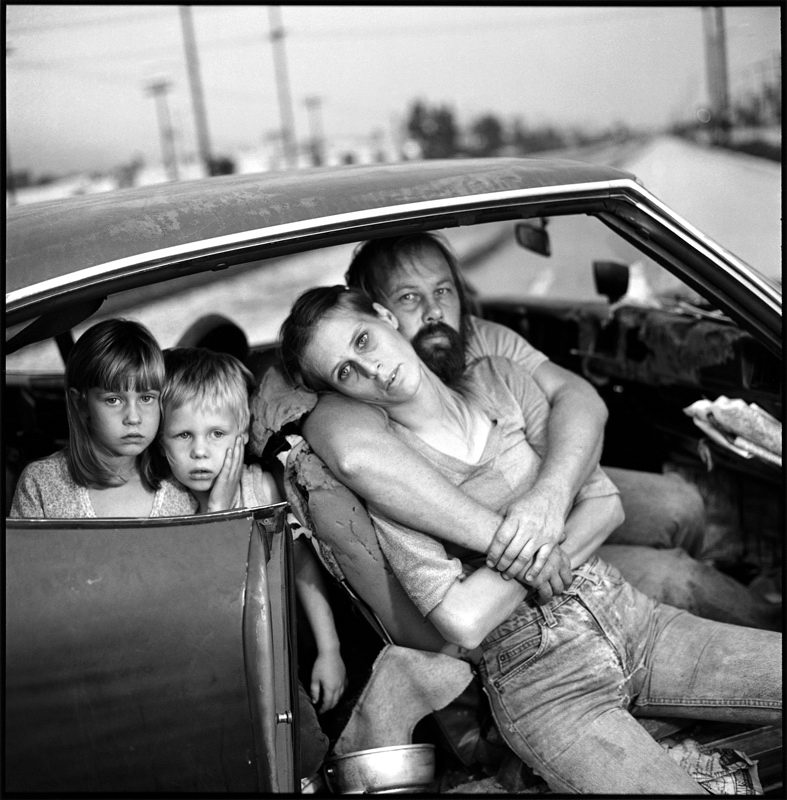 This well-rounded selection of pieces from the Whitney’s permanent collection represents the fifth and final installment of a two-year series. Each of the pieces included in I,You, We were produced by well-known artists from the 1980s and 90s (Maplethorpe, Basquiat and Fischl among them) with a specific focus on the prevailing issues of the day – escalating wealth/poverty, the AIDS epidemic, gun control, etc. As a whole, these works provide a unique window into the way we once were, if not the retroactive feeling that things were more than likely going to get a lot worse before they ever began to get better.