(Good Pictures/Bad Camera is a regular feature on IFB.)
Author Archives: BobHill
Film Capsule: Klown
Here is all you need to know about Klown (the crass Danish comedy based on a long-running sitcom of the same name): There is a running gag throughout the first 15 minutes of the film about giving a woman a pearl necklace that culminates with the main character blowing a load across his sleeping mother-in-law’s face.
This is not a metaphor. Nor is it anything less than appalling. It is so appalling, in fact, I spent the next 15 minutes of the film trying to determine whether I was just too lowbrow to appreciate the rapier edge of Danish humor.
It turns out I am not.
What I am is challenged to appreciate baseless humor, especially when it needs to be explained via subtitles. Subtitles – by and large – have long been indicative of higher culture, which tends to make one wonder just how avant-garde he or she might feel watching some unsuspecting old woman wipe a son-in-law’s seed off her face.
Allow me to put it to you in the form of a question: Do you really feel like watching The Hangover again, only this time with boy scout genitalia and subtitles?
Answer: Of course not. Who on earth would really feel like watching The Hangover at all?
(Klown arrives in select theaters and Video on Demand this coming Friday.)
Fran Lebowitz on Becoming a Real Writer
“People who are meant to become real writers are marginal enough already. Why else would they want to be writers? The only way someone can see something is by being outside it. A person who fits into the culture, who is truly acceptable to a society, would never become a writer in the profound sense of that word. Even Edith Wharton, who looked to be at the top of our society, was not truly acceptable because of her sensibility. That was marginalizing enough. She wasn’t black or Latina or poor, and although those things can work in that direction, that isn’t, contrary to popular opinion, the most important sort of distinction. What if someone wants to write about something else entirely? Luckily for us, homosexuality wasn’t Oscar Wilde’s direct subject. He didn’t need a subject. Unlucky people have a subject thrust upon them. I can’t think of a worse thing to be than a black writer, because to be a black writer means to be forced constantly to write about being black. Nothing could be more confining. I’ve always been grateful to be a second- rather than a first-generation American Jew, so I didn’t have to be obsessed with my Jewish identity. Blacks in this country may never have that luxury.”
Film Capsule: The Dark Knight Rises
The Dark Knight Rises may not be the best of the Batman films, but it is certainly the most ambitious.
Go for the spectacle, but only if you’ve seen the first two films in the trilogy previously. Otherwise, you’ll have no worthwhile idea what the fuck anyone is talking about, and you’ll keep wondering why Michael Keaton looks so hot.
(The Dark Knight Rises opens in theaters nationwide today.)
Moving On: Mountaineers
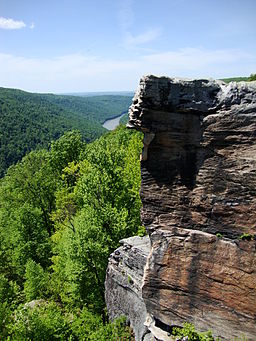
We were standing on a 300-foot bluff along the edge of Raven Rock when the LSD began to take hold. I was three hours into my trip, and about an hour prior I had eaten a second tab, assuming that the first one had somehow managed to subside.
I was regretting that decision now, as the earth began to shift beneath me, and the arms of several trees began to twist and weave like vines. We had traveled two miles to get here, hiking through a rugged section of the forest known as Coopers Rock. The trek was exhilarating, save for an unsavory moment during which I doubted my ability to negotiate a leap. This was the drugs talking … talking so loud and convincingly that the only mechanism I could conjure to halt the grinding tension was to repeat the phrase, “Raven Rock is dead ahead. Raven Rock is dead ahead,” until it echoed off the edge of West Virginia. One false move and the entire mechanism might go kablooey, setting me adrift in barren darkness. Either that, or I’d somehow manage to pull it all together, easing down in flaccid layers until my psyche took control.
***
It was a Thursday in October when Mike, Gerry, Joe, and I set out. Our first stop was Ligonier, Pennsylvania, a mining town located 50 miles east of Pittsburgh. Ligonier had a population of 1,500. It was built around a modest square, nestled deep within the Westmoreland Valley. This was an area most commonly associated with Idlewild Amusement Park – voted Best Kid’s Complex in the World by the editors of Amusement Today Magazine two years in a row.
Our plan was to drive clear across Pennsylvania, set up camp, and then chart a course for Morgantown, West Virginia the following morning. We had settled on Ligonier because Mike had spent his childhood there, and he was familiar with the lay of the land. Whereas State College or Pittsburgh would’ve required a hotel room, Mike was certain we could sleep beneath the stars in Ligonier for free. Despite that, we were still canvassing the area around dusk, desperate for some backdoor entrance to an arboretum or a state park. The four of us were high, and hungry, and more than eager to get our drink on, despite the fact we had no alcohol between us. Just after dark Mike doubled back along the rural route, hoping to ask an old family friend whether he could direct us toward a place where we could camp and find some booze.
We pulled up out front of a ranch-style Rambler, set several feet back from the road. There was a rusty trailer anchored to the main house with a pair of “His” and “Her” toilets clamped down upon its roof. There were broken twigs about the yard, and an uprooted parking meter leaning up against the shed. There was little else in the way of any welcoming decor.
Gerry had been uneasy ever since we entered Ligonier, maintaining several of the same assumptions about country people that the country people maintained about him. “This is a bad idea,” Gerry whispered to me. He was staring out the window with a look of concern.
The man we’d come to visit was Jim Wagner, a Ligonier native. Jim welcomed us with a round of beers, and the four of us took a seat around his table. As the minutes passed, Gerry Vessels began to grow frantic. Jim had settled into telling us about a pack of outlaws who had poached the crops from several nearby fields. “I ain’t got no problem with the outlaws,” Jim told us. “And they ain’t got no problem with me.” Jim got up and disappeared along a hallway. “You remember Old Yeller?” Jim yelled.
“I think so,” Mike replied.
Jim emerged a few seconds later, cradling a single-barrel rifle in his hands. “Here she is,” Jim told us. “Old Yeller … the greatest friend a man ever had.”
With embers crackling, Jim discussed the work he’d spent his whole life doing, how he’d been forced out of his job, how he felt old and injured and unable to keep on, how he drank a 12 pack of beer every evening, how he shrugged it off like so much jet lag come the early morn.
When it came time to leave Jim insisted that we take a case of beer. We followed Jim’s directions to a campground where we drank and slept before continuing south along 119 the following morning.
***
Our first night at the University of West Virginia was a blur. We had started drinking around midday, and a handful of us decided to smoke a bowl laced with hash prior to heading out for the night.
Our first stop was at a campus bar where a few of us used the same ID to gain access at the door. From that point, we took a roll and tumble down a very steep hill, I vomited on someone’s front lawn, and the lot of us passed out just after midnight. The morning after we took acid, after which we took a ride to Cooper Rock State Park. The autumn breeze set leaves adrift, and as I began peaking, I felt myself being sucked back and down into a wormhole, into the confines of Jim Wagner’s Rambler. I was staring down the muzzle of Jim’s rifle, uncertain of whether it was Jim or I that held the trigger. I was flashing now, and the world had taken to revealing itself in violent snapshots. Minutes later, I could feel myself thrust forward, fast and uncontrollably, through a space-time continuum, past the bluff at Raven Rock and the slow, uneven hangover awaiting me come Sunday, past my return to the weary streets of Swarthmore, past a spate of violent clashes with my father, past November, then December, past a hard-sell negotiation which forced my re-enrollment at Penn State, past frigid mornings spent hard-bracing against the wind, past a two-hour, two-transfer commute to and from the local campus, past writing papers as a means of making money, past broken friendships and betrayal, past passing out in vacant fields, past the inauguration of Bill Clinton and the premiere of Monday Night Raw, thrust deep and true into the heart of winter, where I came to rest upon a fraying couch set in the basement of a North Philadelphia rowhome. There was a party going on around me, and some goon in Z Cavaricci jeans kept offering to tase me for a buck.
On the far side of the room, a punch-drunk behemoth named Mark sat perched upon a stool, catching steel-tip darts with his hands. Across from him sat Gerry Vessels, who had invited me to hang out in North Philadelphia for the evening. It was 11 pm and the party was bustling. The cops had already warned us to keep it down twice.
Just before midnight a gang of Puerto Ricans showed up in the backyard. These Puerto Ricans had been turned away at the front door, and they were angry. I was pumping a keg toward the back basement door when something resembling a fountain soda splattered hard against the glass. “C’MON, MOTHERFUCKERS!” someone yelled from outside.
I was still watching from a rear corner of the basement when some Kenzo in a backwards cap slapped me on the arm, and said, “C’mon, man. Let’s get ’em.” With that, I pulled the basement door wide open and I tucked myself behind its shadow. The taser dude went charging forth into the yard, where he got drilled across the head with a baseball bat. I watched his skull snap backward; I watched his body shift at the waist.
Several others came funneling out of the basement now. The Puerto Ricans held their ground. Gerry Vessels began tangling with a pair of banditos, one of whom kept swinging a 3-ft ironing board within inches of Gerry’s face. Some dude in a bandana began poking Gerry with the butt-end of a broomstick. Gerry’s buddy Mark stepped in and began cutting the air with a screwdriver, as if warding off the wolves with a torch.
The basement ran empty, save for a handful of females, the bulk of whom stood staring at me from across the cellar. My cover was blown, and so I shimmied out from behind the door. When the action hit full-tilt, I hurried out into the fray. One of the Puerto Ricans spun around. He dropped into a crouch, and prepared to up-end me. I came in tight. I juked right, and then left, at which point I sprinted hard and cleared a fence. The Puerto Rican gave chase. I could hear chain links rattling. I made a right, and then I leapt into an alley. I sprung to and I made a break for the open road.
“Stray cat!” I heard somebody yell. “Yo! We got a stray cat out here, motherfuckers!”
I used my speed to break away, high-stepping through the alley. Potted plants were being thrown from backyards. Those pots kept crashing on the pavement. I hit the corner, then cut hard around a row of bushes. I fell out of sight, then doubled back across the brush. I was clearing gates like hurdles – one hand on every bar for leverage. I made one final jump, and then I ducked into the basement. I grabbed my beer. People were washing pepper spray out of their eyes in a nearby sink.
Perhaps it was the adrenaline, or the fact that all of this was taking place as I flashed forward. But the reality was that I could see the white-picket lines of my existence beginning to blend now, and I found myself questioning the people whose side of the fence I was supposed to be on.
Day 216
(Moving On is a regular feature on IFB)
©Copyright Bob Hill
Charles Dickens on Daily Living in a Small, Blue-Collar Town (1854)
“It was a town of red brick, or of brick that would have been red if the smoke and ashes had allowed it; but as matters stood it was a town of unnatural red and black like the painted face of a savage … It contained several large streets all very like one another, inhabited by people equally like one another, who all went in and out at the same hours, with the same sound upon the same pavements, to do the same work, and to whom every day was the same as yesterday and to-morrow, and every year the counterpart of the last and the next.”
Good Pictures/Bad Camera: The Morningside Beat
(Good Pictures/Bad Camera is a regular feature on IFB.)
Film Capsule: Red Lights
Reviewing any film like Red Lights presents a bit of a Catch-22.
Much like The Others, The Sixth Sense, or even April Fool’s Day, Red Lights is a film that relies heavily upon classic misdirection to keep the audience engaged.
Let that cat out of the bag, and you’ve already taken a critical element away from the storyline. Do your best to write around it, and you leave the reader feeling more confused than informed.
In the end, it defeats the whole purpose of reviewing a film like Red Lights in the first place.
Having said that, it’s definitely worth your while to go see this film. It’s both highly entertaining and well directed, to be sure. And it’s driven by Robert De Niro, who most recently kicked ass in Being Flynn, much the same way he does here, and subsequently promises to continue doing with no less than 10 projects already slated for release by the end of 2013.
Otherwise, Sigourney Weaver plays a cynic, Cillian Murphy plays her protege, and Elizabeth Olsen adds the awesome. But, like usual, it’s De Niro who pulls the whole thing together. Everything else about Red Lights rests squarely upon his shoulders.
(Red Lights arrives in New York and L.A. this coming Friday, July 13, with a national rollout to follow.)
Bill Clinton on ‘Future Preference’
“Professor Carroll Quigley’s second lasting insight concerned the key to the greatness of Western civilization, and its continuing capacity for reform and renewal. He said our civilization’s success is rooted in unique religious and philosophical convictions: that man is basically good; that there is truth, but no finite mortal has it; that we can get closer to the truth only by working together; and that through faith and good works, we can have a better life in this world and a reward in the next. According to Quigley, these ideas gave our civilization our optimistic, pragmatic character and an unwavering belief in the possibility of positive change. He summed up our ideology with the term ‘future preference,’ the belief that ‘the future can be better than the past, and each individual has a personal, moral obligation to make it so.’ From the 1992 campaign through my two terms in office, I quoted Professor Quigley’s line often, hoping it would spur my fellow Americans, and me, to practice what he preached.”
Coming Next Week: Moving On: Season Two
Oh, my. Has it been another year already?
Why, no … it sure hasn’t. In fact, it’s only been a month since The Season Finale of Moving On (A non-fiction web series about Wildwood, Childhood, and Life After Drinking).
But, alas, it’s time to gear up again, and get on with Season Two. Twelve more installments. Lots of sex, drugs and rock n roll. Who could ask for anything more?
Look forward to seeing you all back here next week, as we dive head-on into the Summer of 1993. Tell a friend. Tell your neighbor. Tell someone, for Pete’s sake.