(Good Pictures/Bad Camera is a regular feature on IFB.)
Author Archives: BobHill
Norman Mailer on Sex
“Guilt was the existential edge of sex. Without guilt, sex was meaningless. One advanced into sex against one’s sense of guilt, and each time guilt was successfully defied, one had learned a little more about the contractual relation of one’s own existence to the unheard thunders of the deep. Each time guilt herded one back with its authority, some primitive awe – hence some creative clue to the rages of the deep – was left to brood about.”
Film Capsule: The Amazing Spider-Man
The new superhero trilogy model breaks down something like this:
- Origin story: Establish main character, main conflict … explore protagonist’s motivation, flaws, strengths, weaknesses and values. Insert average villain for good measure. If the franchise tag is bankable enough, name recognition alone should prove more than enough to carry the box office.
- Introduce arch-nemesis: Stakes are heightened, a marquee villain arrives on the scene. An epic battle between good and evil ensues. Somewhere in the midst of all this, a major love interest gets compromised (This is the more viable reverse of the original franchise model which reigned supreme from 1980-2005).
- Final Resolution: What the final film loses in terms of relying on a lesser-known adversary, it more than compensates for via the freedom to take more chances, resolve ongoing plot points, and wrap the whole thing up in a multi-million-dollar bow.
This newer model is one of several reasons why The Dark Knight franchise has continued to gain momentum throughout the course of its seven-year run. This model is also the reason why Superman Returns is widely considered such a disappointing failure.
The Amazing Spider-Man somehow manages to straddle the awkward balance between those two. On one hand, it feels like the slightly-adjusted retelling of a story we’ve already heard. On the other, it veers just enough from that story to keep the entire franchise afloat.
In terms of casting, Andrew Garfield proves himself more than equal to the task, Emma Stone‘s character benefits from strong chemistry with him (both on-screen and off), and Martin Sheen approaches the role of Uncle Ben as if he was simply reprising Cliff Robertson’s dramatic turn from the original.
The most welcome surprise of this reboot – by far – is the casting of Denis Leary as Gwen Stacy’s Police Captain father. The biggest letdown, meanwhile, is how horribly out of place Sally Field seems playing Peter Parker’s venerable Aunt May.
Otherwise, the dialogue is subpar (often times even bordering on hackneyed), the plot relies far too heavily on rote gimmicks (rather than deft storytelling), and the climax works itself into such a 3D lather that you simply cannot help but roll your eyes.
Final verdict: While The Amazing Spider-Man certainly does provide a feast for the eyes, it also fails to live up to the worthwhile precedent set by Sam Raimi’s original. For something on that level, we may very well have to wait until the already-anticipated sequel, which is – of course – exactly what Columbia execs have been banking on all along.
(The Amazing Spider-Man opens in theaters today.)
Good Pictures/Bad Camera: Summer in the City
(Good Pictures/Bad Camera is a regular feature on IFB.)
Hunter S. Thompson on Rolling Stone Magazine (1990)
“Essentially, the fun factor had gone out of Rolling Stone. It was an outlaw magazine [when it was based] in California. In New York it became an establishment magazine, and I have never worked well with people like that. Today at Rolling Stone there are rows and rows of white cubicles, each with its own computer. That’s how I began to hate computers. They represented all that was wrong with Rolling Stone. It became like an insurance office with people communicating cubicle to cubicle. But my relationship ended with [them firing me]. The attempt was enough.”
Good Pictures/Bad Camera: Set Adrift on the Mighty Chesapeake
(Good Pictures/Bad Camera is a regular feature on IFB.)
Why Joe Frazier Matters
October 1, 1975. Phillippine Islands. The Thrilla in Manila – a world-title match considered 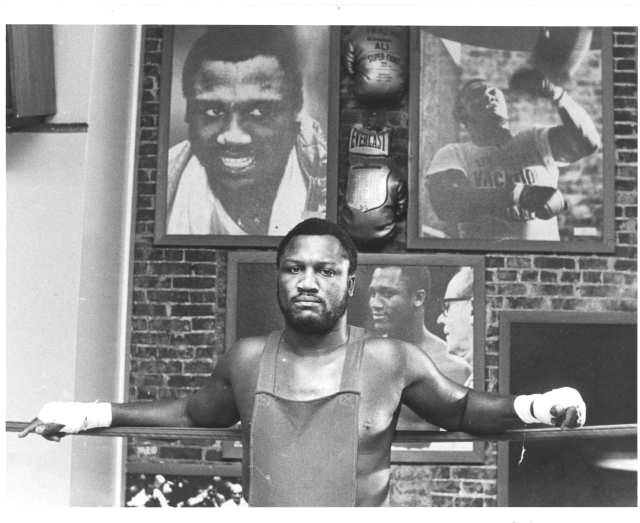 by most boxing aficionados to rank among the most brutal in heavyweight history. In one corner, Muhammad Ali, the self-proclaimed greatest of all-time. In the other, Smokin’ Joe Frazier, a brooding arch-nemesis who absolutely refused to stand down regardless of how tight or often Ali insisted on putting the screws to him.
By October of ’75, Ali and Frazier had split the first two fights between them, a pair of unanimous decisions that somehow managed to live up to the pre-game hype and then some. Despite the unprecedented build-up (and payoff) surrounding both of those contests, it would be this fight – this battle to the near-death on the southern outskirts of Quezon City – that would tether the legends of both men inextricably from that point forward.
Most on-hand accounts put the in-ring temperature that morning somewhere between 110 and 120 degrees. By the end of the 14th round, Joe Frazier had gone blind in both eyes, and he was spitting pure blood and guts into the belly of a bucket. Ali, on the other hand, was sitting slumped over on the point of near-collapse in his corner, pleading with (his trainer) Angelo Dundee to simply cut the gloves and end it.
The only thing that prevented Dundee from doing so was the fact that Joe Frazier’s cornerman quite literally got there first.
In the end, Muhammad Ali got the better of Joe Frazier both inside and outside of the ring.
But Ali would never be the same fighter again.
And, unfortunately, neither would Joe Frazier. Continue reading
David Gunn on Curbing Subway Graffiti in New York City
“We had a yard up in Harlem on 135th Street where the trains would lay up over night. The kids would come the first night and paint the side of the train white. Then they would come the next night after it was dry, and draw an outline. Then they would come the third night and color it in. It was a three-day job. We knew the kids would be working on one of the dirty trains, and what we would do is wait for them to finish their mural. Then we’d walk over with rollers and paint it over. The kids would be in tears, but we’d just keep going, up and down, up and down. It was a message to them. If you want to spend three nights of your time vandalizing a train, fine. But it’s never going to see the light of day.”
Good Pictures/Bad Camera: Bedford Avenue & Beyond
(Good Pictures/Bad Camera is a regular feature on IFB.)
Moving On: The Season Finale

It was just past 8 pm on a Tuesday when I received word that my grandmother was dying. She had been in a coma for several hours, and her vital signs were fading. Last Rites had already been administered twice.
My father had been dispatched to collect me. He and I drove back to Swarthmore in silence, my thoughts and focus facing forward as we sped north on 55.
The doctors could not pinpoint what it was that had caused my grandmother to collapse, but they were sure it had something to do with a previously undiagnosed case of emphysema. My grandmother was not a smoker, but my late uncle was. For 30 years, my grandmother and my uncle had lived together in a two-bedroom walk-up 10 miles south of Philadelphia. My uncle had died half a decade prior.
***
My mother insisted that it would be a good idea for me to have a few minutes alone with my grandmother in her hospital room. My grandmother had been laid out in a gown. She was all purple veins and tulips. It was cloudy outside, and that made the room seem damp. I held my grandmother’s hand. The skin on her fingers felt like loose scales. After a few minutes, I began wailing, while also pleading with my grandmother not to die. My cousin Carolyn had somehow slipped into the room behind me, and she was standing in wait now. I stood up, and I stepped back out into the hall.
A half hour later, the whole thing was over.
***
In the months that followed my late uncle’s death, I’d spend entire weekends at my grandmother’s apartment – a youthful presence enlisted to lift her spirits. I’d set up shop in my late uncle’s bedroom, where there was a library along with a cherrywood desk. The refrigerator was always stocked with Pabst Blue Ribbon, which I drank while sitting on a cast-iron porch after my grandmother had fallen asleep. There were records by Nat King Cole and there were TV dinners a la Stouffer’s. There were month-old crosswords jammed between the sofa cushions, and there was a faded page-one headline hanging on the back of a door that read, “ANYTHING IS POSSIBLE.”
My cousin Dave lived with his mother in a two-bedroom downstairs, and Dave was kind enough to let me tag along whenever he went out drinking with his friends. Dave had a suitcase full of cassettes featuring some of the premier artists of the 60s and 70s. Sometimes, when my grandmother would slide me a few bucks, I’d hightail it over to The Bazaar, where I’d pick out something odd and wonderful by The Who, The Doors, The Lovin Spoonful, or Pink Floyd. This is how I came into contact with great LPs like Quadrophenia and The River, Blood on the Tracks and Harvest Moon. This is how I came to realize there was more to the FM dial than the Hot Eight at Eight and Terry “The Motormouth” Young.
Somehow, it felt like that era of great discovery had officially ended now. There would be no more weekend trips to my grandmother’s apartment, no more late-night beers on her second-floor porch, no more Boxcar Willie playing loudly from her living room, no more writing by the desktop light. There would only be a three-day mourning period, capped off with beads and flowers in some dimly-lit slumber room where we would all be lined up like lemmings, made to exchange phatic pleasantries with 300 or more of our closest friends and relatives, all before driving single-file to a church, where some know-nothing preacher would stand behind a pulpit and butcher my grandmother’s first name repeatedly, all the while trying to convince us that this was not so much a day of mourning as it was a celebration.
Then we’d all line up a second time, and we’d bawl our way into the sunlight … an organ playing us out to the heartfelt strains of “Eagle’s Wings”. We’d load the old gal into a wagon, and 30 minutes later, we’d look on in tinted silence as she got lowered into the earth. From there, we’d all head off to lunch at some swanky black-tie joint. “What a fitting sendoff,” any number of people might say. “What a fitting sendoff.” Of course.
***
I do not remember exactly when or how I returned to Wildwood that Labor Day weekend. I do remember that I had two bags’ worth of groceries under each arm upon my arrival, and that the doorknob to my apartment had a medieval-sized padlock clamped down over it. The padlock had a handwritten note attached to it. That note read: “See Sam at the Shore Plaza for a key to unlock door.”
Sam was my landlord. Sam was also the owner of both Sam’s Pizza and the Shore Plaza Hotel. Sam stood 5’3 with a shiny head, and Sam spent most afternoons in the main lobby of the Shore Plaza. Whenever Sam saw me shuffling toward the apartment, he’d wander out onto the sidewalk. The building that housed our apartment was located directly across the street from the Shore Plaza. If I was walking toward the apartment alone, Sam would stare at me without saying a word. If I came shuffling down the block with a girl on my arm, Sam would call out from across the street, “She’s not living there, is she?” “No, Sam. She’s not,” I’d call back.
Sam was intrusive in an old-country way, and I was in no position to dispute that. My name did not appear on any lease, and I had recently become the only tenant left occupying our 4th-floor apartment. My lone roommate, Jen, had set out for school the previous weekend. Jen had hit me up for cash to pay off the remaining balance of our seasonal rent before she left. As a result, Sam could conceivably – and legally – double his take by kicking me out and taking on another tenant for the month of September.
I kept all of this in mind as I wandered over to the Shore Plaza to confront Sam about the padlock.
“You livin’ over there?” Sam asked, as he glanced around the Shore Plaza lobby.
“Umm, yes,” I said. “I’ve been living over there for the better part of two months. You know me. You say hi to me sometimes.”
“That place is a mess,” Sam said. He had obviously sent someone over to inspect the apartment during my absence. “You need to clean it up.”
I assured Sam that I would.
“What about the rent?” Sam said, just before he handed me the key to the padlock.
“What about the rent?” I said. “Jen paid the rest of the rent about a week ago.”
“No, no, no,” Sam said, snapping his fingers. “That was the rent for August. That girl who always live with you … What’s her name?”
“Jen,” I said.
“Jen,” Sam said. “Right. Jen told me you pay off the rest of the rent for September when she drop off her key here last Sunday.”
“How much?” I said.
“How much what?” Sam said.
“How much for September?” I said.
“280,” Sam said, flatly.
I dug into my pocket, which also functioned as a cash-n-carry, and I counted out seven 20s. “I’ll pay off the rest next Thursday,” I said.
Sam handed me a key for the padlock. “You’re a good boy,” Sam said.
***
September in Wildwood was the most beautiful thing.
September was the Stonehenge solstice, the magnetic fields of Finland; September was the pride before the fall, when thinning crowds meant fewer hours, and the island blazed in pristine shades of auburn. September was the engine cooling, the Sunday paper, the sublime sound of ebb tides rolling in outside your door. September was cold beers and citronella, deep-sea fishing on the fly. September was the month when summer suntans slowly faded, when a million grains of sand began to migrate off the jetties. September meant drunk firemen and Harley hogs, classic cars and kite conventions. September was the month when hardcore flotsam washed ashore, when motel decks, they set to buckling. September was the month when beatnik locals hawked their wares. September was the month that culminated with an end-of-season fire sale along the boards.
That fire sale was known as Super Sunday. Super Sunday was a six-hour street bazaar during which seaside merchants sold off as much surplus stock as possible, rather than box that stock up and take their chances trying to sell it the following May.
I worked in Tin Can Alley on Super Sunday. Around 6 PM, I leaned my shoulder against a pillar, and I tossed the headset microphone aside. I looked on as the night watchman fastened a steel chain across the central gateway to the pier. That steel chain had a wooden sign on it that read: “PRIVATE PROPERTY. NO TRESPASSING.”
A few minutes later, I waved goodbye to all the maintenance workers as they stepped over the steel chain en route to a nearby bar.
“C’mon, man,” one of the maintenance workers said. He turned in stride and tossed me a softball. “We’re all headed to the Tiki. You comin’?”
I caught the softball and I tossed it back. “I’ll be down there in a bit,” I said.
With that, I set to closing Tin Can Alley for the season. I took my time and I let the breeze run through me. I watched a napkin as it fumbled down the strand.
Day 182
“Saratoga Summer Song” originally written by Kate McGarrigle.
***
(Moving On is a regular feature on IFB)