Go see The Avengers. It’s light, and silly, and it doesn’t get bogged down with details. Scarlett Johansson looks hot, Robert Downey, Jr. is superb, and Mark Ruffalo’s Hulk is good enough that it may actually merit yet-another reboot of that franchise (Keep an eye out for one scene, in particular, during which Loki, the super-evil bad guy, does for the Incredible Hulk what the Cairo Swordsmen did for Indy).
How can you go wrong, right?
But wait! there’s more … including the final big-screen trailers for The Amazing Spider Man and The Dark Knight Rises, as well as a climactic battle for all of mankind on the war-torn streets of midtown Manhattan, just like Superman II.
Anyway, forget about the fact that Captain America was weak, both Hulks and Thor were just OK, and Iron Man 2 basically mailed the whole thing in. The Avengers does more than compensate for all of that, and it also promises to move the story forward somewhere around the Summer of 2015.
“When the editors and publishers of our great magazines and networks want you to worry about something – child safety seats, the impact of air bags, drunken driving, insecticides on apples – they know how to make you worry. They know exactly how to capture your attention. Mathew Shephard and hate crimes, Rodney King and racism: The networks and great newspapers know how to hit Drive and go from zero to the American consciousness in 60 seconds. And the networks can do it on free airwaves, a gift from our government. Did the networks and great newspapers make us worry about what we knew we should be worried about? No. Did they bang the drums? No. Did they hit the right story like they know
how to hit a story? No.”
I am alone now, and I am shivering, mangled beyond all recognition in the rear pew of St. Ann’s Catholic Church. It is late now, well past 4 am, and all that’s left along the strand is a pale and wanton cast of zombies, spilling out into the night as Holly Beach marquees go dark. This is what Scottish warlocks refer to as the Devil’s Pocket – a vacuum-black void that exists between pitch dark and dawn. The Devil’s Pocket is no time to go wandering dead-end streets alone, that is unless you happen to be carrying a gun, or a badge, or both, and you have absolutely no qualms about brandishing either one.
Down along the east end of Cresse, local authorities are just now beginning to investigate the sudden disappearance of a Canadian transvestite named Rene Ouellet. Rene was last seen wandering toward the beach with an unidentified male right around this hour of the night. Less than a week prior to Rene’s disappearance, a recent high school graduate by the name of Steven Freeman had been arrested and charged with the fatal stabbing of a classmate outside a North Wildwood hotel along the corner of 11th and Surf Avenue.
Two summers before that on Memorial Day weekend, the half-naked body of a 20-year old named Susan Negersmith had been found beaten and bloody behind a dumpster outside Schellenger’s Restaurant. Negersmith’s body had been discovered by two busboys, her T-shirt and bra had been pushed up around her neck, her jeans and underwear had been bunched up around one foot. There were 26 areas of trauma on Susan Negersmith’s body, including vaginal bruising and the presence of semen.
At the time, the Cape May County Coroner’s Office tried to pass off Susan’s death as nothing more than routine alcohol poisoning. That is until the state police, the FBI, and a forensic pathologist by the name of Michael Baden simultaneously descended on the area, declaring the entire investigation (or general lack thereof) an obscene miscarriage of justice. Those sources concluded, much like any other sane, uncompromising human being might, that Susan Negersmith had been raped, and then strangled, and then left to die upon a filthy piece of cardboard. “It would seem to me you could not rule it any other way,” State Police Superintendent Justin Dintino had been later quoted as saying.
In the blazing shitstorm that ensued, Mary Ann Clayton, a state medical examiner who had assisted in Susan Negersmith’s initial autopsy, admitted a “grievous error” had been made, and offered to amend the official cause of death. Clayton was overruled by her superiors, many of whom insisted upon sticking to their story. This despite the fact there was still an unrepentant rapist/murderer left wandering the streets.
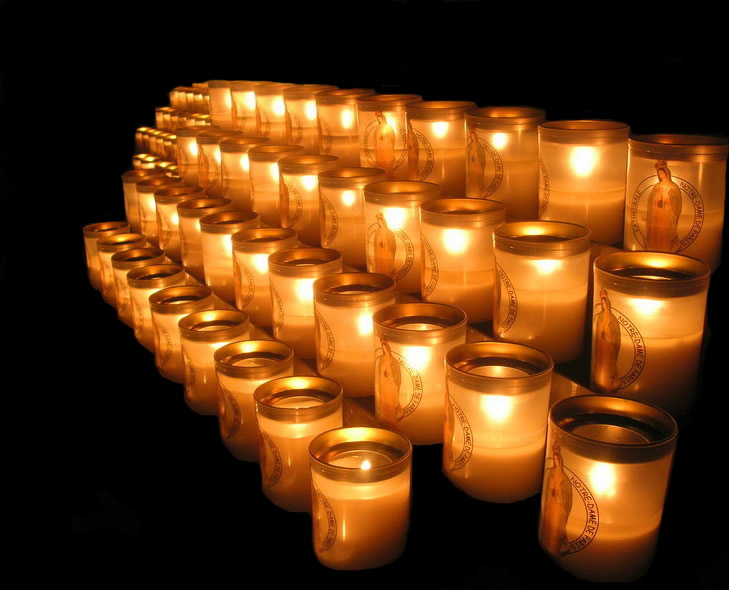
All of this kept swimming around in my head as I ducked into the bowels of a catholic church at 4 o’clock in the morning. I was drunk, and severely stoned, and I was more than a little bit afraid. More to the point, I had no idea how I had gotten there. I mean, I knew where I was. And I knew that I had wandered in there, and that the door had been unlocked. I simply could not stitch together how I had gone from smoking hash in someone’s attic to staring at a row of votive candles during the middle of the night.
***
I was seeing the world through kaleidoscope eyes now, an array of dancing prisms set adrift in my periphery. The votive candles were fucking with my vision something wicked; I could see the stained-glass glow of blinking traffic signals along the altar. I could hear the rhythmic purr of dual exhaust and static pounding … a pair of ghetto dragsters battling hard along Atlantic. The screeching tires set me reeling, reeling forward past the altar, past the candles and the stained glass, past the streetlights and the shivering, past it all until I reappeared inside the bare-bones attic of some beach house, smoking pot out of a bong that may or may not be nicknamed Sue.
I hold that bong down at an angle, much like a mortar or an alpine horn. The skunk weed sets me spinning, the hashish sets my mind afloat … afloat and confused, like some cosmic whirling dervish. I am lost now, doggy-paddling, set adrift a thousand miles at sea. I will myself toward the shore, battling currents and black ripples, battling eddies and fierce winds, battling my way beneath the surface … battling deep, deep down into the nether until I find myself right back again, inside the vast and empty confines of a church past 4 am.
I slip out of the church through a side door. I wander down along East Maple. I take a seat upon the front steps of a house where I once lived. An unmarked cruiser stops in front of me, a plain-clothes officer asks, “What the hell do you think you’re doing?”
“I’m just on my way home,” I somehow manage to tell the officer.
“Home where?” the officer asks.
“Home here,” I say, without hesitation. “I live up on the second floor.”
The officer glances upward, considers whether to call me on my bullshit.
“In that case, get upstairs,” he says. “You don’t want to be out here by yourself this time of night.”
I stand up, and then nod. I climb upstairs toward the door. I disappear into the shadows, pulling curtains close behind me. I stand there, still and silent in the hallway of that beach house. I hold my breath and shut my eyes. I pray to god no tenant sees me.
I creep toward the window, making sure the coast is clear. Then I dart back down the steps and high-tail it to the beach. It is light now, nearly dawn, and the sun will soon be breaking coast. It’s time for me to get back home. It’s time for me to get some sleep.
Last night, Lissy Trullie arrived at the Mercury Lounge for what should have been a triumphant return. Trullie played a similar, well-publicized CD pre-lease show at the Mercury way back in early February, 2009. That show felt more like a coronation than a celebration – fans packed rafter-deep, media types from The Times, The Voice, The New Yorker and beyond all bandying about. There were even a handful of celebrities on-hand to ratchet up the “it” factor.
But that was then, as they say. And this, well, this is now.
All of which might explain why Trullie’s hour-long set last night seemed to lack the crucial energy that made that 2009 show such a hit. I mean, sure, the room had its fair share of critics and fans. But the mood seemed deflated, the crowd seemed subdued, and – more often than not – the applause felt almost forced. National reporters were replaced by a room full of bloggers, many of whom appeared worlds more consumed with shooting grainy cell-phone vids than they did about critiquing, or perhaps even enjoying, Trullie’s set. There was very little fanfare for – and even less recognition of – the half a dozen or so selections from Trullie’s brand-new, self-titled LP.
What the audience clamored for instead was anything and everything from Trullie’s critically-acclaimed 2009 EP, Self-Taught Learner.
Obligatory bursts of nostalgia were few and far between, however, and what filled the gaping voids was very often either silence or the synth-pop sound of Trullie laboring to put her new material over. Lissy’s onstage presence is still remarkable, as is the way she wraps those bony fingers round her Fender, staring out across the room from behind medallion eyes. Yet, the set still ended with a spare, almost non-existent round of applause, immediately followed by Trullie making her way, alone and off-kilter, past a handful of well-wishers, en route to her dressing room … a feat she accomplished rather easily, given the fact most of her initial audience had already disappeared into the night.
Wait. What’s that you say? James Franco wrote, directed and starred in a full-length feature film for his NYU thesis project, and it’s premiering this weekend at the IFC Center?
Why, yes, of course James Franco wrote, directed and starred in a full-length feature film for his NYU thesis project, and it’s premiering this coming weekend at the IFC Center downtown.
I mean, how could it not be, really?
This is James Franco, after all – the budding young provocateur who wants so ardently for people to recognize him as a renaissance man that he’s willing to turn his entire career into one long, rambling performance art project. This is a guy who figures if he tethers himself to enough beatnik poets and esteemed liberal arts programs, the public will inevitably have to consider him brilliant by association. This is a guy who – perhaps to his credit – refuses to rest on the laurels of an Oscar-caliber acting career, instead taking significant detours into long-form fiction, poetry, music, and teaching along the way.
And the unfortunate thing about it is, with the exception of being an absolutely superb actor, just about everything else James Franco tries his hand at is mediocre at best. As a fan, you kind of want to cheer the guy on … give him his due for bucking the system and trying his hand at several worthwhile pursuits that may not come so easily.
As a critic, you’re in the unfortunate position of leveling with your readers – a sentiment that is particularly relevant in the case of The Broken Tower, a two-hour film about a little-known American poet who travels the world on his father’s dime, while doing very little else in between. Continue reading →
“Every man is proud of what he does well, and no man is proud of what he does not do well. With the former, his heart is in his work, and he will do twice as much of it with less fatigue. The latter performs a little imperfectly, looks at it in disgust, turns from it, and imagines himself exceedingly tired. The little he has done, comes to nothing, for want of finishing. The man who produces a good, full crop will scarcely ever let any part of it go to waste. He will keep up the enclosure about it, and allow neither man nor beast to trespass upon it. He will gather it in due season and store it in perfect security. Thus, he labors with satisfaction, and saves himself the whole fruit of his labor. The other, starting with no purpose for a full crop, labors less, and with less satisfaction. He allows his fences to fall, and cattle to trespass.
He gathers not in due season.”
I was working the microphone of an eight-player race game located on the corner of 24th and the Boardwalk. I was living in a one-bedroom apartment less than two blocks away. My roommates were a pair of potheads named Jen and Heidi. Jen and Heidi had only agreed to take me on so they could afford to buy more weed.
Jen and I shared a room, and, what’s more, we shared a mattress. On certain nights, the two of us would lie awake, and we would debate what the repercussions might be if we decided to have sex. Eventually, one or both of us would fall asleep, beaded foreheads mingling sweat toward the center of our pillow.
Heidi slept alone, on an off-white futon in the living room. Heidi had recently been diagnosed with herpes, and, for a time, she would talk about this openly. Eventually, our social circle made an in-joke out of Heidi’s sexually transmitted disease. “Herpes Heidi! Herpes Heidi!” drunken hecklers would call out from behind Heidi at parties. Then one morning, Jen informed me that Heidi had moved out.
“Wow, really?” I responded. The two of us were still lying in bed.
“Yep,” Jen told me. Jen took a drag off of her cigarette.
“Want to have sex?” I asked Jen.
“Not right now,” Jen told me.
***
The day before I moved into Jen and Heidi’s apartment on 26th Street, I got fired from my job as a part-time dishwasher at Samuel’s Pancake House. I had landed the position through a friend, who was both gracious and sympathetic enough to put in a good word. What that friend did not account for was my drinking. Most mornings, the manager would either have to send someone to fetch me or gamble on letting the dishes pile up until I arrived. Once a shift, I would fall asleep while standing up. A stack of plates might shatter. The boys working the grill would look over at me and say things like, “Stupid motherfucker,” under their breath. Some days I’d arrive at work so famished, I’d sneak leftover scraps before scraping a plate into the garbage. I was entitled to one free meal at the tail-end of every shift. Other than that, I was living on a steady diet of cheap beer and nicotine, burning more electrolytes than my body could afford.
Anyway, the point being that eventually I got fired. What’s more, I had to sign over the only two paychecks I had received to a Korean girl named Ronnie, who, in turn, cashed those checks through her account for a nominal fee. I still hadn’t gotten any picture ID, and there wasn’t a check-cashing joint on the island game enough to accept the word of an 18-year old who was all cheek acne and bones.
Toward the end of July, I accepted an offer to talk to Bob Satanoff. Bob ran the Beach Grill and several other snack carts along Morey’s Pier. He also ran a water gun game on the west side of 24th Street.
“I hear you have a drinking problem,” Bob said to me, after I had introduced myself.
“Where’d you hear that?” I replied, taken aback.
“Bill Salerno,” Bob said.
“I don’t know who that is,” I said.
“Well, he knows who you are,” Bob said.
“Apparently not,” I shot back.
“You ever worked a game on the boardwalk?” Bob asked.
“No, but I can learn,” I said.
“Everybody thinks they can learn,” Bob told me.
“No, I’m serious,” I said. “I can do it. I swear.”
“You ever worked on a microphone?” Bob asked me.
“I used to be the lead singer of a band named 13,” I lied.
Bob hired me on the spot. The following morning I reported to the Beach Grill, where I collected my bank, and a set of keys. From there, I taught myself how to operate the stand.
My only full-time coworker was some slicked-back motherfucker named Dan. Dan worked the night shifts, whereas I worked the days. Dan was selling drugs out of the stand. My fourth day on the job, I found a quarter-ounce of weed buried inside a box full of plush behind the counter. One day later, some black dude with a scar across his chest approached the stand, asking where my “partner” was.
“Dan?” I said, sarcastically. “Dan won’t be around until tonight.”
The dude looked to his left, and then to his right. Then he looked directly at me.
“Yo, you holdin’?” the dude asked. He sniffled, wiped his nose clean with his hand.
“Holden who?” I wondered.
“Yo, nevermind,” the dude said.
He leaned the top half of his body over and into the stand, like a fisherman stretching starboard to reel in his catch. The dude was digging into a crate of stuffed animals now. “Anything I can do to help?” I asked. I had stashed the quarter-ounce of weed behind the stand earlier that morning.
“Nah, I’m good,” the dude said. He pulled his body from the bins, and then he shot me a knowing glance.
A few days later, Dan got fired – replaced by a 37-year old named Karen. Karen stood 5’2, tan and stocky. Karen wore a belt pack over a tanktop and short shorts. Karen was authoritative, and she liked to justify a lot of her attitude by saying, “I’m an agent, dude. The last thing I need is somebody trying to tell me what to do.”
Karen eventually agreed to let me work the stand alongside her (entirely off the clock). My goal was to attain some sense of how Karen achieved a natural rhythm on the microphone. But all I came away with was the sense that Karen wasn’t actually that good. The entire shift felt like a grind, punctuated by Karen smoking menthols in the corner, vaguely attempting to call in passing tourists between drags. There were prolonged spans of dead air time, uncomfortable periods during which Karen would school me on all the reasons people weren’t stopping by to play the game. Karen cited shitty lighting, half-ass flash, outdated stock, and a one-speaker sound system that was turned inward, rather than out.
“And I’ll tell you one other thing,” Karen insisted, “This stand’s located two blocks north of where all the real action is.”
Karen pulled a prescription pill bottle out of her windbreaker. She counted out a few whites, washed them back with a quick belt of water.
“Don’t ever get old, dude,” Karen instructed me. “Don’t ever get old, and don’t ever get scabies.”
***
I spent the next few nights wandering the boardwalk, gaining a feel for how the best microphone operators transitioned through a crowd. There was Ricky Nickels down on Midway Pier, whose nasal delivery seemed more suited to a DJ booth. There was a 6-ft Scottish chick who ran the race games down by Mariner’s Landing. And then there were Sean and E.J. Dougherty – a pair of brothers from South Philadelphia who both looked and sounded the part to a T.
Sean and E.J. ran the Gambit – a huge, free-standing race game located along the east side of 24th Street. Both brothers had second-generation ties to North Wildwood, and they also had an instinctive sense of what stood missing from a lot of the midway attractions. Gambit’s music, sound, and lighting were all fantastic. The Gambit was located one block south of Sportland Pier – a rotting piece of flotsam boasting old-school attractions like the Hell Hole and the House of Horrors. Sportland Pier was also home to Wild Wes and Lucky Lou, equal partners in an industrial-sized bushel joint situated directly across the way from Bob Satanoff’s water-gun game.
Lou was tall and fat, pot-bellied like a walrus. Wes was short and tan, with whitewash dentures and a mustache. Lou and Wes employed a molting nest of vipers, the lot of whom detested me on principle. The better I became at working on a microphone, the more those vipers hissed at me from across the boards. Every night at 6 pm when Karen showed up to relieve me, the Sportland boys would break out into applause. Most of them had worked with Karen, and they showered her with nicknames like Madame General and The Sarge.
The first Thursday in August, Bob Satanoff instructed me to hand-deliver Karen’s wages. Bob wrote Karen’s total on the outside of an envelope, which is how I discovered Karen was earning more than $600 per week (25% of her nightly gross, with no adjustment made for costs). I maxed out at $260 ($6 per hour with no taxes taken out). The revelation didn’t bother me so much as the fact that Karen sucked at what she was doing. Given the disparity, I intended upon proving that I was the bigger draw.
There was no chance of me rivaling Karen’s totals during an average beach day. But every time I caught a boardwalk afternoon (i.e. clouds but no rain), I’d throw down on that microphone much like a madman hawking cattle. I started running $3 races for $7 tigers, upselling dollar stock at $4-5 a pop. My day-time totals began to increase, and then double. Karen, on the other hand, grew increasingly frustrated, spending the first 10 minutes of every night shift dismissing whatever it was I had accomplished. “You had the clouds working for ya today,” she might comment, or “I’m guessing people spent so much this afternoon that they won’t put out a dime tonight.”
I’d taken to walking each afternoon’s total over to Bob Satanoff, thereby avoiding any risk of Karen taking credit for my work. Toward the end of August, Nick the Greek – the man who actually owned the boardwalk block that I was working on – handed me an envelope with a hundred dollars in it.
“Good work, Bill,” Nick said to me.
The day after I received that bonus, a slow and steady rain fell down upon North Wildwood. I sat alone along the counter, sifting through some old cassettes. I turned the speaker out toward the boardwalk, sang along into the microphone. Around 2 pm, Lucky Lou wandered over from across the way, leaned his back against the counter.
“How’s it goin’?” Lou wondered.
“How’s it goin’? It’s goin’ alright,” I said. “How’s it goin’ with you?”
“Aaaaaah, it’s a washout,” Lou said. He swung his body round to face me, squeezed the trigger of a water gun. “Might as well roll down the shutters and call it a day.”
“I hear ya,” I said, laughing. “I could use a few more hours of sleep, if you know what I’m sayin’.”
“So, listen,” Lou told me, completely ignoring my last comment. “I was talking to my guys over there, and we were wondering if you could do us a small favor.”
“Sure,” I said. “No problem. Just tell me what you need.”
“I, well, we, need you to stop singing over the microphone. Otherwise, the entire lot of us are gonna need to come over here and shove that goddamn speaker up your ass.”
Lou stood still and silent for a moment, sizing me up like a pitbull might a rabbit. He took a breath, then lumbered back across the boardwalk, where he fell asleep across a bed of plush.
“This is your walk and this is your moment and this is your time capsule, says the city every evening as I leave the mailroom and step outside to find the lights of Lincoln Square. This is the moment when you can take me and mold me and make me in your image, and I’ll be what you wish and I’ll take after all your wants and whims, I’ll woo you if I have to till you get used to me and love me. But after this I’ll harden into what you see now and what you want now, and I may never change again. Buildings will come and go, and today’s movie theaters will be gone soon enough, you will grow older too, but come the evening of every day, you’ll find me as you find me now, waiting for you to step out into the speckled evening to recall, once again, as ever again, that you and I are of one kind. This is your New York.”