A week after I left home, my parents put the word out 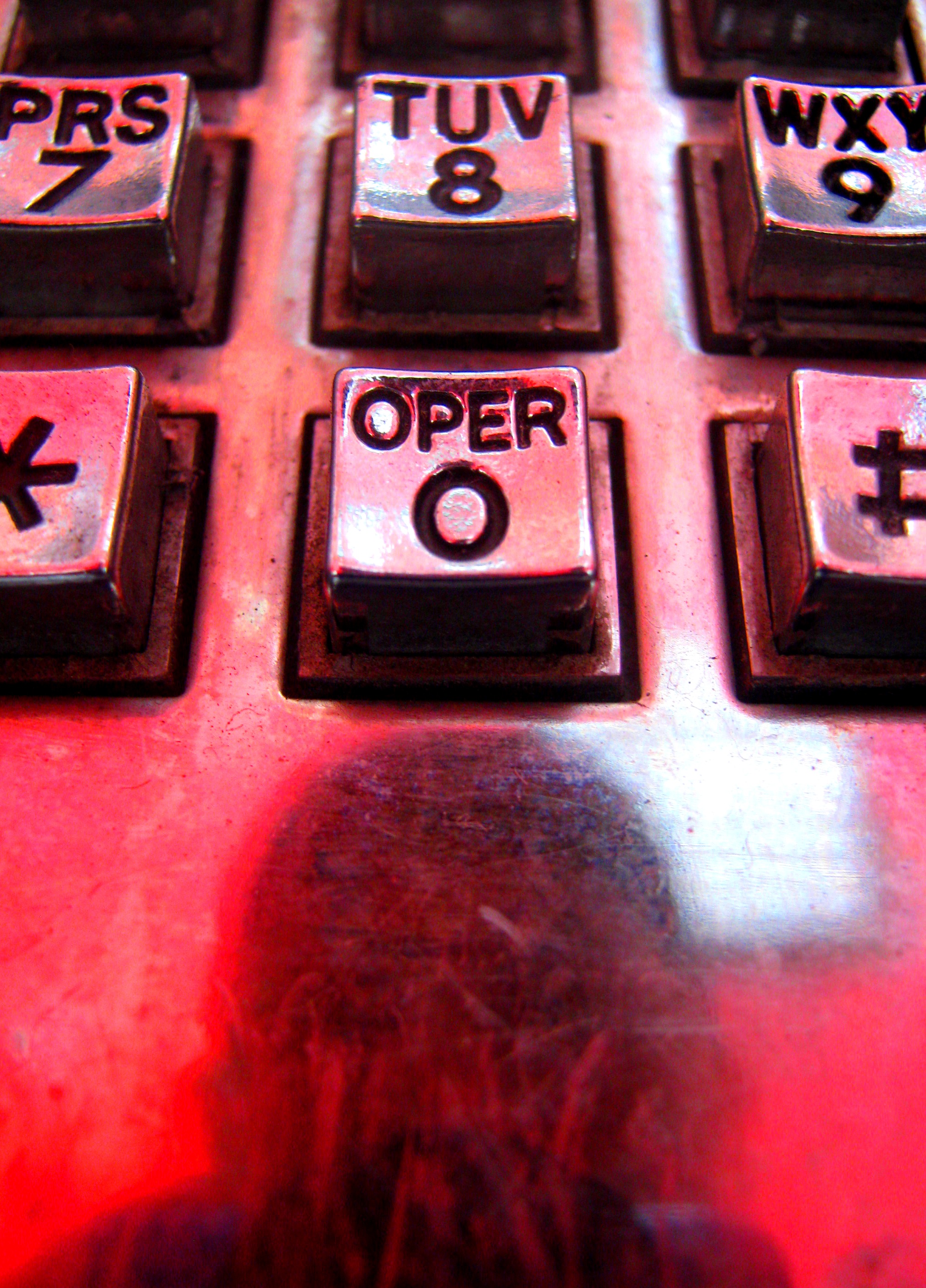 they had taken the spare house key from its usual spot. They had fastened all the windows. They had secured all points of entry.
It was an absurd stance to take, especially given I knew of at least three alternate ways to access the house, and none of them required a key. As a child, I was often reprimanded for slipping the clasp on our front window, then reaching through to unfasten the front door. I never had a house key. I never needed one.
To that end I had a close friend drive me over to my parents’ house one mid-May morning – a morning when I knew my mother, my father and my younger sister would be out. I requested that this friend park his car around the corner, allowing me to make my approach across back fences. I used a pocket knife to slip the lock on our back door, then shuffled upstairs to my bedroom, where I found two stacks of laundry folded neatly on my bureau.
I remember streaks of daylight breaking through the pastel curtains. I remember awkward silence mixed with pangs of guilt. I remember bagging clothes, then running out the basement door. I remember how that door slammed shut, then locked itself behind me. I remember my father intercepting me a few days later on a crosstown walk from Ridley Park to Springfield. I remember he was driving south along 420 when I noticed him pass by. He broke full-bore into a U-turn, swerving round to block my path.
“Get in,” my father said. He pushed the passenger-side door open.
“No,” I said back.
“Get in,” my father said, looking everywhere but at me. “I just want to talk, that’s all.”
“Well, then talk,” I said. “But I’m not getting in that car.”
My father considered this for a moment. “What if I pull into that vacant lot?” he suggested, gesturing with his chin. “That way I can turn off the car, and you can get out whenever you want.”
“OK,” I said. “Pull around. I’ll meet you there.”
And so for the ensuing four minutes, my father and I sat in a vacant parking lot along a shady patch of Route 420, both of us staring forward at reflections on the dash. He offered me no quarter, and I offered him none back. We just sat. And stared. And then we sat and stared some more.
Eventually, my father insisted that I come back to the house. I, in turn, insisted there was nothing left to say. I looked out the window, asked my father to let my mother know I was getting by OK. Then I opened the side door, and – for the first time in my life – I turned my back upon my father. For the first time in his life, he simply let me go.
***
Come Memorial Day weekend, I made the full-time move to Wildwood, New Jersey. My parents, meanwhile, had taken to contacting as many of my friends’ parents as possible, desperate for any update on my whereabouts. Their general plea was for my safety, my father maintaining he had reason to believe I’d gotten mixed up in drugs. When none of my friends stepped forward to volunteer information, my parents cast a wider net, placing calls to several people I hadn’t spoken to since high school. They called my friend Michelle. They called some dude I used to drink with. They even called some girl I’d shared a tryst with during Senior Week.
Fearful that my choices had begun impacting others, I called my parents from a pay phone and arranged for them to come visit me in Wildwood. The afternoon they arrived, I hurried down from a 2nd-floor apartment I had been living in and met them on the street. There were several people inside the apartment on that afternoon – drunks and cokeheads. I was doing my best to keep my parents from wandering in upon that scene.
My parents bought me lunch around the corner. Our conversation was awkward. My parents made it clear they disagreed with what I was doing, and I made it clear that their opinion held no sway. Once lunch was over, the three of us wandered back to my apartment. Out front, I introduced my parents to one of my drunk roommates, who kept repeating the phrase, “So you two are Bob’s parents,” over and over and over again.
Before my mother left that afternoon, she handed me a piece of paper with a phone number written on it. The number belonged to my cousin Dave, who was staying at a nearby house in Sea Isle, New Jersey. Dave was four years older than me, and he occupied the big-brother function in my life that my real-life big brother had not filled. Dave was intelligent, non-judgmental. Back in high school, he introduced me to Tolkien and Vonnegut; JIm Morrison and Roger Waters. Dave took me to see my first concert, and then, a year later, he took me to see my second. He taught me how to play pinball and poker, checkers and chess. He was the only one of my relatives who did not approach me like a chore.
I called my cousin from a pay phone a few days later.
One ring. Two ring. Three ring. Four.
“Hello,” an unfamiliar voice said.
“Dave?”
“No, no. This is Kevin. Who’s this?”
“Kevin, it’s Bud.” a family nickname.
“Buuuuuuuuuuuuuud,” Kevin said. “What’s up, man?”
“Not much. I’m actually calling from a pay phone over in Wildwood right now, so I was wondering if my cousin Dave might be around.”
“Yeah, man. He’s right here. Hold on.”
“Hello,” my cousin Dave said.
“Hey, man. What’s up? It’s Bud.”
“What’s up?” my cousin Dave said. “Nothing’s up. What’s up with you?”
“Me? Well, nothing, actually.”
“Uh-huh,” Dave said. “So what are you calling me for?”
“Well, my mom gave me this number,” I said, “and she told me that you wanted me to call.”
“I said that?” Dave said.
“Well, yeah,” I told Dave. “I mean, that’s what she told me.”
“I don’t think so,” Dave said.
“Oh. Well, maybe she just figured since the two of us were both down the shore for the sum — ”
“No,” my cousin Dave said.
“No what?” I said. I was confused. “Is there something wrong here?”
“Something wrong with me?” my cousin Dave said.
“I don’t know, something.”
“There might be something wrong with you,” my cousin Dave said, “but there’s nothing wrong with me.”
“Something wrong with me like what?” I said.
“Something like 10 pounds’ worth of potatoes inside a 5-lb sack,” my cousin Dave said.
“Huh?” I said back.
“You heard me. Nothing more than 10 pounds’ worth of potatoes inside a 5-lb sack.”
“I have no idea what you’re talking abou — ”
What followed was the sound of change dropping. The phone had swallowed my deposit. I gathered another handful of quarters, redialed the same number.
“Hello,” my cousin Dave said.
“Hey, man. I think we must’ve gotten disconnected.”
“We didn’t get disconnected,” my cousin Dave said. “I hung up on you.”
And then again, as if to demonstrate his point, my cousin disconnected the call, leaving me alone at the corner of Glenwood and Pacific, staring at my reflection in the keypad.
“Ten pounds worth of potatoes inside a 5-lb sack,” I murmured.
Nothing more than 10 pounds worth of potatoes inside a 5-lb sack.
Day 99
(Moving On is a regular feature on IFB)
You ever get the feeling that just about everything Allen Ginsberg ever did – with the obvious exception of writing absolutely brilliant works of poetry – seemed a little bit contrived? I mean, here the guy is, dancing around in the streets of Versailles. There he is again, howling at the moon in the middle of the afternoon. Not to mention the way he always seemed to be lurking in the shadows whenever Dylan was busy making history.
Well, if you’ve ever felt that way about Allen Ginsberg, than The Beat Hotel probably isn’t for you. Continue reading
What Lee Fields pulled off last night in front of a capacity crowd half his age was nothing short of amazing.
Standing all of 5’5, pimped out and proud in thrift-store shades and cream white pinstripes, Fields was the personification of a bygone era in Soul – one that’s enjoying a welcome resurgence these days, as an entire generation of fauxhemians rediscover what it was that had gone missing along the way. Continue reading
“You can be a lot of things and be lonely. You can do exciting things and be lonely. You can fall in love and be lonely. You can be content and be lonely. Once you’ve felt that kind of deep alienation, it changes you permanently. Permanent change means a lack of full recovery. If a man has an accident and limps for the rest of his life, we say he never fully recovered. You can even be lonely and be lonely.”
I showed up drunk for my first day of college. I showed up barely coherent, waving like a buoy, reeking like a bad sock that had been bathed in turpentine.
After 18 years spent sweating it out in Delaware County, just waiting for the moment when I could break out, bust out, explode across the cosmos, there I sat, half-baked on a set of bleachers, hunkered deep inside a low-budget gym, watching some dude named Bird lead a “WE ARE …” chant as he charged across mid-court, unfurling an industrial-sized banner.
I was there to be acclimated, indoctrinated, to pledge allegiance to the drag. Only I had no interest in being acclimated, or indoctrinated, or even cheering on some dude named Bird. In fact, the only thing I did have interest in at that particular moment was sleep … sleep, and the fleeting hope that when I awoke, all of this would somehow vanish, clearing a path for me to continue along my way.
Delaware County is not a place where fertile dreams are given to flower.
All of which explains why I had spent the bulk of that past summer running … running and sometimes even praying that something somewhere might come along and lift me out of this grind. I was young, and I was poor, and I was devoid of any means or transportation, which meant the furthest I could go was a close friend’s beach house in Ocean City, New Jersey, where there was enough free liquor to see me through until the fall.
The night before college orientation I wound up at a friend’s house, drunk and belligerent, pleading with that friend’s older sister to give me a ride to the PA Turnpike. Once there, I planned on hitchhiking clear across to the Ohio state line. Was I a bit over the moon with drama? Yes, I was a bit over the moon with drama. But I was also deadly serious. In the end, my midnight ride would never come to pass. Instead, I would simply drink my way to morning, at which point my mother would drop me off at the local Penn State campus.
***
Within weeks of orientation, I fell in with a small group of burnouts whose lack of interest paralleled mine. Every morning, the lot of us would ditch class, and wander over to the Commons Building, where we would panhandle loose change until we had accumulated enough to afford a case of beer.
The defining moment of my freshman year occurred during the height of February. Driving cold had forced the students indoors, and a few of us had taken to spending the afternoons watching movies in one of the library’s AV rooms.
One morning, I arrived on campus earlier than usual, hungover and unkempt. I commandeered the audio-visual room, where I lay down to take a nap. When I came to—face down in a pile of denim—I could hear a voice, a rhetorical voice, the kind of voice that one might associate with a lecture. My eyes were shut, but my bearings were intact, which is how I knew that I was still lying in the center of the AV room. I rolled over, interrupting a class in mid-session. A dozen students sat huddled around me in a horseshoe curve. A lone moderator stood at the fore. I sat up. I gathered my belongings. I made a beeline for the door.
***
A week after the spring semester ended, my father and I got into a vicious argument. We had been fighting almost daily—loud and vile, tooth and bone. It was during one of these arguments, at a point when the two of us very nearly came to blows, that my father opened the front door and invited me to leave. And so I did.
I left behind a rambling letter that placed the brunt of the ordeal on me. This was my father’s house, I reasoned, and so long as I was living in it, I had to abide by his rules. Skipping town was a good move, the right move, a move I should have made immediately after I had graduated high school. The only thing that had held me back was my own fear, a fear of failure, a fear of my father, a fear of ignorance, a fear of working papers, a fear of being out there, on the road, alone, without proper means or understanding; a fear of all the cautionary tales I had been fed over the years; a fear of how cold and cruel and stark-raving mad the world at large could become. This was a fear that had been instilled in me since early childhood, reinforced by my parents and my teachers and my peers. Everyone was so afraid for me, but what did they know, really? None of them had ever pursued a life outside of that whiny and pedestrian and wholly unremarkable little town.
***
One week later, I fell asleep alongside a set of railroad tracks, using an Acme bag as my bedroll. I remember lying there, stubborn weeds poking at my sides. I remember thinking if I could just lay low until the break of day, I might be able to keep walking without substantial risk of being arrested, or molested, or even robbed. I also remember looking up into the sky, and thinking I was about to enter yet another weird stage in my young life. This would be the first time that I could dictate my own choices. I remember thinking that the most liberating thing about entering any new stage, whether it be a new relationship, a new job, a change of address, or even a school transfer, is that a person has the opportunity to start over, to go clear, to wipe away all of the shame that has built up over the years.
The goal now, so far as I could tell, would be to gather momentum, not moss.
Day 91
(Moving On is a regular feature on IFB.)
OK. OK. So a designer, a survivor, and a pair of graphic artists walk into a comic book convention … Stop me if you’ve heard this one.
No? Well, it’s a good one, that’s for sure. And it’s the central plot of Morgan Spurlock’s latest documentary, Comic Con, Episode IV: A Fan’s Hope. The title – an obvious play on the Star Wars franchise – reflects the fact that (at least in the mind of any super-fan) the annual trek to San Diego’s comic book convention is more than just a pilgrimage, it’s a quest … a quest for validation, love, acceptance, companionship, collectibles, earning potential, employment, hidden treasure, awards, adoration, and/or enjoyment. Continue reading
(Welcome to the final week of the Friday Afternoon Serial. If you haven’t  had an opportunity to read Chapters 1-14, we highly recommend doing so before delving forward into Chapter Fifteen. Otherwise, enjoy. Pass it on. After the jump, it’s time to say, “Goodbye.”) Continue reading
Fact: Silent House will scare the living shit out of you.
But it will only scare the living shit out of you if you watch it uninterrupted, in a dark space, with all cell phones, laptops, and other worldly distractions completely blocked out.
The reason for this is simple: Silent House is a classic horror flick, so gripping and intense it makes you feel as if you’ve suddenly become immersed, sucked down, trapped helplessly beneath the surface. Continue reading