A Chronological List of 27 Notes I Made During a Recent Screening of Alfonso Cuaron’s ‘Gravity’

  1. The silence feels so welcoming
  2. Brilliant camerawork
  3. Early dialogue plays like it was written for a video game
  4. First 15 minutes, one continuous take
  5. First 15 minutes, all tell
  6. Amazing how they accomplish this without inducing motion-sickness
  7. Bullock: “Well, you know what.” (non sequitur)
  8. Only one major cut during initial 25 minutes
  9. Clooney = soothing
  10. The sense of security that comes along with being attached to somebody
  11. Swingin’ On a Star
  12. Lake Zurich = What a wonderful place to raise a family
  13. Set adrift inside the womb
  14. Major Tom/”Space Oddity”
  15. What motivates someone to make a critically-acclaimed space movie?
  16. Holy Toledo!
  17. Please don’t let this movie have a happy ending
  18. Inscrutable attention to detail
  19. “Nothing can hurt you up here.”
  20. Final 15 minutes, all show
  21. “Rocketman”
  22. How’d-he-do-dat?
  23. Quite a feat
  24. Circle of Life
  25. That final sequence was astonishing
  26. 2001
  27. Totally forgot about my M&Ms

(Gravity arrives in theaters nationwide today.) 

Continue reading

Film Capsule: The Summit

The experienced climber is well above 8,000 meters when the initial wave of atrophy occurs. The early symptoms are quite subtle – narrow breathing, cramping limbs, perhaps the sudden, stilted loss of equilibrium. One is well within the summit push come this point, trapped inside what seasoned vets might call the Death Zone. Pressing onward causes lungs to swell, the air now thin and weakened to a point where one is breathing through fixed tubes. Meanwhile, the frost is seeping in through numb extremities and stiff toes have given way to midnight blue. Looking up, the line of sight becomes obstructed, blurred by frozen goggles and snow-blindness. And yet, one presses on, beyond the serac and the snowdrifts, beyond the avalanche and ice, beyond the setbacks and the casualties, beyond it all until one stands upon the summit.

And that, my friends, is when the real mortal danger almost immediately sets in.        

For it is upon the steep descent that 75% of all fatalities occur. It is upon the steep descent that one in four climbers go dying. And it was upon the steep descent that the lion’s share of 11 professional mountaineers met their death during a weekend climb during the summer of 2008. Twenty-two climbers started up. Only 11 came back down.

The Summit provides a fairly breathtaking – if not slightly disjointed – job of chronicling the events that led up to and through that landmark expedition. I suggest that you go see it in a darkened theater, with no distractions and no cell phones. Otherwise, you won’t actually be seeing it at all.

(The Summit opens this Friday at the Landmark Sunshine Cinema and Lincoln Plaza in New York City.)

Continue reading

8 Iconic Directors & Their 8 Iconic War Movies

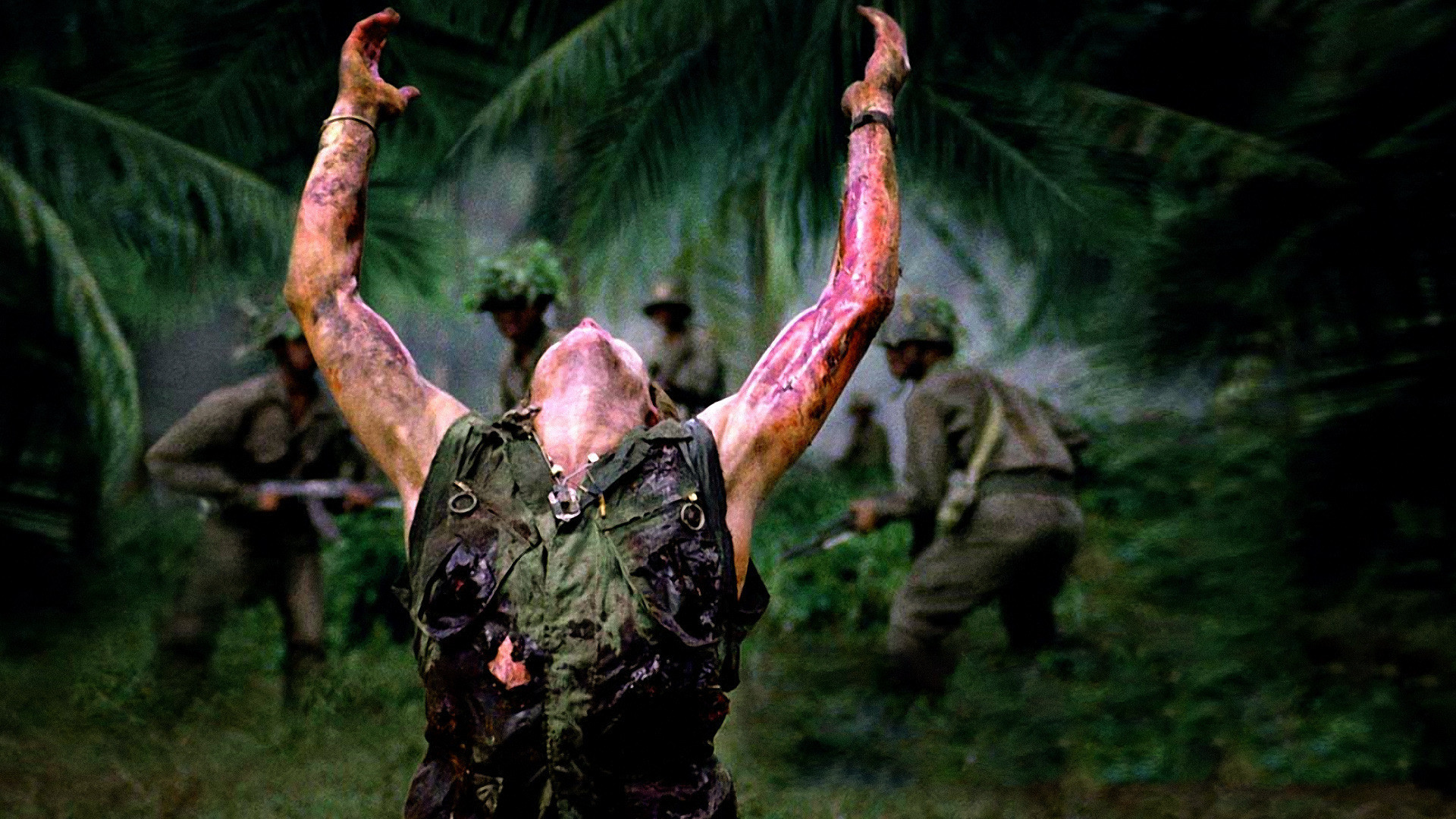
Platoon Yes 2The bigger the war, the more incomprehensible its depths. That dynamic may very well explain why the majority of war-epic directors tend to zero in on a specific regimen or event, using it as a microcosm for the more deplorable whole. When it comes to the all-time greats, crucial plot points tend to say as much about the blinding fog of war as they do about the directors themselves. What’s more, the same way it takes a certain je ne sais quoi to direct a gripping war epic, it also takes a certain caliber of actor to appear in one. To wit: Sean Penn and John C. Reilly appear in two separate movies on this list (both times as an army Sergeant and low-level infantry soldier, respectively), while Martin Sheen shot footage for two, despite only appearing in one.

The similarities don’t end there. Two of the films on this list were released in 1998 (both of them about World War II), another two were released during the mid-to-late 1980s (both of them about Vietnam), and two of the most critically-acclaimed were released in 1957.

Almost all of the films included on this list met with some level of controversy.

Finally, a word about selection. The phrase I kept coming back to throughout was “sweeping war epic.” I actually eliminated Black Hawk Down among others – because it failed to qualify as a “sweeping” motion picture (Not to mention Ridley Scott was more than 20 years past his prime and Black Hawk‘s casting seemed unconscionable). I also did my best to avoid any overt form of satire, which meant disqualifying both Dr. Strangelove and M*A*S*H.

Quentin Tarantino’s Inglourious Basterds happened to be the only film I struggled with (before ultimately deciding to disqualify it). Basterds met just about every major requisite, save for the fact there really weren’t any traditional battle sequences. While Basterds does not appear on this list, I’d be remiss if I failed to point out it’s a much more effective motion picture than at least 2-3 others that did make the cut.

In the end I prioritized ensemble over character (no Patton); valor – or lack thereof – over dealing with past consequence (no A Few Good Men). And what it all whittled down to were these eight iconic war epics, helmed by their eight all-time directors:

Continue reading

Barack Obama on The Affordable Care Act (2013)

“When we passed the Affordable Care Act, there were a number of components to it. A big part of it was essentially providing a Patients’ Bill of Rights that Americans and advocates have been fighting for for decades. What we wanted to do was make sure that if you already had health insurance, that you’d get a fair deal, that you were being treated well by your insurers. So we eliminated – prohibited – insurance companies from imposing lifetime limits, which oftentimes if a family member really got sick, they thought they were covered until suddenly they hit that limit, at which point they were out hundreds of thousands of dollars with no way of paying.

We said to insurance companies, ‘You’ve got to use at least 80% of your premiums that you’re receiving on actual healthcare – not on administrative costs and CEO bonuses. And if you don’t, you’ve got to rebate anything you spent back to the consumer.’ So there are millions of Americans who have received rebates. They may not know that they got it because of the Affordable Care Act or ‘Obamacare’, but they were pretty happy to get those rebates back because it made sure that the insurance companies were
treating folks fairly.

We said that any young person who doesn’t have health insurance can stay on their parents’ health insurance until they’re 26 years old. As a consequence what we’ve seen is the rate of uninsured for young people steadily dropping over the last three years since the bill’s been passed, obviously providing a lot of relief to a lot of parents out there because a lot of young people, as they’ve been entering into the job market at a time when jobs are tough to get and oftentimes benefits are slim, this is providing an enormous security until they get more firmly established in the labor market.

We’ve provided additional discounts for prescription drugs for seniors under the Medical Care Program. And so seniors have saved billions of dollars when it comes to their prescription drugs. So there have been – over the last three years – a whole array of consumer protections and savings for consumers that result directly from the law that we passed. And for those who say that they want to repeal [The Affordable Care Act], typically when you ask them about all these various benefits they say, ‘Well, that one’s good, and that one’s pretty good, and we’d keep that,’ and you pretty much go down the list and there’s not too much people object to. 

You will recall – at the time – that part of the way we paid for the Healthcare Bill was that we said, ‘Medicare’s wasting a lot of money without making seniors healthier.’ And there was a lot of hue and cry about how we were taking money out of Medicare. Well, it turns out we were right, that we could change how doctors and hospitals and providers were operating, rewarding them for outcomes as opposed to just how many procedures they did. You started seeing practices change among millions of providers across the country, Medicare rates have actually slowed in terms of inflation, seniors have saved money, folks are healthier. And some of those savings we’ve been able to use to make sure the people who don’t have health insurance can get health insurance.

Now, this brings me to October 1st.

The one part of the Affordable Care Act that required several years to set up was, ‘How do we provide health insurance for individuals who don’t get health insurance through the job?’ It’s a historical accident that in this country healthcare is attached to employers. And part of the problem is if you’re out there shopping for health insurance on your own – you’re not part of a major pool – there’s no aggregation to risk for the insurers. So they’re basically going to say, ‘Let’s see. You’re 50 years old, you’ve got high blood pressure, and we’ll just look at the actuary tables and we figure you’re going to get sick, so we’re going to charge you $1,500 a month for health insurance,’ which the average person has no way of affording. There’s no pooling of risk. So what we said is, ‘We need to set up a mechanism to pool people who currently don’t have health insurance, so they have the same purchasing power, the same leverage that a big company does when they’re negotiating with the insurance company.’ And essentially what we’ve done is we’ve created what we’re calling marketplaces in every state across the country where consumers are now able to be part of a big pool. Insurers have to bid – essentially compete – for the business of that pool. And what we now have set up are these marketplaces that provide high-quality healthcare at affordable prices, giving people choices so they can get the health insurance that they need and they want, and the premiums are significantly lower than what they were able to previously get.” 

Vince Gilligan on Writing About The Constants (2013)

I tend to shy away from overt politics in my writing because human problems will go on forever. The problems of living that we all face – no matter where we live throughout the world – is that there are certain human truths and constants. I am in no way comparing the work we do to Shakespeare, but when you think of Shakespeare, he wrote about basic human constants, and that’s the lesson I like to take as a writer. Politics, they come and go. But certain problems, they stick with us, always, no matter where we live and who we are. There are certain things that bind us all, that a person on one side of the globe can understand because someone else on the other side of the globe
is facing the same kind of situation.”

Why Laura Marling May Very Well Be The Most Important Folk Artist To Come Along in 40 Years

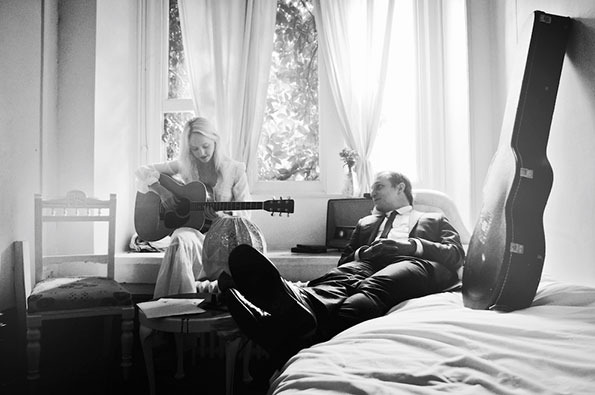
Ugne-HenrikoLast week, I sat alone along the aisle in the second pew of St. Ann’s Church in Brooklyn Heights, watching Laura Marling record a 50-minute set for WFUV. By the time that set was finished, I found myself transfixed, feeling a slightly deeper urge to be or offer something better, to rise above the constant nothing I’d become.

Granted, the time and venue might’ve played a role. I mean, it doesn’t get a lot more hallowed than a 170-year-old church, one that’s flooded with semi-cavernous acoustics. And yet, the lick of the heat was absolutely Laura Marling, standing alone there on the dais, free-strumming the only six-string she had brought along. Laura Marling, who opened her set with a 19-minute suite of new material, who played throughout with very little ego, who inhabited the same space of every narrator in her songs, who stared listlessly into the gulf for want of casting out the herd, who never broke out of her rhythm nor exceeded her known range. Laura Marling, who delivered the most honest and gut-pure performance I’ve ever witnessed on an altar.

None of which should come as a surprise. Laura Marling is a phenom, after all, a 23-year old from Hampshire who’s already put out four albums, every one of them complete, every one of them acclaimed. (Three out of the four have since been nominated for the UK’s vaunted Mercury Prize.) Marling won the 2011 Brit Award for Best Female Artist and the 2011 NME Award for Best Solo Act. She just recently moved from the UK to Los Angeles. She hopes to finish her fifth album before Christmas.

Laura Marling is a workhorse, an artist who’s almost constantly on tour, inserting and reworking new material on the fly. Marling is gracious and unassuming during interviews, showing no trace of megalomaniacal behavior. She veers away from petty excess and addiction. She appears attractive but demure, self-assured and yet reserved. She has a tremendous sense of altruism. She is the accidental superstar.

Laura Marling’s got it all, for lack of any better way of putting it. She’s one of the only working artists out there who’s acutely reminiscent of Dylan’s semi-recent proclamation that “It’s about confidence, not arrogance. You have to know that you’re the best whether anybody else tells you or not. And that you’ll be around, in one way or another, longer than anybody else.”

Laura Marling, well, Laura Marling has that. Just shy of 24, she is already astonishingly far ahead of the curve. Marling’s accomplished more, better, faster, and more consistently than just about any other folk-rock artist out there. Patty Griffin? Kathleen Edwards? Lucinda Williams? Kristian Matsson? Laura Marling’s trumped them all. She’s a juggernaut, an unrepentant throwback who’s casting folk into the future. She writes like Joni Mitchell, she belts out tunes like Joan Baez. The beauty of it being, any way you cinch it, Laura Marling is built to last. She shows no outward signs of fading. And at the extreme risk of dealing in superlatives, one might even go so far as to declare young Marling the very best thing to emerge out on the folk scene since the beginning of the 1970s.

(Please Note: The above photo is part of a professional set taken by Hanson Leatherby.)

Moving On: The Return of Junior, Sales Associate

Junior 2He was standing there, upper-torso burrowed deep inside Mike’s Eagle Premier, when I emerged from The Vacationer. He was wearing dark tan work boots under worn and faded jeans, the entire length of which ran dabbed with splattered paint and streaks of gypsum.

There was a jet-blue women’s 10-speed leaning up against the side door, and so I swiveled round to port, took a seat behind the driver.

“Is this your boy?” the gravelly-voiced silhouette demanded. “Is this the one who live inside?”

“Yeah, yeah,” my buddy Mike assured him. “This is the guy who we’ve been waiting for.”

The gravelly-voiced silhouette turned his focus toward me. “Your homey here said it might-could be OK for me to stash my bike inside your place there for a minute, y’know, so as he and I can conduct ourselves a little bit-o-business.”

“I said that you could ask him,” my buddy Mike interjected.

“OK, then,” the gravelly-voiced silhouette persisted. “And so I guess that I’m-a ask you: you think it might-could be OK for me to leave my bike inside your place there for a minute?”

“Sorry, man,” I called up from the back seat, “but I just now finished locking up the entire building for the evening.”

“And so what?” the gravelly-voiced silhouette insisted, “You can’t just right-on unlock the joint and let me wheel my goddamn bike inside? I’m just tryin’ to do your homey here a solid, yo.”

“Yeah, well, I really don’t know anything about that,” I responded. “The best advice that I can offer is you either park your bike around the back or see if you can fit it in the trunk. Otherwise, maybe the three of us can meet you up the road somewhere.”

“What the fuck is wit-your boy here?” The gravelly-voiced silhouette asked Mike. He was pointing off toward the rear now, dashboard glow casting a glare upon his nose. He pulled his head out from the window, wheeled his bike along the hollow, the shadow of both thighs elongating like spears. He turned the corner, disappeared.

“You mind if I ask you what the hell that was all about?” my buddy Mike said. He was adjusting the rear-view mirror till it faced me.

“Look, man,” I responded, looking directly past Mike toward the rear of The Vacationer, “we really don’t have ample time to get into this right now. Just believe me when I tell you the smartest thing that we can do is throw this fucker in reverse and hit the bricks before that asshole turns around.”

Mike threw his fingers on the gear shift, dropped it slow into reverse. He was still holding one good foot over the brake pedal when that asshole reappeared, stiff legs collapsing inward as he approached the idling vehicle.

He slithered low into the front seat, swung his weight across the lumbar.

“Yo, man, my name’s Junior,” is what that smarmy motherfucker said.

“Yeah, I’m pretty sure the two of us have met,” is what I said back in return.

There was a 16-year-old named Kevin sitting across from me in the rear, and he leaned forward with his arm out, shook Junior’s hand to ease the tension.

Junior grappled for his seat belt, pulled it over, faked a yawn.

He had a live one on the hook now. He knew much better than to ruin it with questions.

Continue reading