
Click through for full-size images. Continue reading
Film Capsule: Inescapable
Inescapable is an American movie about a Canadian Banker who is actually an ex-Syrian Intelligence Officer convicted in absentia by Damascus. Confused? Good. You should be. That’s exactly the way Ruba Nadda intended it. Keep in mind, Nadda is dealing with age-old tendencies here (i.e., the foolhardy notion of trying to outrun one’s past). As such, she really has no other alternative but to present her subject matter in a fresh, new-angled way.
To Nadda’s credit, that is precisely where Inescapable succeeds.
You’ve got spies and you’ve got intrigue. You’ve got edge lighting and track shots. You’ve got blood, and you’ve got water. You’ve got byzantine bureaucracy, reining down upon them both. You’ve got burkas and you’ve got brandy. You’ve got back-door border jumping, granted in exchange for belts of Scotch. You’ve got a Sudanese lead with Mediterranean eyes, and an entire thematic palate that’s indicative of both. You’ve got Josh Jackson, A.D.-Fringe, and Marisa Tomei, aging nicely. You’ve got all of that and more, weaved intricately into an taut, well-thought-out story. The plotholes are subtle; the miscues are slight. Alexander Siddig kicks much ass. The end.
(Inescapable arrives in limited release this coming Friday, February 22nd.) Continue reading
Rabbi Dov Ber on The 7 Things You Can Learn From a Thief
- To work at night
- If one cannot gain what one wants in one night, to try again the next night
- To love one’s coworkers just as thieves love each other
- To be willing to risk one’s life even for a little thing
- Not to attach too much value to things even though one has risked one’s life for them
- To withstand all kinds of beatings and tortures but to remain what you are, and
- To believe that your work is worthwhile and not be willing to change it.
Classic Capsule: The War Room (1993)
The 1990s are history. And by history, I mean History. Modern economists are now studying the trends, modern legislators are revisiting the wrongs, and modern pundits are all busy, reframing backward contexts. The 1990s have officially reached that awkward 20-year mark at which old fads become new again … perhaps ironically, at first, before spiraling out onto big-budget billboards all across this sprawling land of ours.
Such is the case with D.A. Pennebaker’s The War Room – a no-frills docu-drama which follows the now-legendary 1992 presidential campaign from New Hampshire through November. The beauty of The War Room is that it is told from the perspective of those working on Governor Bill Clinton’s campaign. George Stephanopoulos plays the role of wide-eyed wiz kid, in stark-yet-stunning contrast to Jimmy Carville’s wicked sage. The ongoing chemistry between these two provides a major facet of the movie’s charm – a necessary component, to be sure, given Pennebaker’s age-old insistence upon allowing every story to unravel for itself.
Casual film buffs will remember Pennebaker as the daring young maverick who chronicled Bob Dylan via the 1967 documentary Dont Look Back. Not a whole lot has changed about Pennebaker’s approach over the years. The man remains a docu-purist, if not a wholly dated reminder of just how much the surging genre has evolved.
To watch a Pennebaker film today is to feel as if there’s something missing. Modern audiences have been conditioned to expect color commentary, spliced-in footage, A-list interviews, dramatic reenactments, perhaps even the filmmaker himself, playing the horribly miscast role of foil. But the reality is, those are all new-fangled trends, very much still a part of the zeitgeist. The War Room, on the other hand, is now 20 years old, which means it’s more than likely high time for budding young filmmakers – if not political organizers – to revisit it … perhaps ironically, at first, before spiraling out onto big-budget billboards all across this sprawling land of ours.
(The War Room is currently available as part of Hulu’s Criterion Collection.) Continue reading
Bill Clinton on The 4 Elements That Determine Every Presidency (2008)
“When you go there to Washington, what you do as President is a function of about four things. Number one, believe it or not, most Presidents do try to keep their promises. President Bush, most of the things he did that people thought contradicted the compassionate-conservative label, he actually talked about [those things] very specifically in the campaign. It’s just that a lot of people didn’t listen. But most people actually try to do what they say they’re going to do … Then they have to deal with the incoming fire. Nobody asked President Bush how he stood on Katrina or 9/11 because no one knew it would happen. That happens to every President. And then you have to deal with the Congress, and the things that may come up that they care about, because if you don’t deal with what other people care about, then they have no incentive to deal with what you care about. But the fourth thing – that nobody thinks about – has to do with how you organize The White House.”
Across 110th Street
Click through for full-size images. Continue reading
9 Kick-Ass Things You Can Stream This Weekend in Lieu of Going to the Movies
 OK, so, word is out: A Good Day to Die Hard is fucking atrocious and Josh Duhamel’s Safe Haven is equally bad. Given what little else modern cinema has to offer this coming weekend – with the towering exception of Steven Soderbergh’s Side Effects – here are 10 kick-ass streaming suggestions for a lazy winter’s evening spent indoors:
House of Cards (Season One): The new Netflix series is not exactly perfect, but it is the best of what’s available until Mad Men kicks back in on April 7th. Sure, most of us could do without the whole breaking-down-the-fourth-wall thing. But the storytelling is rich, the subject matter is relevant, and Michael Kelly deserves a goddamned Emmy for his supporting turn as Douglas Stamper. Given the one-two combination of Lilyhammer, which is currently filming its second season, and House of Cards (not to mention the long-awaited return of Arrested Development this May) Netflix certainly does seem to be on the right track, which is welcome news, considering that unfortunate PR flub way back in the final quarter of 2011.
Frontline: The Untouchables: One of the most recent editions in PBS’s award-winning news series, The Untouchables dares to ask the question, “Why hasn’t anyone on Wall Street ever been prosecuted for all the illegal activity leading up to the financial crisis?” Good question. While this documentary provides very little in the way of real-world answers, it does serve as an important reminder of just how smarmy and crooked the majority of these too-big-to-fail motherfuckers really are, and why the utter lack of accountability has the entire wayward lot of them disco-dancing in the aisles.
Wings for Wheels: The Making of Born to Run: Recommended not only because of what an altogether remarkable human being Bruce Springsteen has turned out to be, but moreso because of how effectively Thom Zimny’s doc captures that crucial make-or-break moment in any worthwhile artist’s career. This film is an inspiration, to be sure – required viewing for anyone who has ever believed in something to the point of casting out every conceivable distraction that threatened to stand in its way.
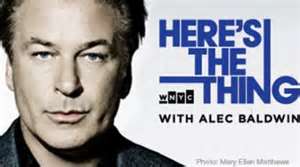
Here’s The Thing: Lorne Michaels: Lorne Michaels rarely (and by rarely, I mean never) agrees to sit down for an interview. But Michaels owes a great deal to his good friend, Alec Baldwin (or perhaps it is the other way around). And it is because of this that Lorne Michaels originally agreed to appear on Here’s The Thing. There’s a smooth reciprocity between these two that makes for great radio, as well as brilliant commentary. And, assuming you’re so inclined, you’d be well served to check out the show’s WNYC homepage, as it offers continuous access to a running archive of past interviews, including David Letterman, Lena Dunham, and Judd Apatow (to name a few).
Quentin Tarantino on Charlie Rose (12/21/12): One of the great joys of watching this interview via YouTube is that it allows one the freedom to just keep on dialing back … back, back, way back, until you hit Tarantino’s original hour-long interview celebrating the major motion picture release of Pulp Fiction. Equally fascinating – if not wholly unexpected – is the on-set chemistry between Tarantino and Rose. A sheer pleasure, every time.
Sherlock (Seasons 1 & 2): Unfortunately, neither season is streaming for free via PBS/BBC any longer, but Netflix offers all six episodes (three to each season) on its website. While not entirely seamless, Sherlock is most certainly the closest thing we’ve seen to a worthwhile reimagining of Sir Arthur Conan Doyle’s classic sleuth in years. Elementary is, well, elementary. Guy Ritchie’s Sherlock Holmes is pretty much absurd, and House, well, let’s just say Dr. House put most of his best work behind him shortly after season three. The beauty of BBC’s Sherlock (presented by Masterpiece Theater) is that it somehow manages to hit the invisible mark all those others imitators missed, which is, of course, the constant mark of genius.
The Thrilla in Manila (HBO): Of all the Ali-centric documentaries – and there have been many – Thrilla in Manila is undoubtedly the best. It is certainly the most human, specifically because it is told from the perspective of Joe Frazier, that great great heavyweight from the fighting city of Philadelphia … the same man who always seemed to be afforded short shrift as an ongoing result of Ali’s larger-than-life persona. Thrilla in Manila is the story of two aging-if-not-ageless fighters, deadlocked into a near-death battle for the ages … a battle that tethered the two of them together for all-time, rendered all the more poignant at this particular moment, assuming Ali’s brother Rhaman is to be believed.
THR Roundtables: The Actors (2012): The Hollywood Reporter added considerable production value to its informal roundtables this year. While several editions of this series are noteworthy, this one is probably the most fascinating. Denzel Washington is both the elder statesman and the lynchpin. It’s tough to take your eyes off him throughout.
The Iceman Tapes: Richard Kuklinski is a brutal motherfucker, currently serving an endless succession of life sentences for more than 100 murders (several of which he was convicted of, many others of which he has admitted to). But he’s also a fascinating character study, given his laid-back nature and the unbridled honesty he exudes on film. There are shades of Tony Soprano here – shades of madness, shades of humor, shades of some weird, all-consuming charisma … the kind that previously allowed Kuklinski to draw his prey in just before he cut them down. This documentary is a necessary primer for anyone who’s interested in seeing The Iceman (starring Michael Shannon), arriving in theaters nationwide this May.
Film Capsule: The ABCs of Death
Here is what you need to know about The ABCs of Death (a 26-chapter montage of fatal shorts, helmed by 26 international directors, each of whom chose a word/phrase beginning with a different letter of the alphabet to base his/her film around): A quarter of the way through, there is a 5-minute short featuring a pair of Asian schoolgirls, one of whom strips down to her panties before farting directly into the other’s face for a full 45 seconds (almost one-fifth of the entire feature). The other, meanwhile, positions herself downwind and center, allowing the putrid gas to waft directly at and through her. Once the fartee has become sufficiently entranced by the farter, the farter relies upon some strange other-worldly power to suck said fartee full-borne into her sphincter, at which point the two of them appear reunited, giddy and naked, fluttering carefree and unscathed through the ambient depths of her intestine.
F is for “Fart”.
How’s that for a synopsis?
(The ABCs of Death is currently available via Video OnDemand. It arrives in limited release on March 8th.) Continue reading
Brendan Behan on Human Kindness (1958)
“I respect kindness in human beings first of all, and kindness to animals. I do not respect the law; I have a total irreverence for anything connected with society except that which makes the roads safer, the beer stronger, the food cheaper, and the old men and old women
warmer in the winter and happier in the summer.”
Last Stop On The 6
Click through for full-size images. Continue reading