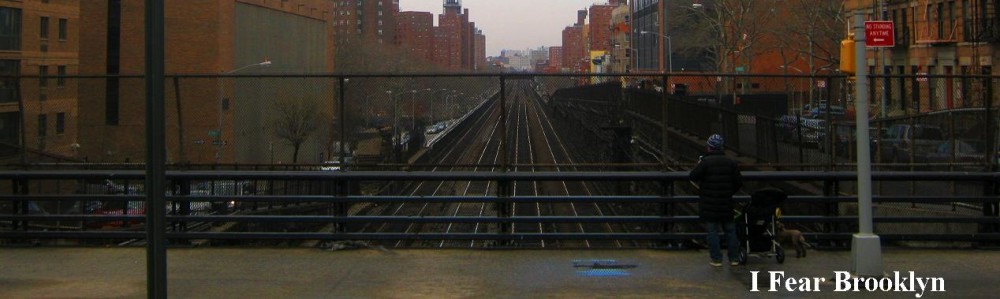
Click through for full-size images. Continue reading
Category Archives: Uncategorized
9 Kick-Ass Things You Can Stream This Weekend in Lieu of Going to the Movies
 OK, so, word is out: A Good Day to Die Hard is fucking atrocious and Josh Duhamel’s Safe Haven is equally bad. Given what little else modern cinema has to offer this coming weekend – with the towering exception of Steven Soderbergh’s Side Effects – here are 10 kick-ass streaming suggestions for a lazy winter’s evening spent indoors:
House of Cards (Season One): The new Netflix series is not exactly perfect, but it is the best of what’s available until Mad Men kicks back in on April 7th. Sure, most of us could do without the whole breaking-down-the-fourth-wall thing. But the storytelling is rich, the subject matter is relevant, and Michael Kelly deserves a goddamned Emmy for his supporting turn as Douglas Stamper. Given the one-two combination of Lilyhammer, which is currently filming its second season, and House of Cards (not to mention the long-awaited return of Arrested Development this May) Netflix certainly does seem to be on the right track, which is welcome news, considering that unfortunate PR flub way back in the final quarter of 2011.
Frontline: The Untouchables: One of the most recent editions in PBS’s award-winning news series, The Untouchables dares to ask the question, “Why hasn’t anyone on Wall Street ever been prosecuted for all the illegal activity leading up to the financial crisis?” Good question. While this documentary provides very little in the way of real-world answers, it does serve as an important reminder of just how smarmy and crooked the majority of these too-big-to-fail motherfuckers really are, and why the utter lack of accountability has the entire wayward lot of them disco-dancing in the aisles.
Wings for Wheels: The Making of Born to Run: Recommended not only because of what an altogether remarkable human being Bruce Springsteen has turned out to be, but moreso because of how effectively Thom Zimny’s doc captures that crucial make-or-break moment in any worthwhile artist’s career. This film is an inspiration, to be sure – required viewing for anyone who has ever believed in something to the point of casting out every conceivable distraction that threatened to stand in its way.
Here’s The Thing: Lorne Michaels: Lorne Michaels rarely (and by rarely, I mean never) agrees to sit down for an interview. But Michaels owes a great deal to his good friend, Alec Baldwin (or perhaps it is the other way around). And it is because of this that Lorne Michaels originally agreed to appear on Here’s The Thing. There’s a smooth reciprocity between these two that makes for great radio, as well as brilliant commentary. And, assuming you’re so inclined, you’d be well served to check out the show’s WNYC homepage, as it offers continuous access to a running archive of past interviews, including David Letterman, Lena Dunham, and Judd Apatow (to name a few).
Quentin Tarantino on Charlie Rose (12/21/12): One of the great joys of watching this interview via YouTube is that it allows one the freedom to just keep on dialing back … back, back, way back, until you hit Tarantino’s original hour-long interview celebrating the major motion picture release of Pulp Fiction. Equally fascinating – if not wholly unexpected – is the on-set chemistry between Tarantino and Rose. A sheer pleasure, every time.
Sherlock (Seasons 1 & 2): Unfortunately, neither season is streaming for free via PBS/BBC any longer, but Netflix offers all six episodes (three to each season) on its website. While not entirely seamless, Sherlock is most certainly the closest thing we’ve seen to a worthwhile reimagining of Sir Arthur Conan Doyle’s classic sleuth in years. Elementary is, well, elementary. Guy Ritchie’s Sherlock Holmes is pretty much absurd, and House, well, let’s just say Dr. House put most of his best work behind him shortly after season three. The beauty of BBC’s Sherlock (presented by Masterpiece Theater) is that it somehow manages to hit the invisible mark all those others imitators missed, which is, of course, the constant mark of genius.
The Thrilla in Manila (HBO): Of all the Ali-centric documentaries – and there have been many – Thrilla in Manila is undoubtedly the best. It is certainly the most human, specifically because it is told from the perspective of Joe Frazier, that great great heavyweight from the fighting city of Philadelphia … the same man who always seemed to be afforded short shrift as an ongoing result of Ali’s larger-than-life persona. Thrilla in Manila is the story of two aging-if-not-ageless fighters, deadlocked into a near-death battle for the ages … a battle that tethered the two of them together for all-time, rendered all the more poignant at this particular moment, assuming Ali’s brother Rhaman is to be believed.
THR Roundtables: The Actors (2012): The Hollywood Reporter added considerable production value to its informal roundtables this year. While several editions of this series are noteworthy, this one is probably the most fascinating. Denzel Washington is both the elder statesman and the lynchpin. It’s tough to take your eyes off him throughout.
The Iceman Tapes: Richard Kuklinski is a brutal motherfucker, currently serving an endless succession of life sentences for more than 100 murders (several of which he was convicted of, many others of which he has admitted to). But he’s also a fascinating character study, given his laid-back nature and the unbridled honesty he exudes on film. There are shades of Tony Soprano here – shades of madness, shades of humor, shades of some weird, all-consuming charisma … the kind that previously allowed Kuklinski to draw his prey in just before he cut them down. This documentary is a necessary primer for anyone who’s interested in seeing The Iceman (starring Michael Shannon), arriving in theaters nationwide this May.
Film Capsule: The ABCs of Death
Here is what you need to know about The ABCs of Death (a 26-chapter montage of fatal shorts, helmed by 26 international directors, each of whom chose a word/phrase beginning with a different letter of the alphabet to base his/her film around): A quarter of the way through, there is a 5-minute short featuring a pair of Asian schoolgirls, one of whom strips down to her panties before farting directly into the other’s face for a full 45 seconds (almost one-fifth of the entire feature). The other, meanwhile, positions herself downwind and center, allowing the putrid gas to waft directly at and through her. Once the fartee has become sufficiently entranced by the farter, the farter relies upon some strange other-worldly power to suck said fartee full-borne into her sphincter, at which point the two of them appear reunited, giddy and naked, fluttering carefree and unscathed through the ambient depths of her intestine.
F is for “Fart”.
How’s that for a synopsis?
(The ABCs of Death is currently available via Video OnDemand. It arrives in limited release on March 8th.) Continue reading
Brendan Behan on Human Kindness (1958)
“I respect kindness in human beings first of all, and kindness to animals. I do not respect the law; I have a total irreverence for anything connected with society except that which makes the roads safer, the beer stronger, the food cheaper, and the old men and old women
warmer in the winter and happier in the summer.”
Last Stop On The 6
Click through for full-size images. Continue reading
Classic Capsule: The Wild Bunch (1969)
Anyone who’s interested in understanding how modern film culture operates need look no further than the critical reviews for Sam Peckinpah’s classic western, The Wild Bunch. These days, The Wild Bunch is widely considered to be a cinematic masterpiece, achieving an almost-perfect score of 97% on Rotten Tomatoes‘ uber-popular “All-Critic” meter. Yet, drill down a smidgeon deeper and you’re likely to find the majority of those reviews were originally aggregated from the year 1995 forward (when a remastered version of The Wild Bunch initially became available via DVD). Zero in a smidgeon more, and you’re likely to find a narrow cluster of reviews that were written by senior critics old enough to have seen and reviewed the original Wild Bunch way back in the late sixties. Most of those reviews read like a veritable laundry list of mea culpas mixed in with an almost equal number of “I-told-you-so”s.
All of which raises the question: What might cause a major critic to heap praise upon a film he or she denounced as unnecessarily vulgar some 30-odd years prior? Well, that all depends upon the critic, I suppose. And yet, I’d be willing to bet that if you asked the majority of well-known elder statesmen, you’d more than likely hear some convoluted equivocation based upon the foolhardy notion that we were all living in a simpler time back then; a time when cinema and society were both considerably more demure; an ultra-prudent era during which the brutally violent nature of Peckenpah’s film seemed more than a little too ambitious, if not all-consumingly obscene.
But here’s the thing (and there really is no gentle way of putting this): Those critics? Those critics are full of shit, you see. Stinking mad as the brine, so to speak. How do I know this? Well, I know it because The Wild Bunch was initially released during July of 1969, the undisputed height of lurid culture in this country. We’re talking about the golden age of Thompson, Bukowski, and Mailer, for Christ’s sake. We’re talking about the motherfucking Summer of Love, a divisive period during which Vietnam was tearing the social fabric of this country in two. And to insist Sam Peckinpah’s homage to the American cowboy was somehow too eager or over the top is to insist that you simply could not bear to watch the evening news or open up a daily broadsheet back in those days.
I mean, I suppose it does bear mentioning that the majority of reviewers who actually got The Wild Bunch correct during its initial big-screen run also felt the unmistakable need to apologize for their advocacy. Most notably, New York Times film critic Vincent Canby, who hailed The Wild Bunch as “the first truly interesting American-made Western in years,” while counterbalancing that statement with some weak-ass disclaimer about how the film possesses a violent intensity that “can hardly be supported by the story.”
Bullshit, Vincent Canby. Bullshit. Bullshit. Bullshit. Bullshit.
Unfortunately, Vincent Canby was far from alone in terms of that sentiment. And if you think the entire infrastructure has matured one iota in the four decades since, I’d submit that you should think again (Please see Django Unchained for more on this sad topic). The problem (or one of several problems, in fact) is that the movie industry – much like any other corporate structure – is rotten to the core with desperate yes men and cheap-ass hangers-on. Most mainstream reviewers live in constant fear … fear of scorn, fear of firing, fear of being blackballed from the next goddamned junket, for that matter. These flat-foots check their passion at the door, and – in that spirit – they respond to every kick-ass flick like The Wild Bunch or Django Unchained as if they had been tossed into an entire conference room of dullards, every one of them staring back and forth at one another in time, just waiting for someone to signal when it might be safe to laugh again.
Just how good is The Wild Bunch? The answer is, very good … but not great. The first 15 minutes alone feel like a full-length film onto itself: a band of lonesome drifters, a massive rooftop ambush, a daring robbery gone awry, the subsequent looting of corpses, all set against the metaphorical backdrop of “Shall We Gather at The River,” sung by the South Texas Temperance League as it files its way past a drum-tight circle of children, all of whom are cheering on a colony of fire ants, as it marches roughshod over a dying pair of scorpions.
From that point forward, The Wild Bunch settles into a full hour of dead air masquerading as backstory. The film does, however, recover, culminating in a batshit crazy shootout just a few miles clear of the Mexican border – a shootout which signifies the end of one era and the beginning of another; the triumphant last stand of an aging William Holden, and perhaps even the death of the American cowboy himself.
It’s a fitting send-off, to be sure, ripe with all manner of cheap drinkin’, and whorin’, and homoerotic cowdudes in between. The Wild Bunch hasn’t only provided inspiration for every significant Western that’s come along in its wake, it’s also provided a huge chunk of the storyline for RockStar’s acclaimed Red Dead Redemption series. Over time, the film has come to be recognized as a revolutionary piece of cinema, much like Django Unchained might be some 40 years from now, y’know, once Quentin Tarantino’s long-gone-dead-and-buried and the industry’s discovered the financial opportunity – if not the set of balls – to rebrand his greatest films modern classics.
(The Wild Bunch is currently available for rental via YouTube and Amazon.) Continue reading
Lena Dunham on Becoming a Young Independent Filmmaker (2011)
“Things in the entire landscape of films, like what it means to be a filmmaker, are completely shifting. That’s something that I became aware of really fast. It used to be that you would hear stories about people who got out of school, they’d make a short film, they’d take it to Sundance, it’s a huge hit, and suddenly they have a three-picture deal with a studio, they’re making the movies that they want to make – only on a bigger level – and that’s the dream. And, basically, that career – the entire idea of what your film career can be – has shifted. People ask me all the time whose career I admire, and who my role models are. The amazing thing is that most of the people whose careers I admire are people I admired when I was younger, like a Woody Allen or a Noah Baumbach, or even an independent filmmaker who’s gotten to make interesting kind-of-complex character studies on the studio level. Those aren’t really careers that are possible anymore because the money isn’t rolling in the same way that it used to, and studios aren’t willing to take risks in the same way. So the work that’s getting made in Hollywood becomes more and more safe, and getting a movie made … it’s no longer you have a good idea, you make a movie. Before you even get to start making the movie, there are people crunching the numbers to determine whether it would be a hit. And people are less and less willing to take chances. And also, [regarding] all of the new technology, while there’s something really wonderful about that, which is that anybody can go out and make a movie, anybody who has $1,500 can buy a camera, and even if you don’t [have $1,500], there are still so many ways to make a movie, there are so many ways to distribute your film on the internet, there are a million different platforms. So that’s all really good for people who want to express themselves, but it also makes it a lot harder to kind of break through all of the noise and get attention and figure out how to move your career forward … So all of this new technology, while incredibly exciting for young artists, is also the same thing that is making all the role models we have for what a career as a filmmaker can be totally implausible.”
The Snow
Click through for full-size images. Continue reading
Film Capsule: Side Effects
Roger Ebert once wrote that, “Movies are hardly ever about what they seem to be about,” and Steven Soderbergh’s latest film is certainly no exception to this rule. On the surface, Side Effects is a deeply satisfying psychological thriller with all the requisite earmarks of a classic. And yet, at its core, Soderbergh’s film feels more like some deep meditation on the human stain of mental illness, the compound risk of medication, and the innate greed that leads people to exploit either one.
Side Effects is master manipulation at its finest – a shape-shifting house of mirrors steeped in the grand filmmaking tradition of Hitchcock and Kubrick (perhaps even Polanski). Soderbergh doles out crucial details in highly disciplined drips and drabs here, goading the audience straight into a labyrinth that’s slowly zigzagging its way back to center. The writing is brilliant, the cinematography is bleak, and the motherfucking game is oh-so definitely afoot.
All of which brings us to the acting. And the acting in this film is absolutely superb. Channing Tatum fits the bill as an ex-con financier. Jude Law is cracking good as the mid-life academic, and Catherine Zeta-Jones will make you yearn for the days when she might’ve taken on a role like this for little more than sport.
But the real story here – the story that serves to keep the whole enchilada in one piece – is Rooney Goddamn Mara. Rooney Mara. Rooney Mara. Rooney Goddamn Fucking Mara. Y’know, there have been moments throughout these past 2-3 years – several of them, in fact – when it seems like Rooney Mara might actually be railing against the milk-white suburbanite co-ed she played in David Fincher’s Social Network. That young co-ed’s all but dead now, replaced by an ultra-powerful femme fatale who initially rose to prominence via Girl With the Dragon Tattoo, before barreling straight-on through with an Oscar-caliber turn in both this film and the next.
What it all boils down to is the fact that Side Effects is quite possibly the best thing Steven Soderbergh has ever laid hands on. And it’s proof positive that the long and frigid cinematic clime of early January has now officially run its course.
(Side Effects opens in theaters nationwide today.) Continue reading
Andrew Ross Sorkin on Financial Risk & Recovery (2009)
“The financial industry had always been intended to be something of an unseen backroom support for the broader economy, helping new businesses get off the ground and mature companies adapt and expand. Yet, in the years leading up to the crisis, the finance sector itself became the front room. The goal on Wall Street became to generate fees for itself as opposed to for its clients … Meanwhile, Wall Street, [now] bent but not broken, rumbles on in search of new profits. Risk is being reintroduced into the system. Vulture investing is back in vogue again, with everyone raising money in anticipation of the collapse of commercial real estate and the once-in-a-lifetime bargains that might be available as a result. Perhaps most disturbing of all, ego is still very much a central part of the Wall Street machine. While the financial crisis destroyed careers and reputations, and left many more bruised and battered, it also left the survivors with a genuine sense of invulnerability at having made it back from the brink. Still missing in the current environment is a genuine sense of humility.”