(Good Pictures/Bad Camera is a regular feature on IFB.)
Chief Sitting Bull on The One Percent (1877)
“Hear me, people: We have now to deal with another race – small and feeble when our fathers first met them, but now great and overbearing. Strangely enough, they have a mind to till the soil and the love of possession is a disease with them. These people have made many rules that the rich may break but the poor may not. They take their tithes from the poor and weak to support the rich and those who rule.”
Moving On: A Partial List of People I’ve Somehow Wronged Due to Drinking Over the Past 20 Years
Julie Andrews Nick Greto Kate Lockwood
Joe Austin Laurie Hand Meghan Mac
Geoff Beaver Erin Hart Joanna Martin
Elyce Beck Steph Hayes Michelle McMahon
Terri Bracken Bobbi-Jean Heil Maggie McManus
Frank Brockway Walt Heil Paudie McManus
Dave Brown Tim Hilferty Ed McNamara
Denny Brown Bob Hill Tonya Moore
Kim Browne Jen Hill Heather Moyle
Colleen Burke Patricia A. Hill John Mullin
Matt Burke Patricia K. Hill Jason Nichols
Elizabeth Burke Sam Hill Annie Niles
Michael Caless William Hill John O’Hurley
Alison Chambers Jill Hoffman Jim O’Malley
Brendan Clark Becky Zahner-Huff Jen Vu-Ortiz
Corrie Conklin Jack Huff Heather Osterberg
Megan Connelly Loren Hunt Diana Polansky
Liz Connolly Trina Ieradi Shelly Ray
Bruce Culp Rob Iler Rick Rau
Malia Dalesandry Dave Imbrogno Melonie Reid
Vera Davis Kristin Irving Kim Rubin
Kirsten Deane Debra Jacobs Eddie Rudolph
Autumn Donahue Katie Jacobs Scott Russell
Brendan Donnelly Todd Kaufmann Bill Salerno
Chris Donnelly Jackie Keane Jennifer Siglin
E.J. Dougherty Heather Keating Brian Smith
Sean Dougherty Monica Keenan Melanie Smith
Erin Drumm Francine Kennedy Anthony Scalia
Dave Duff Joe Kennedy Dominic Scalia
Alicia Farthing John Kennedy Karen Schwarz
Bill Feeley Tricia Kennedy Robin Spencer
Maria Feeley Rick Kline Kristen Stanley
Laura Flager Lindsay Kraycar Jamie Stewart
Amy Flynn Zuzana Krejcova Deanna Strong
Karen France Betsy Krill Natalie Stuchko
Jackie Fulginiti Diana Lallone Vesna Sukalo
Joann Fulginiti Susie Lauterborn Renee Uekele
Astrid Gallagher Bob Lerario Rita Varano
Jesse Gallagher Amy Lindler Gerry Vessels
John Gallagher Annmarie Lloyd Doug White
Chris Gantz Mariellen Lloyd Steph Winters
Bernadette Geary Tom Lloyd Natasha Yates
Dana Mazzenga-Greto Maureen Locke
***
(Please Note: If your name does not appear on this list, but I have, in fact, wronged you in some way due to drinking over the past 20 years, feel free to add your name in the comments section below. I’m sure I overlooked/blocked out a few episodes here and there. Either that, or you completely deserved whatever it is I did. If it’s the latter, I make no apology. If your name does appear on this list and you’re not sure why, feel free to contact me for an explanation.)
Day 114
(Moving On is a regular feature on IFB)
©Copyright Bob Hill
Film Capsule: Hit So Hard
Once upon a time, Patty Schemel was the internationally-renowned drummer of Hole.
Once upon a time, Patty Schemel was also a homeless drug addict, who regularly nodded off in MacArthur Park after turning tricks to support her habit.
Patty Schemel would like you to know she is no longer either of those things, and she’s doing just fine, all things considered, having made her peace with whatever demons might have been ravaging her back in those days.
This is the central premise of Hit So Hard, a new documentary featuring very old footage, much of it patched together via countless hours of homemade videos Schemel recorded between the Fall of 1994 and the Summer of 1995 – a crucial period during which Hole was at both the height of its collective power, and the constant verge of implosion.
These were the cataclysmic months during which Kurt Cobain committed suicide, Hole bassist Kristen Pfaff died of an overdose, and the whole fucking ball of yarn began to unravel. Continue reading
Kurt Vonnegut on Censorship
“There is the word ‘motherfucker’ one time in my Slaughterhouse-Five, as in, ‘Get out of the road, you dumb motherfucker.’ Ever since that word was published, way back in 1969, children have been attempting to have intercourse with their mothers. When it will stop no one knows.”
Moving On: Maple Street Memories
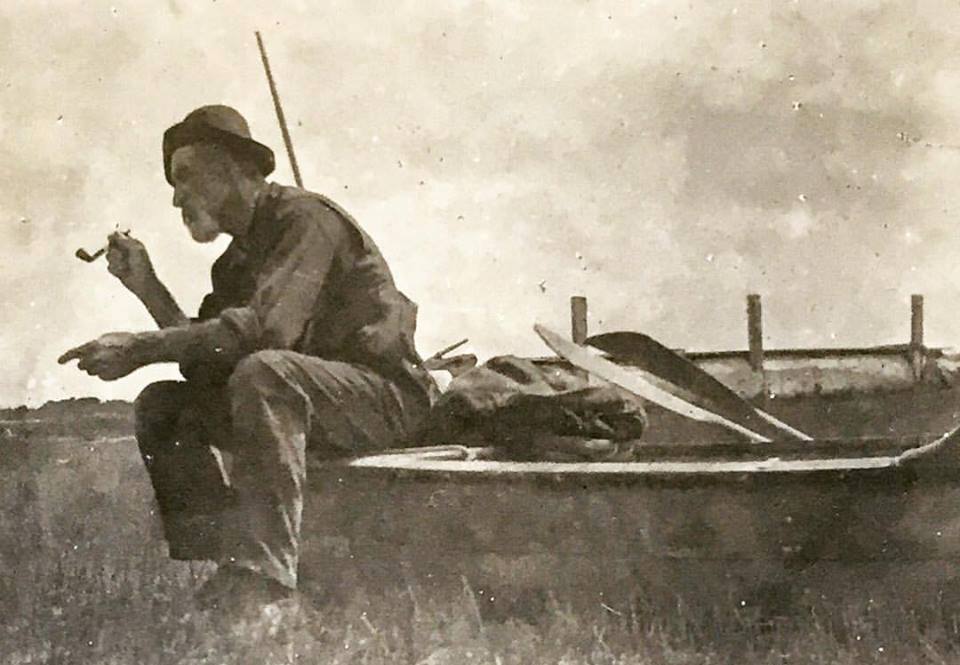
You could tell by the way that kid came screaming around the corner – all high knees and elbows – there was trouble closing fast behind. Seconds later, a pair of shirtless silhouettes appeared in his wake, twin aluminum bats reflecting in the moonlight.
The kid was a quarter of the way down the block before one of the silhouettes wound up and let fly, chucking his bat end-over-end, like a pickaxe in mid-air. It struck the kid square in the back, propelling him forward, where he fumbled for a moment, before falling to the ground.
Then the entire world went silent, save for the static thud of aluminum alloy, and the guttural screams of that scrawny, helpless kid, writhing wildly on the sidewalk.
I watched the horrid episode from a second-story porch across the way. Once both the silhouettes had disappeared, I put my beer down and hurried off toward the steps.
“What the fuck are you doing?” my roommate John asked.
John was one of several roommates I was living with at the time. John had orange hair and pasty skin. John was staring over at me, a 12-ounce bottle in his hand.
“We gotta go see if that kid’s OK,” I said. I stood frozen at the top of a flight of stairs.
“The fuck we do,” John said. “Get back over here, man. You’re liable to get yourself killed down there.”
I looked across the street at that kid, who was struggling to his feet. He made it two steps, maybe three, before collapsing to the sidewalk. The kid was beaten, and bloody, and you could tell by several abbreviated movements that critical ligaments were no longer making full connections.
“C’mon, man,” John said.
I did an about-face. I started back toward my seat. As if on cue, a flatbed truck came zipping around the intersection – a pair of shirtless silhouettes standing upright in the back. The driver stopped just short of where that poor kid still lay, struggling. One of the silhouettes leaned down, picked up a brick from the flatbed, then launched it at the back of that kid’s head, delivering what appeared to be a knockout blow.
The truck peeled off heading west along Maple, followed less than 30 seconds later by the sound of EMTs arriving on the scene. Drunken neighbors went filtering out into the street now.
“You see?” John said, patting me on the shoulder. “No matter how bad it might seem, you don’t ever get involved. Ever.”
“I don’t know, man,” I said. “I still feel kind of bad.”
“Why?” John asked. “You don’t know who that kid was. You don’t know what he might’ve gotten himself into. In fact, you don’t know whether that kid just got exactly what he had coming to him, which is exactly why you do not get involved.”
I watched the kid get wheeled into an ambulance. It could’ve been me, according to John. Or maybe it didn’t have to be anyone. These ghetto streets weren’t made for martyrs.
***
During the first few weeks of that summer, John taught me how to work a job for a couple off-peak hours, then quit and suggest petty cash in lieu of paperwork. He taught me how to make a proper fist (I spent 18 years sandwiching my thumb inside four fingers), and he taught me about the Christian House – a nearby homeless shelter that offered cost-free meals three times a day.
The Christian House represented an ideal way to keep from starving. The only trade-off being that the bread was stale, and volunteers read from scripture at the beginning of each meal. “I was dying,” one guy sitting next to me insisted as we were eating one evening. “I’d been sleeping in this shed for damn near a month, without any food or water. Then one day, this asshole comes along and tosses me, for real. That same night a big ole’ snowstorm hit. That shit came piling down in droves, man. Real hard. Like so hard I got this frostbite all the way up on the foretips of my fingers.”
He lifted both hands, and then he wiggled his fingers, as if to show me it worked out.
“In the moments just before I was about to pass out, I looked down into this snowdrift, see. And I saw Jesus, and he was just staring right on up at me. There he was, man, plain as day. As soon as he appeared, I didn’t feel so cold no more. And when I looked back down the road, I could see this pair of headlights approachin’. Them headlights were attached to somethin’ big, man, a big ole’ fuckin’ truck, see. And so eventually, this truck driver, he slowed down to ask me if I needed a ride. Took me into town, man. Found me a warm bed. Saved my fuckin’ life, man. To this day, I truly believe that man to have been my savior. I ain’t never been the same since. Like, not ever. Never.”
It was still early June then, which meant dire straits for a poacher like me. What little scams I’d learned – counting cards, upselling beer for a dollar a can – required a constant flow of people, and there really weren’t any, at least during the week. I was sharing an apartment with 15 other tenants, and all of those tenants with the exception of me were weekenders. Come Sunday night, they would all drive back to Philadelphia. The loneliness didn’t affect me. I had become friends with Lou, the property manager, and I could always wander over to his place for some free beer and weed. Lou had introduced me to Vince – an African-American drug delaer from Bedford-Stuyesant. One night Vince told me the story of a rival drug dealer from Flatbush, Brooklyn. This dealer had beaten Vince’s brother for a bag of money and some coke. One week later, Vince and his crew had tracked that dealer down, jumped him from behind, forced him to the ground, and then hacked into his kneecaps with a machete. “You want to sever that motherfuckin’ ligament at just the right angle,” Vince assured me, demonstrating the downward motion with his arm. “Sometimes you even gotta step on that fucker’s hamstring for leverage, cause pulling a machete out of the flesh is a little bit like pulling a goddamn axe out of a tree.”
***
Alone and hungry, I would regularly break into the apartment upstairs, using a kitchen knife to slip the lock. On most occasions, I’d steal either a handful of loose change or a 5-oz box of macaroni and cheese. If I stole a box of macaroni and cheese, I would boil it on the stove in our apartment, then eat it raw out of the pot. If I stole a handful of change, I’d walk across the street to the Maple Deli, where I could usually afford either a pair of soft pretzels or a pack of Ramen noodles.
The first week in June, I landed a job as a cashier at Curley’s Fries. Curley’s was a popular boardwalk fry joint that employed a largely Mexican staff. Curley’s would pay me under the table (I had no photo ID), which meant that I would be capable of affording a cheeseburger or a bar of soap or a 12-pack of beer within a few days.
I was living with a group of jocks, the majority of whom had graduated from a rival high school back in Delaware County. John had emerged as the unofficial leader of the group, and it was John who had initially agreed to let me stay at the apartment. But it was also John who was charging me double what the other tenants were paying, a detail I did not become aware of until a few weeks down the line.
There were parties every Saturday, and by mid-June the apartment’s walls had gotten marked up and riddled with holes. The kitchen table had collapsed. There was a gaping tear along the living room ceiling. Fearing that we would get evicted, I started holding back rent. Money was tight, I reasoned, and if things eased up, I could still pay off the remaining balance before September. Shortly after, what little possessions I owned began disappearing from my bureau. One weekend, my portable radio went missing; the next weekend, a bag of cassettes. Battle lines were being drawn, and it did not take long before the majority of my roommates started walking away from me in mid-sentence. One of those roommates had even threatened to beat me up.
Toward the end of June, our landlord showed up with a pair of Class II police officers and ordered us to vacate the premises no later than July 5th. He posted an eviction notice on the apartment door. In response, my roommates planned one final blowout to coincide with the 4th of July. I packed my bags, and I left my belongings at a friend’s apartment on East 24th Street. I spent the first two weeks of July sleeping on the beach.
One night, I wound up walking the streets well past 2 am with a summer girl named Tonya. There were “too many drunk people lying about” for us to crash at Tonya’s apartment, so I decided to take her over to the ex-apartment on East Maple. The landlord couldn’t have completed all the necessary repairs, I figured, which meant the place would still be empty. What’s more, I knew three different ways to break into that apartment without a key.
When Tonya and I made a left onto Pacific Avenue two blocks south of Maple, a trio of drunk dudes fell in behind us.
“You lookin’ for somebody to walk you home?” one of the drunk dudes shouted to Tonya.
“I’m fine, thanks,” I responded.
“The fuck d’you say?” one of the drunk dudes shot back. He sprinted forward until he and I stood parallel. Then he elbowed Tonya out of the way. “The FUCK d’you say!?” he asked me a second time.
This dude had a shaved head, and he flicked his cigarette against my shirt. He made a proper fist, tight and white. He was backing me up now, against a storefront. I could feel my fight-or-flight response kick in. And that’s when something struck me … something strong and solid with the force of a wave. That something sent me stumbling. I landed on the sidewalk, where I curled into a ball.
“Are you FUCKIN’ with him?” I heard a gravelly voice demand from above. “I said, are you FUCKIN’ with him? Answer me, motherfucker. Are you or are you not FUCKIN’ with that white boy on the ground?”
It was Vince from Brooklyn. Vince had that dude jacked up against the storefront. The other two drunk dudes took off.
“Look at me,” Vince said, his tone more relaxed. “I want that you should look at me. Are you lookin’ at me?”
The drunk dude was looking at Vince.
“I want you to remember this face. D’you think you can remember this face?”
The drunk dude did believe that he could remember that face.
“I want you to remember this motherfucker too,” Vince said, forcing the drunk dude’s face down within a few inches of mine. “D’you think you can remember this motherfucker’s face?”
The drunk dude did believe that he could remember my face.
“You fuck with him,” Vince said, pointing to me with his index finger, “You fuck with me. We clear?”
They were.
“Now get the fuck out of here,” Vince tossed the drunk dude aside.
“Thanks, man,” I said. I was clapping gravel off both hands. “Seriously, thanks. Those guys would’ve killed me if it hadn’t been for you.”
“Tell me about it,” Vince said. There was a vein pulsing along the side of his neck. “I didn’t even realize that that was you until I got all up in that motherfucker’s grill.”
“You’re kidding,” I said.
“Nope,” Vince told me. “I wouldn’t kid about no shit like that.”
“So why intervene?” I said.
“I turned the corner and saw three wetback motherfuckers about to roll some skinny-ass white dude,” Vince said. “What the fuck was I supposed to do?”
Day 107
***
(Moving On is a regular feature on IFB)
©Copyright Bob Hill
Film Capsule: Surviving Progress
Every time history repeats itself, the price goes up.
So goes the central theme – and cautionary advice – of Surviving Progress, a remarkable documentary directed by Mathieu Roy and Harold Crooks, and executive-produced by Martin Scorsese.
The angle, which Progress reinforces time and again, is that while the human race has made tremendous strides in terms of technological advancement, the cognitive modes human beings use to confront, and ultimately overcome, problems haven’t evolved worth a lick since the dawn of civilization. Continue reading
Moving On: The Things We Think (& Do Not Say)
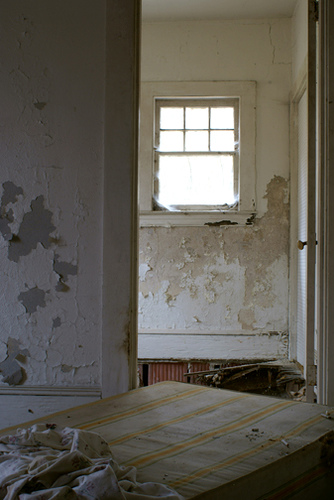
Twenty years ago in the side bedroom of a second-story shack on the 100 block of East Maple, two drunk kids set to wrestling at each other in the dark – he in a second-hand pair of Umbros, she in a pink-cotton halter and button-fly skirt.
The room was damp and quiet. The walls were white and bare. And the gaping void between filled up with shadows from each passing car.
The windowsills ran vile, a stagnant film of dust and paint. There were twin beds on both sides, pushed up against the walls. The buttons from the mattress pierced her back at jagged angles, carving tiny cuts into the left side of her shoulder.
He pushed the halter up above her chest. She pushed the Umbros down below his thighs.
He used his foot to push her skirt down, heard it jangle, and then crash.
Her neck, it smelled like nicotine. His breath, it reeked like booze.
They’d been seeing each other for three weeks now, and he’d been homeless nearly all that time. The first and only date they’d shared was a last-minute trip to see The Cutting Edge. He would always remember that she insisted on paying because he had no money to his name. She would always remember dropping him off outside a party, how he never thought to ask her in.
There came a pounding at the door now, followed by a turning of the knob. The two of them ignored the noise, descended deep into each other’s arms. His hands, they felt like meat hooks, and she kept digging in behind. She was clinging tight and desperate, latching on in desperation.
He lunged forward with an awkward shift, fell inside her with a sigh.
She braced herself against the storm, gripped a pillow to her side.
His hair was whipping fast now, loose strands brushing across her face, and through her mouth. She kept her eyes fixed on the ceiling, cracked and spotty, full of mold.
She handed him a cigarette, then lit one for herself. He pinched the filter like a bedbug, blew the smoke out with a shrug. He studied how she took each puff, measured how she held each drag. She eased her head onto a pillow, ashed her smoke onto the ground. He waited till she looked away before repeating the same move.
When the rod burned down to cotton, she cast her butt into a can. Then she set her frame against his arm, took note of his last drag.
She had a thousand misconceptions about who he was and where he’d been.
He feared how things might change after reality set in.
Day 104
(Moving On is a regular feature on IFB)
©Copyright Bob Hill
Michael Chabon on the Midnight Disease
“The midnight disease is a kind of emotional insomnia; at every conscious moment its victim – even if he or she writes at dawn, or in the middle of the afternoon – feels like a person lying in a sweltering bedroom, with the window thrown open, looking up at a sky filled with stars and airplanes, listening to the narrative of a rattling blind, an ambulance, a fly trapped in a Coke bottle, while all around him the neighbors soundly sleep. This is in my opinion why writers – like insomniacs – are so accident-prone, so obsessed with the calculus of bad luck and missed opportunities, so liable to rumination and a concomitant inability to let go of a subject, even when urged repeatedly to do so.”
Film Capsule: All In: The Poker Movie
From French aristocrats to World War II vets; from Riverboat Dandies to Texas Rounders. From The Mayfair Club to the New York school; from the living rooms to Las Vegas. From the sharks to the suckers; from the mavericks to mechanics. From the independents to degenerates, from the skill players to the cons. From the back rooms to the main floor; from the back alley to the marquee. From Wild Bill to the World Series; Texas Hold ’em to Total Poker. From Johnny Moss to Amarillo Slim; Dunson Broyle to Bobby Baldwin. From Stuie Ungar to Johnny Chan, Chris Ferguson to Chris Moneymaker. From sheep sheering to skinning; five minutes to a lifetime. From spotting the sucker to being the sucker; from a science to an art. From Straight-Deal to Stud; Up the River, Down. From Low-Bail to High-Stakes; All-In to Ante-Out. From Five-Card to Seven; Community to Draw. From boosting your bankroll to coming up bust; from winning the game to getting out of town. From the rake to the take; the raise to the call. From the fanfare to the folklore; from Rounders to The Sting … From beginning to end, All-in Poker somehow manages to cover all that and more. And it does so via in-depth analysis from some the game’s greatest players, historians, innovators and critics – all of whom agree that whether you love poker or hate it, it’s difficult to dispute the impact it’s had on our culture, as well as the multi-billion dollar industry it’s helped build.
Highly recommended.
(All-In: The Poker Movie opens at New York City’s Cinema Village on Friday, March 23rd, with a national rollout – including VOD – to follow)