John Cheever on The Old New York (1978)

“These stories seem at times to be stories of a long-lost world when the city of New York was still filled with a river light, when you heard the Benny Goodman quartets from a radio in the corner stationery store, and when almost everybody wore a hat. Here is the last of that generation of chain smokers who woke the world in the morning with their coughing, who used to get stoned at cocktail parties and perform obsolete dance steps like ‘The Cleveland Chicken,’ sail for Europe on ships, who were truly nostalgic for love and happiness, and whose gods were as ancient as yours and mine, whoever you are.”  

(Excerpted from the Introduction to The Stories of John Cheever)

Moving On: A Murder on Park Boulevard

By Bob Hill

“Hey, Fred.”

This is what Robert Connors said. He was buzzed, but not drunk, slumped alone over a barstool at the Firehouse Tavern around 2 AM. It was the second Friday in May, a week prior to when the crowds and city ordinances would allow for every bar to remain open until 5.

Frederick Simmons had just entered along with a second man whom Robert Connors did not recognize. The two of them were drunk, coked-up, both black and in their mid-thirties, with Simmons looming large over the second man at 6’0, 290. The two men separated, with Frederick Simmons flanking Connors as his partner cruised the bar.

Robert Connors was a local, and he knew Frederick Simmons from winter nights spent working at the Wildwood Bowl. The two of them exchanged pleasantries, at which point Connors noticed something out of the corner of his eye. The second man, John Poteat, was brandishing a club, which he slammed down on the galley, demanding money from the bar.

When the bartender refused, John Poteat struck him in the shoulder, wooden club glancing the deltoid with a thud. Frederick Simmons escorted Connors into a bathroom, where he flew into a rage, slamming Connors’ head into a sink with such intent it broke the mold. There was water spurting forth now, and the two of them slid down low onto the floor. Connors turned, just long enough to see Simmons’ head cast like a halo. There was a flash, and then a thunder, a rusty switchblade piercing Connors before it garroted his throat. There was blood, the sound of gurgling, hot water hissing forth from broken pipes. Frederick Simmons pushed himself up off the body, trudged wet footprints through the bar. John Poteat was on the sidewalk, fighting off a battered bartender who had refused to let him go. Simmons emerged, then doubled back, thinking better of getting caught up in the mess. He hurried south toward a service exit, making his getaway alone.

***

Continue reading

Nick Cave on The Power of Ideas (2014)

“All of our days are numbered. We cannot afford to be idle. To act on a bad idea is better than to not act at all, because the worth of the idea never becomes apparent until you do it. Sometimes this idea could be the smallest thing in the world, a little flame that you hunch over and cup with your hand, and pray will not be extinguished by all the storms that house about it. If you can hold on to that flame great things can be constructed around it that are massive and powerful and world-changing,
all held up by the tiniest of ideas.”

(Source: 20,000 Days On Earth)

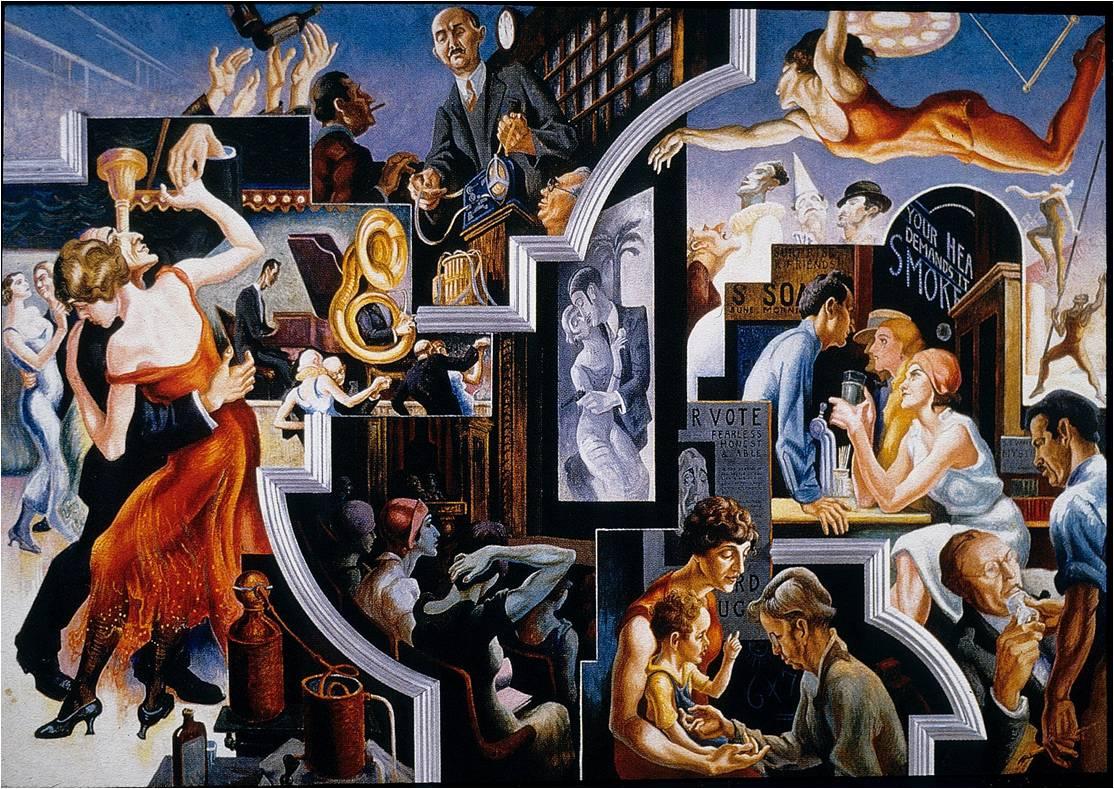
‘America Today’ by Thomas Hart Benton @ The Metropolitan Museum of Art

bentoncity1352564491315Jackson Pollock served as a model for several of the male archetypes featured in Thomas Hart Benton’s 10-panel mural, America Today. And Benton, in turn, served as a mentor to Pollock. Given their relationship, one might find it odd that it is Pollock who steals Benton’s thunder via the Metropolitan’s latest exhibit. Benton’s mural, originally crafted for the New School’s International Style Building on West 12th, is both decadent and unique, featuring everything from taxi dancers to racketeers; railroad workers to grain elevators; boom years to lean. And yet, it pales in comparison to several like-minded pieces located in the installation’s anteroom. Along the north wall, Reginald Marsh’s The Bowery, as well as John Steuart Curry’s John Brown. Along the west wall, Jackson Pollock’s Pasiphaé. Collectively, these paintings represent an unexpected morsel, like feasting on hors d’oeuvres at the expense of one’s main course. Either way, it’s all worth seeing, and it’s a perfect time of year to do just that.

(America Today continues at The Metropolitan Museum of Art through 4/19/15. Free with suggested donation, 82nd Street @ 5th Avenue.)

Five More For The Offing: 

Richard Dawkins on Getting Something From Nothing (2012)

“It does violate common sense, but – as I said earlier this evening – you can’t go by common sense. If we could do things by common sense, we wouldn’t need physicists. Common sense, of course, comes from what was necessary for our brains to survive in the Pleistocene of Africa. They had to know how to catch a buffalo and find a water hole, and how to climb a tree when being pursued by a lion or something. So our brains were never shaped by natural selection to understand either quantum mechanics – the theory of the very small – or relativity – the theory of the very fast. And it’s actually an astonishing compliment to the human brain that at least some humans are
capable of understanding.”

Excerpted from The Unbelievers

IFB’s Quotations Page, General Index

Pauline Kael on Fear of Movies (1978)

“Discriminating moviegoers want the placidity of nice art – of movies tamed so that they are no more arousing than what used to be called polite theatre. So we’ve been getting a new cultural puritanism – people go to the innocuous hoping for the charming, or they settle for imported sobriety, and the press is full of snide references to Coppola’s huge film in progress, and a new film by Peckinpah is greeted with derision, as if it went without saying that Bloody Sam couldn’t do anything but blow up bodies in slow motion, and with the most squalid commercial intentions.

This is, of course, a rejection of the particular greatness of movies: their power to effect us on so many sensory levels that we become emotionally accessible, in spite of our thinking selves. Movies get around our cleverness and our wariness; that’s what used to draw us to the picture show. Movies – and they don’t even have to be first-rate, much less great – can invade our sensibilities in the way that Dickens did when we were children, and later, perhaps, George Eliot and Dostoevski, and later still, perhaps, Dickens again. They can go down even deeper – to the primitive levels on which we experience fairy tales. And if people resist this invasion by going only to movies that they’ve been assured have nothing upsetting in them, they’re not showing higher, more refined taste; they’re just acting out of fear, masked as taste. If you’re afraid of movies that excite your senses, you’re afraid of movies.”

(Excerpted from The Age of Movies)

IFB’s Quotations Page, General Index

Why ‘Boardwalk Empire’ Has Always Been Extremely Good, But Never Great

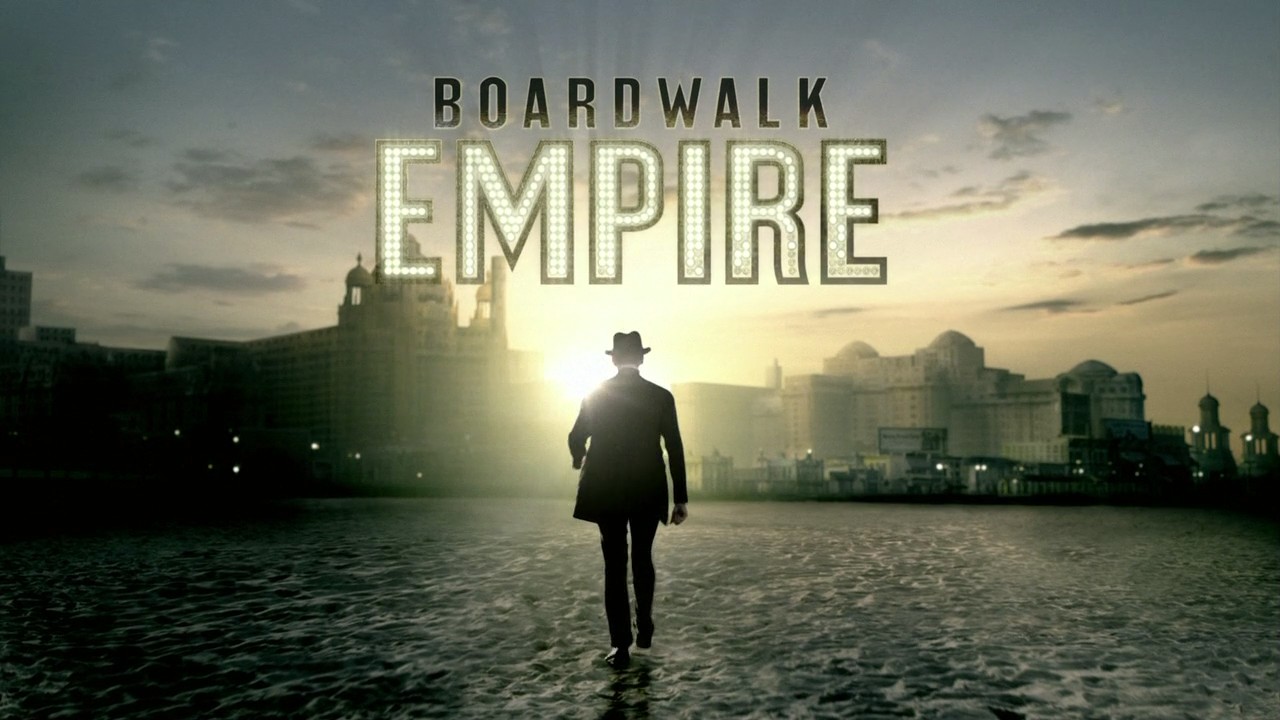
boardwalk-empireThere is a rumor, rather prevalent, that David Chase forbid the use of tight shots centered around the back of any actor’s head throughout production on The Sopranos. Too clichéd, Chase believed (with the exception of a minor dream sequence during Season Four). Yet, if one watches the opening credits of either Mad Men or Boardwalk Empireanchored by Chase protégés Matthew Weiner and Terence Winter, respectively – it’s difficult to ignore the prominent use of that shot.

David Chase was correct about so many things, in retrospect, his shadow must prove staggering, especially for Winter, whose follow-up to The Sopranos exists inside a similar universe. Because both Mad Men and Boardwalk Empire are period pieces, Weiner and Winter find themselves saddled with the responsibility of remaining true to bygone eras. Weiner has proven exceptional at this, building sets and storylines that are more true to 1960s America than 1960s America originally might have been to itself. Terence Winter, on the other hand, has struggled, in large part because he has taken shortcuts in the service of drama. “Never let the truth get in the way of a good story,” Nucky Thompson explains during Boardwalk Empire‘s pilot episode (an adage originally adapted from Mark Twain).

While Matthew Weiner uses exteriors, Terence Winter opts for CGI, suggesting lush, almost-impossible backdrops along a pixelized horizon. Mad Men inserts well-known figures into minor, incidental scenarios (e.g., Don Draper taking meetings with Conrad Hilton during Season Three). Boardwalk Empire, on the other hand, runs fast and loose with historical record (e.g., Al Capone engaging in a non-existent mob war alongside Nucky Thompson toward the end of Season Three).

And this … well, this is small potatoes, really.

Continue reading