Moving On: The Night They Drove Old Dallas Down

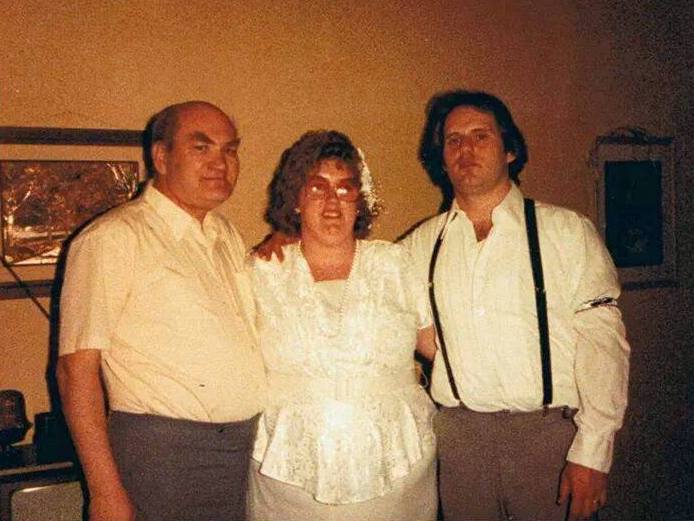
DonnaI arrived at work a half-hour early on that morning. Bill’s Concessions was expecting a delivery, the final stock truck of the season. Deliveries were always scheduled before noon to minimize distraction, uniformed employees unloading a tractor trailer full of plush. It was up a ramp, across the boards, along the carousel, in through a golf course, one step up, then 10 more down, before continuing into a room where bags of plush were stacked like loaves.

That particular morning I opted to stack rather than carry. It was mid-August and it was hot and there were 400 textile lions that needed to come off of that trailer. By one o’clock the truck was empty, and yet the work downstairs had just begun. The air ran dank and desolate in those stock rooms, indicative of why so many supervisors disappeared beneath the pier to drink or drug, take naps or fuck. There was a rumor – long-standing, unsubstantiated – that an employee’d lost his job back in the 70s for poking holes inside these animals then screwing them inside pier stock rooms. And yet these rumors, they tended to mothball, to the extent one risked integrity by telling them. There were more than ample truths to go around, dispensing any need for smoke and mirrors.

I finished stacking around two, at which point I emerged to find a happening – local authorities and EMTs, a network news van, low-circling copters. There was a barricade set up along the north side of the pier, and Donna White, a pier employee, was being rushed toward First Aid in tears. There had been an accident, a nearby maintenance man informed me, and it was believed that Donna’s husband, Dallas White, had died.

*** Continue reading
Galleria: Charles James: Beyond Fashion @ The Metropolitan Museum of Art

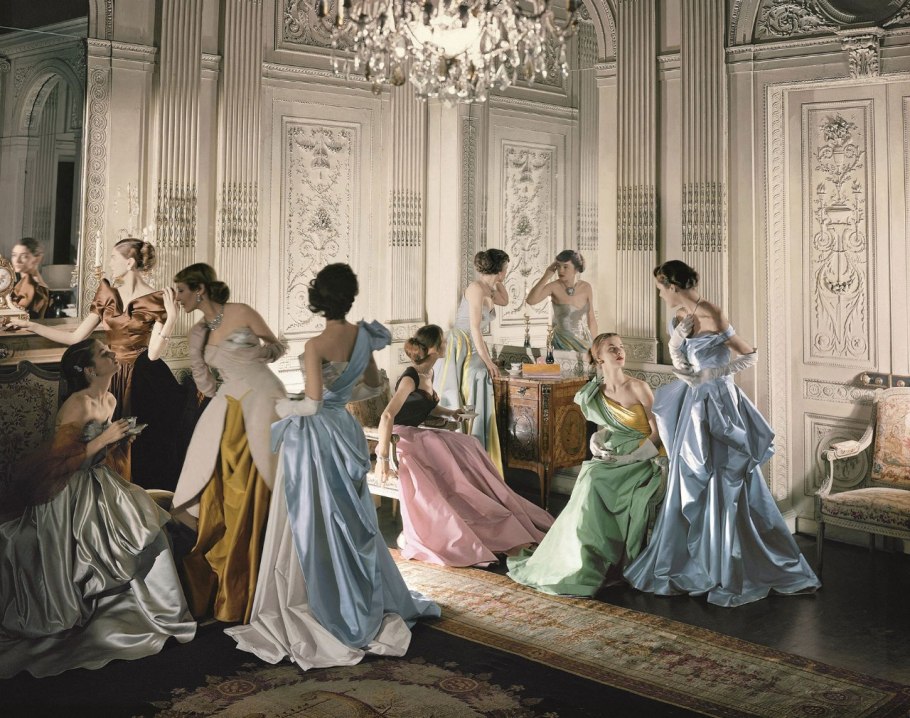
charles-james-beyond-fashion-costume-institute-photos.sw.6.1-charles-james-met-ss-02If Petrarch wanted to express his gratitude, he might write someone a sonnet; Emerson, a short story. Charles James, on the other hand, might design someone a dress, much like he did for Washington, DC socialite Sidney Kent Legare. James, a British-American designer who Christian Dior once credited with inspiring “The New Look,” approached fashion in the same way brilliant artisans approach a canvas. “A great designer does not seek acceptance,” James is quoted as saying in one of 18 signature Metropolitan panels. “He challenges popularity and by the force of his convictions renders popular in the end what the public hates at first sight.”

Charles James, curated in conjunction with the newly-minted Anna Wintour Costume Center, furthers the Met’s ongoing campaign to meld the worlds of art and fashion. Unlike 2013’s Punk: Chaos to Couture – a wildly popular exhibit which contrived a certain necessary grit – Charles James remains exquisitely resplendent … engaging, bare and honest throughout.

(Charles James: Beyond Fashion continues at the Metropolitan Museum of Art through August 10th. Free with suggested donation. 5th Avenue @ 82nd Street.)

Five More For The Offing: 

Jesmyn Ward on Negative Self-Image (2013)

“I looked at myself and saw a walking embodiment of everything the world around me seemed to despise: an unattractive, poor, Black woman. Undervalued by her family, a perpetual workhorse. Undervalued by society regarding her labor and her beauty. This seed buried itself in my stomach and bore fruit. I hated myself. That seed bloomed in the way I walked, slumped over, eyes on the floor, in the way I didn’t even attempt to dress well, in the way I avoided the world, when I could, through reading, and in the way I took up as little space as possible and tried to attract as little notice as I could, because why should I? I was something to be left.”

(Excerpted from Men We Reaped: A Memoir)

Four Quotes That Render The Original ‘Oldboy’ Both Wonderful & Wise

The original Oldboy is not an easy movie to take, at least from an American perspective. There is mass cruelty and rape and vulgarity and violence (including not one, but two “tooth torture” sequences that rival anything you might’ve seen in Marathon Man or American History X). This, of course, opened the door for Spike Lee – a director who remains equal parts luminous and maddening – to direct his own English-speaking version of the film (a critical flop, if ever there was one). Chan-wook Park‘s Oldboy succeeds because there is beauty in the butchery, poetry in each passing blow, all of it wrapped inside a treatise about sex and death and the choices people make once they have been locked inside a box. These four quotes encapsulate what Chan-wook Park was after via this movie, and why the joy of watching Oldboy is more about mass metaphor
than malice:

  1. “The TV is both a clock and a calendar. It’s your school, your home, your church, your friend and your lover.” While that statement might require an update, truer words have not been uttered. We are slaves to mass technology, consumers in the manufactured sense. We believe what we believe because the media – in all its forms – lets us know what’s deemed acceptable. As Don Draper once put it, “You know what happiness is? Happiness is the smell of a new car. It’s freedom from fear. It’s a billboard on the side of the road that screams with reassurance that whatever you’re doing, it’s OK.” That’s what happiness is, despite whatever pipe dream Pharrell Williams might be hawking.
  2. “Remember this: Be it a rock or a grain of sand, in water they sink as the same.” One might recall a few weeks back when rapper T.I. and Floyd Mayweather came to blows inside a Vegas Fatburger over a personal disagreement involving T.I.’s Tiny (Allow yourself a moment to let that statement settle in). In the aftermath, 50 Cent, who’s maintained a long-standing beef with Mr. Mayweather, took to social media, insisting, “Your upper-cut ain’t gonna mean shit when niggers start shootin’.” Therein lies the wisdom of the boulder and the grain of sand. It’s a reminder that while people may be separated by tax bracket, social status, birth right or physicality, every one of us is still susceptible once the stakes are raised to life and death.
  3. “They say that people shrivel up because of their imaginations. So don’t imagine anything. You’ll become brave as hell.” There is nothing new about this sentiment, delivered prior to the would-be extraction of Dae-su’s teeth. The idea has been echoed throughout pop culture, from Agent Cooper – in David Lynch’s Twin Peaks – declaring, “All things considered, being shot is not as bad as I always thought it would be, as long as you can keep the fear from your mind,” to Bob Dylan, who once reacted to a death threat – in D.A. Pennebacker’s Don’t Look Back – by saying, “I don’t mind being shot, man. But I don’t dig being told about it.” It is the thought, rather than the injury, that intensifies the pain. This is what lies at the root of all anxiety, the notion constant dread is eons worse than any beating.
  4. “One word makes you pregnant, another makes you fall in love.” One pill makes you larger/and one pill makes you small,” quoteth Grace Slick of the Jefferson Airplane. At its core, Oldboy is – at least partially – about the power of suggestion. This quote delivered toward the end of the film crystallizes what that power means in the most uncharitable of terms.

(The original Oldboy is currently streaming via Netflix. Spike Lee’s version will be available June 18th.)

Moving On: Escalation

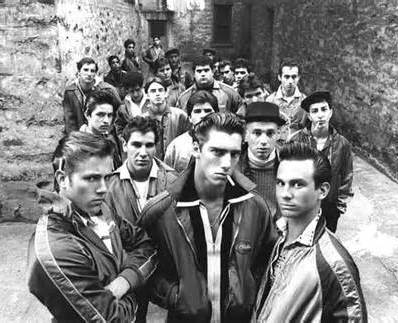
EscalationThere were three carloads of them, disembarking on North Clearfield. All of them were drunk, some of them were high, and one or two were carrying weapons in the form of small appliances. Gerry Vessels took the lead, leather duster swinging open. He made a left turn onto Frankford, came to a halt outside of Chuckle’s.

“You know you ain’t allowed,” the owner shouted. He was seated on a barstool just beyond the rust-brown entrance. The owner leaned forward, took a headcount of the sidewalk. He pushed his stool into the shadows, slammed the door without a warning. Gerry Vessels kicked the door wide, blitzkrieged his way onto the pool room. A battle cry rang out and patrons bottlenecked the entrance. Someone took a swing at Gerry, tagged him square across the jaw.

There was a rumble out on Frankford – flesh pounding, cotton tearing. A friend of Gerry’s was unloading on some asshole near the ground. That friend – a six-foot Kenzo named Chris Shanahan – had just tucked in both arms when someone stabbed him from behind. The blade entered near his kidney, splitting up and through a pair of ribs. It plunged in deeper near the tricep, cutting clear across the bone.

There was a scream and then a whistle, followed by the sound of bootheels clapping. Gerry Vessels fought his way clear, hurried east toward the corner. There was a car there waiting for him. He grabbed the handle, hopped inside. Continue reading

Nic Pizzolatto on The Metaphysical in ‘True Detective’ (2014)

“The function of all the granular details in background and in setting is to suggest this corruption at the root of the world, this poisoned garden. And what it suggests is that the world itself is poison and there’s something ruinous at work here. And the poison at the root of the world is humanity, which is also its only vehicle for meaning. It’s a chicken-and-the-egg type thing. The world is a reflection of who we are, and our values, and our concerns. However we’re all born into situations we didn’t create, inheritors of situations we didn’t create, we’re also subject to these things. In some ways I go back to the first story I ever heard, [which was] a noir story called The Book of Genesis. If you think about it, there’s sex, there’s palace intrigue, there’s sexual betrayal, there’s vengeance, and then there’s two brothers, and one of them kills the other one, and this is in the first two pages. So it’s always been suggested in our oldest literature that we’re living after some kind of spiritual or metaphysical fall.”

(Excerpted from “To The Best of Our Knowledge” radio interview.)

Galleria: Mark Cohen @ The Danziger Gallery

Mark_Cohen_BW_500px_72Flash, long believed to represent the bane of street photography, became an integral part of Mark Cohen’s approach throughout the 1970s. Cohen reimagined flash as a means by which to elicit a reaction. Provocation was the goal, or – at the very least – a byproduct. In that spirit, Cohen would wander the streets of Wilkes-Barre/Scranton, invading people’s personal space just prior to shining a flash bulb in their eyes. The results represent a strange, frenetic alchemy, 1,000x more relevant given the state of citizen photography. Critics maintain Cohen straddles the line between commentary and perversion, citing images that tend to exploit young children in a manner that can only be described as sexual. And yet, it is precisely this uncertain area which renders Cohen’s work an ongoing topic for discussion. In the age of Instagram and Tumblr and Facebook and Twitter, the mainstream sexualization of minors hasn’t only become commonplace, it’s uncharacteristically rewarded.

(Mark Cohen continues at the Danziger Gallery through 6/20, free, 527 West 23rd Street.)

Five More For The Offing: